In the annals of Catholic history, few figures embody unwavering faith and courage in the face of relentless persecution quite like St. Oliver Plunkett. Born into a world deeply divided by religious and political strife, his life journey would take him from the quiet cloisters of Rome back to the heart of a beleaguered Ireland, where he served as a beacon of hope and pastoral care amidst the darkest days of the Penal Laws. This article will delve into the remarkable life of St. Oliver, exploring the tumultuous historical context that shaped his ministry, his profound spiritual legacy, and the enduring devotion he inspires in modern times, offering reflections that resonate with believers today.
Quick Facts
| Category | Detail |
|---|---|
| Birth | November 1, 1625 (Loughcrew, County Meath, Ireland) |
| Death | July 1, 1681 (Tyburn, London, England) |
| Feast Day | July 1 |
| Patronage | Peace and Reconciliation in Ireland; Archbishop of Armagh; Irish Martyrs |
| Canonized | October 12, 1975, by Pope Paul VI |
Historical Context & Early Life
To understand St. Oliver Plunkett, one must first grasp the turbulent 17th century backdrop of Ireland and England. Following the English Reformation, Ireland, predominantly Catholic, found itself under the oppressive rule of the Protestant English Crown. This period was marked by brutal penal laws designed to dismantle Catholicism, strip Catholics of their land and rights, and force conversion. Catholic churches were confiscated, clergy were outlawed, and adherence to the faith became a dangerous act of defiance. The political landscape was fraught with rebellion, confiscation, and an ever-present threat of violence. Catholic education was severely restricted, forcing many Irish students and aspiring priests to seek schooling abroad.
It was into this volatile world that Oliver Plunkett was born on November 1, 1625, in Loughcrew, County Meath, Ireland. He hailed from a prominent Anglo-Norman family, a gentry class that, despite their noble lineage, faced increasing marginalization due to their Catholic faith. His parents, John Plunkett and Catherine Jordan, were devout Catholics who instilled in young Oliver a deep love for his faith and a strong sense of duty. Growing up, Oliver witnessed firsthand the hardships endured by his people—the secret Masses, the hidden schools, and the constant fear of persecution. These early experiences undoubtedly shaped his resolve to serve the Church in a time of profound need.
At the age of 16, under the care and tutelage of his relative, Father Peter Scarampi, an Oratorian priest and papal envoy to the Irish Confederacy, Oliver was identified as a young man of exceptional intellect and piety. Scarampi recognized his potential and arranged for Oliver to pursue his education in Rome. This opportunity was rare for an Irish Catholic of his generation and marked a pivotal turning point in his life. In 1645, he embarked on the long and perilous journey to the Eternal City, leaving behind a homeland in turmoil but carrying with him the hopes of a persecuted people.
In Rome, Oliver studied at the Irish College, a seminary dedicated to training priests for the challenging mission in Ireland. He excelled in his studies, demonstrating a keen mind for theology, philosophy, and canon law. He was known for his diligence, his gentle demeanor, and his profound spirituality. Rome offered him not only an excellent education but also a refuge where he could freely practice and deepen his faith, preparing him for the arduous task that lay ahead.
Calling & Key Milestones
Oliver Plunkett’s life was a testament to a profound calling to serve God and his people, marked by significant milestones that reveal his unwavering commitment amidst extreme adversity.
Ordination and Early Ministry
After completing his studies with distinction, Oliver Plunkett was ordained a priest in 1654. His initial expectation was to return immediately to Ireland, but the political situation there had deteriorated dramatically. The Cromwellian conquest had intensified the persecution of Catholics, making it exceedingly dangerous for priests to minister openly. Recognizing this, his superiors deemed it safer for him to remain in Rome. For the next twelve years, he taught theology at the College of Propaganda Fide, a prestigious institution responsible for training missionaries. He also served as a skilled advocate for Irish Catholics, working behind the scenes to defend their interests and report on the dire situation in his homeland. This period of academic and diplomatic service honed his intellectual abilities and deepened his pastoral heart, preparing him for the monumental task that awaited him.
Archbishop of Armagh and Primate of All Ireland
In 1669, a new chapter began for Father Plunkett. The Holy See, keenly aware of the suffering Irish Church and impressed by his abilities and reputation for piety, appointed him as the Archbishop of Armagh and Primate of All Ireland. This was an immense responsibility, as the position carried the spiritual leadership of the entire Catholic community in Ireland. Despite the grave dangers, Oliver accepted the appointment with humility and courage, knowing he was returning to a land where his very presence as a Catholic bishop was a capital offense. He secretly arrived back in Ireland in March 1670, disguised and under immense risk, beginning his challenging ministry.
As Archbishop, Oliver Plunkett devoted himself tirelessly to rebuilding the shattered Church infrastructure. He traveled extensively, often disguised, ministering to his scattered flock. He held synods—meetings of bishops and clergy—to address internal reforms, promote discipline among the clergy, and counter widespread abuses. He emphasized the importance of education, establishing secret schools for both lay people and seminarians, teaching catechism, and encouraging the spiritual development of his people. He also worked tirelessly to foster peace and reconciliation among the various factions within the Catholic community, promoting unity in the face of external threats. His pastoral zeal was extraordinary; he confirmed thousands, ordained many priests, and brought solace to countless suffering Catholics.
Navigating Persecution
For a decade, Archbishop Plunkett managed to carry out his ministry with remarkable effectiveness, due in part to a brief period of slightly relaxed enforcement of the Penal Laws. However, this respite was short-lived. In 1678, the “Popish Plot” erupted in England. This was a fabricated conspiracy theory invented by Titus Oates, who falsely claimed there was a Catholic plot to assassinate King Charles II and enthrone his Catholic brother. The ensuing anti-Catholic hysteria spread rapidly to Ireland, leading to renewed and intensified persecution. Priests and bishops were hunted down, arrested, and often executed. Archbishop Plunkett, as the most prominent Catholic figure in Ireland, became a prime target.
Despite the escalating danger, Oliver refused to abandon his flock. He went into hiding, moving from house to house, celebrating Mass in secret locations, and continuing to minister as best he could. He understood the immense spiritual and moral support his presence gave to the Irish Catholics, even in hiding. He knew that to flee would be to betray his sacred duty as a shepherd.
False Accusations and Trial
In December 1679, St. Oliver Plunkett was finally arrested and imprisoned in Dublin Castle. He was accused of treason, specifically of conspiring with the French to bring an army to Ireland to overthrow English rule. The accusations were utterly false, fabricated by opportunists and former priests who sought to gain favor and reward from the English authorities. Initially, his trial was to take place in Dublin, but when it became clear that the witnesses against him were unreliable and their testimonies contradictory, the trial was moved to London. This was a deliberate move to ensure a conviction, as in London, the jury would be entirely Protestant, and the public atmosphere was fiercely anti-Catholic.
The trial in London was a travesty of justice. Plunkett was denied legal counsel, faced hostile judges, and the same unreliable witnesses were brought forward. Despite his eloquent and dignified defense, presenting evidence of his loyalty to the Crown and his efforts to maintain peace, he was found guilty. He maintained his innocence throughout, forgiving his accusers and remaining steadfast in his faith.
Martyrdom
On July 1, 1681, St. Oliver Plunkett was led to Tyburn, London, the notorious site of public executions. He delivered a powerful final speech from the scaffold, calmly reaffirming his innocence, forgiving his persecutors, and professing his Catholic faith. He stated, “I die as a martyr for the Catholic faith.” He was hanged, drawn, and quartered, a brutal method of execution reserved for those convicted of high treason. His body was dismembered, and his head was publicly displayed. He was the last Catholic martyr to die at Tyburn, a powerful symbol of enduring faith in the face of ultimate sacrifice. His steadfastness in death inspired countless Catholics and became a lasting testament to his courage and conviction.
Spiritual Legacy & Theological Themes
The life of St. Oliver Plunkett is a profound testament to several core virtues that resonate deeply with Scripture and Catholic teaching. His unwavering commitment to his faith, even unto death, exemplifies the virtue of fortitude. Faced with immense pressure to deny his beliefs and abandon his flock, he chose faithfulness, echoing the words of Christ in Matthew 10:32: “Everyone who acknowledges me before others, I will also acknowledge before my Father in heaven.” His steadfastness reminds us that true faith often requires courage, especially when it goes against the prevailing worldly currents.
Another profound theme in his life is pastoral zeal. As Archbishop, Plunkett prioritized the spiritual well-being of his people above his own safety. He traveled tirelessly, administered the sacraments, educated the young, and reformed the clergy, embodying the image of the Good Shepherd willing to lay down his life for his sheep (John 10:11-15). His ministry was not about personal gain or power, but about service and the salvation of souls, reflecting the Church’s call for clergy to be true servants of God’s people.
His capacity for forgiveness, even towards those who falsely accused and condemned him, is a striking example of Christian charity. In his final moments, he publicly forgave his enemies, echoing Christ’s prayer from the cross, “Father, forgive them, for they know not what they do” (Luke 23:34). This act of mercy in the face of extreme injustice speaks volumes about the transforming power of Christian love and the call to overcome evil with good.
St. Oliver Plunkett’s lasting influence on liturgy, devotion, and Irish identity is immense. He became a powerful symbol of Irish Catholic endurance and resistance during centuries of oppression. His martyrdom solidified the resolve of a people determined to preserve their faith. His story reinforces the theological truth that suffering for Christ is not in vain but a participation in His redemptive work, and that true victory lies not in earthly power but in fidelity to God’s will. He represents the living tradition of martyrdom, reminding us that some truths are worth dying for.
Devotion Today
Devotion to St. Oliver Plunkett remains strong, particularly in Ireland, where he is revered as a national hero and a powerful intercessor. His life and martyrdom continue to inspire a deep sense of faith and pride among Irish Catholics and beyond.
The most significant shrine dedicated to St. Oliver Plunkett is located in St. Peter’s Church in Drogheda, County Louth, Ireland. Here, his preserved head, a relic recovered after his execution, is venerated by countless pilgrims. This relic serves as a tangible link to his sacrifice and a focal point for prayer and reflection. The shrine is a place of profound spiritual significance, drawing visitors from across Ireland and the world who come to honor the saint, pray for his intercession, and seek inspiration from his unwavering faith.
Other places of devotion include the ancient Cathedral of St. Patrick in Armagh, where he served as Archbishop, and various churches named in his honor throughout Ireland and Irish diaspora communities worldwide. Pilgrimages to these sites are common, especially around his feast day on July 1st, which is often marked by special Masses, novenas, and commemorative events. These annual celebrations emphasize his legacy of courage, reconciliation, and fidelity to the Catholic faith.
St. Oliver Plunkett is widely invoked as a patron of peace and reconciliation in Ireland, a role particularly poignant given the country’s long history of conflict. His example of forgiving his persecutors offers a powerful model for healing divisions and fostering unity. He is also considered a patron of the Archdiocese of Armagh and of Irish Martyrs, representing all those who suffered for their faith during times of persecution. His canonization in 1975 by Pope Paul VI was a moment of immense joy and affirmation for the Irish Church, recognizing his heroic virtues and profound impact.
Reflections for Modern Readers
St. Oliver Plunkett’s life, though lived centuries ago, offers timeless lessons for believers navigating the complexities of the 21st century. His story is a powerful reminder that faith is not merely a private belief but a public commitment, sometimes requiring immense courage.
- Standing Firm in Your Convictions: In a world that often demands compromise or silence on matters of faith, St. Oliver Plunkett teaches us the importance of steadfastness. He refused to deny his priesthood or abandon his flock, even when it meant imprisonment and death. For us, this might mean speaking up for justice, defending Church teaching respectfully, or simply living our Catholic values authentically in our daily lives, even when it’s unpopular.
- The Power of Forgiveness and Reconciliation: Plunkett’s ultimate act of forgiving his accusers from the scaffold is a profound lesson in Christian love. In a society often driven by anger and division, his example calls us to seek reconciliation, extend forgiveness, and pray for those who wrong us. This can apply to personal relationships, community conflicts, or broader societal issues, fostering healing rather than deepening resentment.
- Faithful Pastoral Care and Service: As a shepherd of souls, Plunkett dedicated his life to serving his people, even in the most dangerous circumstances. He found ways to provide sacraments, education, and spiritual guidance. For modern readers, this translates into actively participating in our parishes, volunteering our time and talents for the good of our community, and caring for the spiritual and material needs of those around us, seeing Christ in them.
- Education as a Pillar of Faith: Plunkett risked his life to establish secret schools, understanding that ignorance weakens faith. This highlights the ongoing importance of Catholic education—whether in formal schools, parish catechesis, or personal study—to deepen our understanding of our faith and equip us to live it fully.
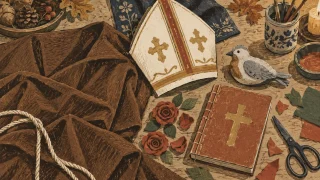
In art and jewelry, St. Oliver Plunkett is typically represented with several key symbols that illustrate his life and martyrdom:
- Bishop’s Mitre and Crozier: These are the traditional symbols of a bishop’s office. The mitre is the tall, pointed hat, and the crozier is the shepherd’s crook. They represent his role as Archbishop of Armagh and Primate of All Ireland, highlighting his spiritual authority and his duty as a shepherd of his flock.
- Palm Branch: A palm branch is a universal symbol of martyrdom in Christian art, signifying victory over death through faith. When depicted with a palm, it immediately identifies him as one who died for his beliefs.
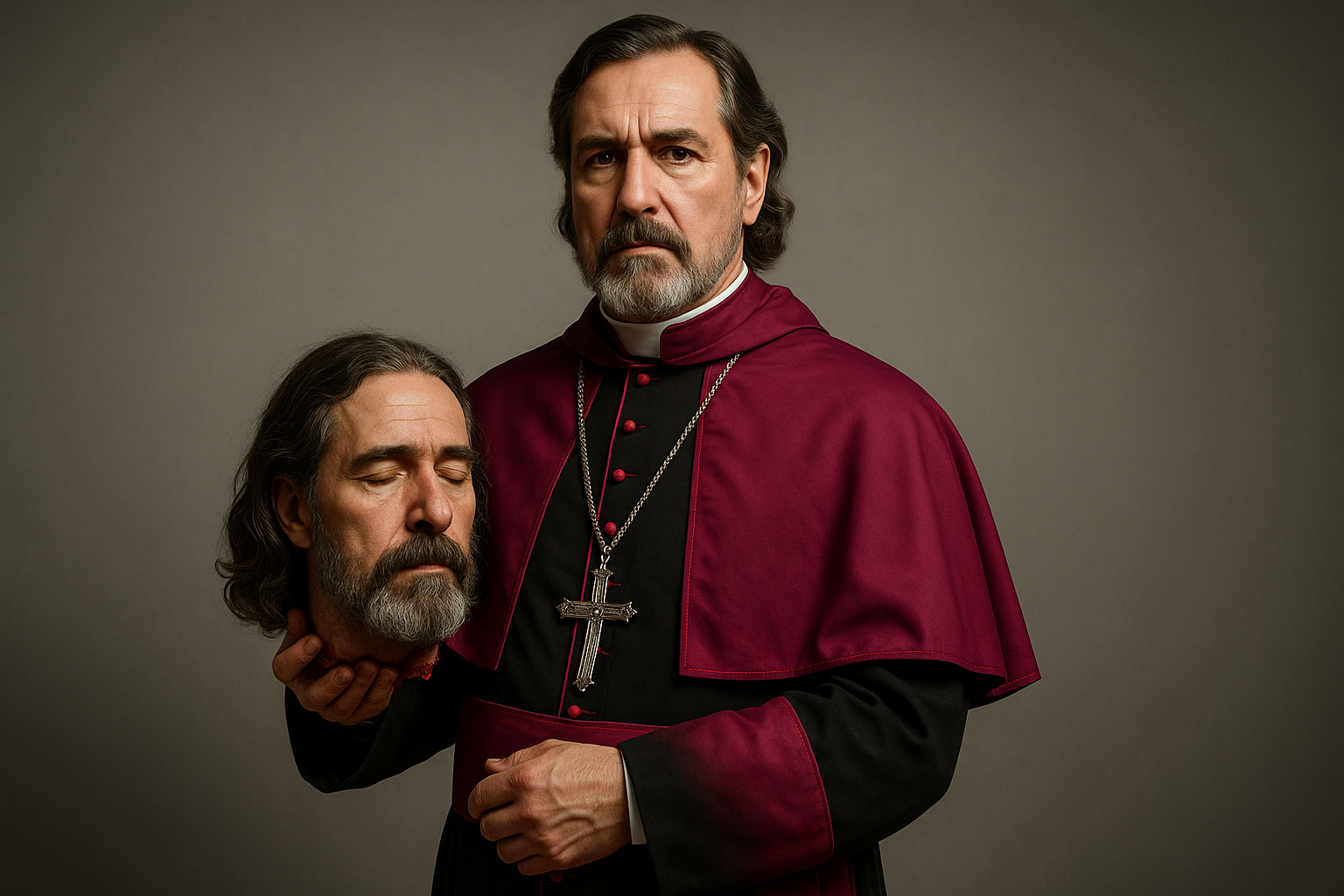
- A Head in His Hands: Due to the gruesome nature of his execution, in which his head was displayed, some depictions of St. Oliver Plunkett show him holding his own head. While perhaps graphic, this powerfully symbolizes his sacrifice and the preservation of his venerated relic in Drogheda, making it a very specific and recognizable symbol associated with him.
- A Noose or Rope: Less common, but sometimes present, a subtle noose or rope can hint at his death by hanging, directly referencing his martyrdom at Tyburn.
These symbols help us remember his story and draw inspiration from his heroic life and death.
Timeline Summary
- November 1, 1625: Born in Loughcrew, County Meath, Ireland.
- 1645: Traveled to Rome to study at the Irish College.
- 1654: Ordained a priest in Rome.
- 1654-1669: Taught theology at the College of Propaganda Fide in Rome.
- July 9, 1669: Appointed Archbishop of Armagh and Primate of All Ireland by Pope Clement IX.
- December 4, 1669: Consecrated a bishop in Ghent, Flanders.
- March 1670: Secretly returned to Ireland to begin his ministry.
- 1670-1678: Actively ministered to his flock, held synods, and established schools despite ongoing persecution.
- 1678: The “Popish Plot” intensified persecution, forcing him into hiding.
- December 1679: Arrested and imprisoned in Dublin Castle.
- October 1680: His trial in Dundalk, Ireland, failed due to lack of credible witnesses.
- May 1681: Tried in London, found guilty of treason based on false testimony.
- July 1, 1681: Martyred by hanging, drawing, and quartering at Tyburn, London.
- May 23, 1920: Beatified by Pope Benedict XV.
- October 12, 1975: Canonized by Pope Paul VI, becoming the first new Irish saint in almost 700 years.
Scripture for Reflection
St. Oliver Plunkett’s life embodies several powerful scriptural themes, particularly those concerning suffering, steadfastness, and true discipleship.
Matthew 10:28: “Do not be afraid of those who kill the body but cannot kill the soul; rather, be afraid of the One who can destroy both soul and body in Gehenna.”
This passage directly speaks to St. Oliver’s fearless witness. He faced earthly death but understood that his eternal soul was safe with God. His example reminds us not to let fear of worldly consequences dictate our fidelity to Christ.
John 10:11: “I am the good shepherd. The good shepherd lays down his life for the sheep.”
As an Archbishop, St. Oliver Plunkett was a true shepherd who refused to abandon his flock, even when his own life was at stake. He consistently put the spiritual needs of his people above his personal safety, living out Christ’s teaching about selfless pastoral care.
1 Peter 4:12-14: “Beloved, do not be surprised at the fiery ordeal among you, which comes upon you for your testing, as though some strange thing were happening to you; but to the degree that you share the sufferings of Christ, keep on rejoicing, so that also at the revelation of His glory you may rejoice with exultation. If you are reviled for the name of Christ, you are blessed, because the Spirit of glory and of God rests upon you.”
St. Oliver Plunkett endured immense suffering and revilement for the name of Christ. This passage illuminates the spiritual significance of his trials, suggesting that his suffering was a sharing in Christ’s own Passion, leading to a glorious reward.
Prayers to St. Oliver Plunkett
Prayer for the Intercession of St. Oliver Plunkett
O God, who in Your infinite mercy chose Saint Oliver Plunkett to be a shepherd of Your flock, and granted him the grace of martyrdom for the sake of Your truth, grant through his intercession that we, too, may remain steadfast in our faith, courageous in our witness, and forgiving to all who harm us. May his example inspire us to serve You faithfully and to work for peace and reconciliation in our world. We ask this through Christ our Lord. Amen.
Prayer for Peace through St. Oliver Plunkett
God of peace, we honor Saint Oliver Plunkett, who, amidst persecution and injustice, sought always to build up your Church and bring peace to a troubled land. We pray through his intercession for true and lasting peace in Ireland and throughout the world. May we, like him, be instruments of reconciliation, overcome hatred with love, and seek unity where there is division. Strengthen us to bear witness to your truth and charity, through Christ our Lord. Amen.