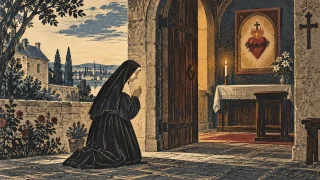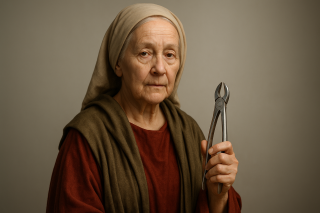
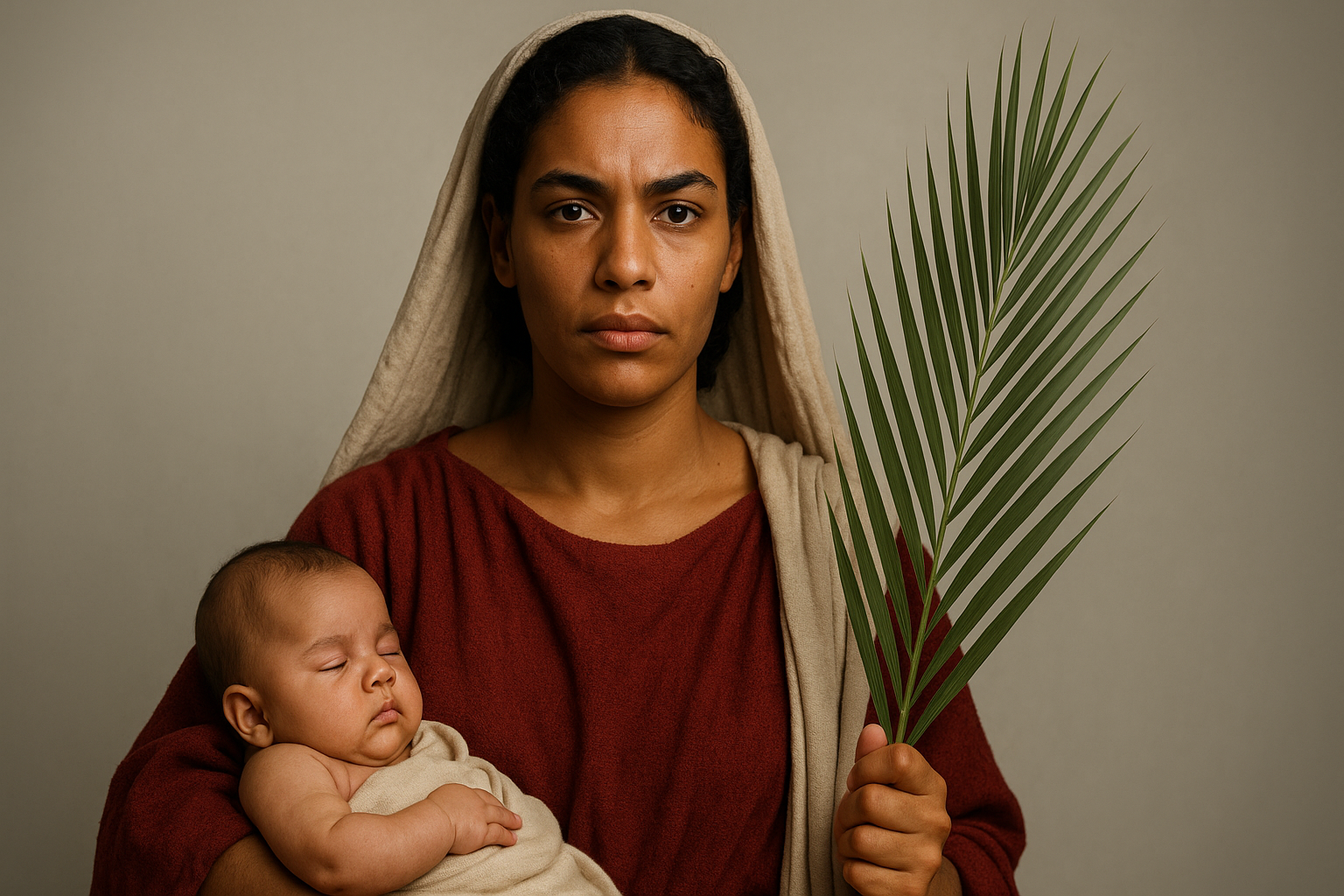
In the annals of early Christian history, few stories shine as brightly and powerfully as that of St. Perpetua. A young, educated noblewoman living in Roman Carthage at the dawn of the third century, Perpetua faced an unthinkable choice: renounce her burgeoning Christian faith or face a brutal martyrdom. Her remarkable courage, captured in her own prison diary, offers a vivid and deeply moving glimpse into the heart of early Christianity. This article will explore the turbulent world she inhabited, the profound spiritual journey that led her to sainthood, the enduring legacy she left behind, and how her unwavering faith continues to inspire believers and seekers in the modern age, making St. Perpetua a timeless example of fidelity and spiritual strength.
Quick Facts
| Category | Details |
|---|---|
| Birth | c. 181 AD, Carthage, Roman Africa (modern Tunisia) |
| Death | March 7, 203 AD, Carthage, Roman Africa |
| Feast Day | March 7 (Western Church); January 25 (Eastern Church, shared with St. Felicity) |
| Patronage | Mothers, expectant mothers, martyrs, Carthage, Vercelli (Italy) |
| Canonized | Pre-Congregation (Venerated as a saint from ancient times) |
Historical Context & Early Life
To understand the extraordinary story of St. Perpetua, we must first immerse ourselves in the tumultuous world of the Roman Empire at the turn of the third century. The year 203 AD found the empire under the rule of Emperor Septimius Severus, a period marked by both vast expansion and underlying tension. While the Pax Romana, or Roman Peace, brought stability to many regions, it was often achieved through military might and a rigid enforcement of Roman civic and religious customs. Christianity, still a relatively new and growing religion, stood in stark contrast to these established norms.
Carthage, located in what is now Tunisia, was a jewel of the Roman Empire – a bustling, cosmopolitan port city and a major center of trade, culture, and learning in North Africa. It was a melting pot of Roman, Punic, and indigenous African cultures, with grand public buildings, amphitheaters, and temples dedicated to the Roman gods. Within this vibrant pagan society, the Christian community was steadily growing, often meeting in private homes and maintaining a distinct identity. Christians, however, were viewed with suspicion by many Romans. Their refusal to participate in emperor worship or offer sacrifices to the Roman pantheon was seen as disloyalty to the state, and their private worship services fueled rumors of strange practices. This suspicion could, and often did, erupt into localized persecutions.
Emperor Septimius Severus, seeking to consolidate his empire and promote traditional Roman values, issued an edict around 202 AD that specifically forbade conversion to Judaism or Christianity. This made it illegal to become a Christian and, by extension, illegal to practice Christianity openly. It was under the shadow of this imperial decree that Perpetua’s life unfolded.
Vibia Perpetua, born around 181 AD, was a young woman of noble birth, suggesting her family was well-off, educated, and held a respected position in Carthaginian society. She was married and, at the time of her arrest, a new mother, nursing her infant son. While her exact upbringing is not fully detailed, her ability to write and the refined tone of her diary suggest she received an excellent education, a privilege not universally afforded to women in Roman society. Her father was a pagan, deeply rooted in Roman traditions and social expectations, but her mother and at least one of her two brothers, Dinocrates, were Christians, with Dinocrates being a catechumen (someone studying to be baptized).
This mixed household created an immediate tension. Perpetua’s embrace of Christianity placed her at odds with her father’s traditional Roman sensibilities and his desire to protect his family’s reputation and status. Her early life, though presumably comfortable, was quickly moving toward a profound spiritual awakening that would challenge every aspect of her existence and ultimately lead her to confront the full might of the Roman state.
Calling & Key Milestones
St. Perpetua’s journey to martyrdom is one of the most vividly documented and inspiring narratives from the early Church, largely due to her own writings. Her ‘Passion,’ or account of her suffering, includes her personal diary from prison, providing a rare and intimate window into the mind and heart of an early Christian martyr.
The Arrest and Imprisonment
Perpetua was a catechumen, meaning she was undergoing instruction in the Christian faith in preparation for baptism. This was a common practice in the early Church, as conversion was a serious commitment. Along with several companions, including her slave, Felicity (who was eight months pregnant), and two free men, Saturninus and Secundulus, and another catechumen, Revocatus, Perpetua was arrested under Severus’s edict forbidding conversions. The group was brought before the Roman governor Hilarianus, who initiated legal proceedings against them. The initial arrest and subsequent imprisonment marked the beginning of her profound trial of faith, separating her from her family and plunging her into the harsh reality of Roman justice.
Baptism and First Vision
While awaiting trial in a dark, crowded prison, Perpetua found solace and strength in her burgeoning faith. She describes the initial prison conditions as “terrible,” but a pivotal moment arrived when she and her fellow catechumens were permitted to receive the Sacrament of Baptism. This spiritual cleansing and strengthening immediately deepened her resolve. Soon after, Perpetua experienced her first of several powerful visions. In this vision, she saw a golden ladder leading to heaven, too narrow for more than one person at a time, and guarded by a fearsome dragon at its foot. At the top, she saw a shepherd welcoming her. This vision confirmed her path, signifying her ascent to martyrdom as a victory over evil, and solidified her determination to remain faithful to Christ, no matter the cost.
Family’s Pleas and Steadfast Faith
One of the most poignant aspects of Perpetua’s account is the deep emotional struggle she endured due to her father’s desperate pleas. Her pagan father, driven by love, societal expectations, and fear for his daughter’s life, repeatedly visited her in prison, begging her to renounce her faith. He appealed to her as his daughter, reminding her of his love and her family’s honor, and most heartbreakingly, implored her to consider her infant son. He even presented her child to her during these visits, hoping to break her resolve. Each time, Perpetua, torn but firm, calmly stated, “I cannot be called anything else than what I am, a Christian.” Her steadfastness in the face of such profound familial pressure exemplifies a radical commitment to God above all earthly ties.
Trial and Condemnation
The group of Christians, now known as the “Martyrs of Carthage,” eventually faced formal trial before Governor Hilarianus in the amphitheater. The crowd demanded their condemnation. During the interrogation, Perpetua was once again confronted by her father, who implored her to recant. The governor, seeing her resolve, pressed her to make a sacrifice to the emperor’s genius (a divine spirit believed to guide the emperor) and to the Roman gods. Perpetua refused, stating clearly that she was a Christian. This unwavering confession led to the inevitable verdict: condemnation to death by wild beasts in the arena, a common form of execution for those deemed enemies of the state and a spectacle for the Roman populace.
Felicity’s Story and Divine Providence
Perpetua’s companion, Felicity, a slave who was eight months pregnant, faced a unique challenge. Roman law forbade the execution of pregnant women until after childbirth. This meant Felicity feared she would not be able to join her companions in martyrdom, leading to great sorrow. However, through prayer, she prematurely gave birth to a daughter in prison. Her companions rejoiced, seeing this as divine intervention, ensuring that Felicity would not be separated from them in their ultimate witness. Despite the pain of childbirth, she was now ready to face her destiny alongside Perpetua.
Visions of Comfort and Prophecy
During her imprisonment, Perpetua continued to experience vivid visions that provided comfort, guidance, and prophetic insight. She saw her deceased brother, Dinocrates, initially suffering in a dark, parched place but later healed and joyful, confirming his salvation. In another powerful vision, she saw herself fighting a fierce Egyptian gladiator in the arena. She triumphed over him, trampling his head. This vision symbolized her upcoming struggle with evil and the devil, assuring her of victory through Christ. These mystical experiences not only strengthened Perpetua but also served as powerful testimonies to her community, interpreted as divine validation of their suffering and ultimate hope.
Martyrdom in the Arena
On March 7, 203 AD, the day of their martyrdom, Perpetua, Felicity, and their companions entered the amphitheater with joy, their faces shining. They were stripped and exposed to a wild cow. Perpetua and Felicity were gored by the animal. Perpetua, disoriented from the attack, reportedly adjusted her tunic to preserve her modesty and even helped Felicity, who was also injured. The crowd, perhaps not fully satisfied by the beast attacks, then demanded they be executed by the sword. As the executioner approached, Perpetua reportedly guided his hesitant hand to her throat, demonstrating an astonishing resolve and calm acceptance of her fate. She and Felicity were among the first documented female martyrs whose personal stories profoundly impacted the early Christian community, leaving an indelible mark on its history.
Spiritual Legacy & Theological Themes
The story of St. Perpetua is far more than a historical account of suffering; it is a profound testament to core Christian virtues and theological truths that resonate deeply within the Catholic tradition. Her life and death offer rich insights into faith, sacrifice, and the transforming power of grace.
Courage and Fidelity in the Face of Persecution: Perpetua’s unwavering commitment to her faith, even under immense pressure from her loving father and the threat of a brutal death, exemplifies extraordinary courage. This aligns perfectly with scriptural calls to steadfastness, such as in Revelation 2:10, “Be faithful unto death, and I will give you the crown of life.” Her fidelity reminds us that true faith demands a radical trust in God, sometimes above all earthly attachments, echoing Jesus’ words in Matthew 10:37, “Whoever loves father or mother more than me is not worthy of me.”
The Witness of Martyrdom: Perpetua’s ultimate sacrifice is the supreme witness to Christ, a concept deeply rooted in early Christian theology. Tertullian, a contemporary Christian writer from Carthage, famously stated that “the blood of martyrs is the seed of Christians.” Perpetua’s death inspired countless others, strengthening the resolve of the nascent Church and demonstrating that faith in Christ was worth dying for. Her martyrdom is seen as an act of perfect love and imitation of Christ’s own sacrifice on the cross, a theological theme consistently emphasized in Catholic teaching regarding the saints.
Dignity and Strength of Women in the Church: Perpetua’s narrative, especially her own writings, highlights the significant role and spiritual strength of women in the early Church. In a Roman society where women often had limited public roles, Perpetua and Felicity stand as powerful figures who defied societal expectations and demonstrated profound spiritual authority. Their story underscores the inherent dignity and equality of all believers in Christ, regardless of gender, a principle consistently upheld by the Church despite historical and cultural challenges.
The Importance of Baptism and Sacramental Grace: Perpetua’s eagerness to receive baptism even while imprisoned, knowing it sealed her fate, speaks volumes about the early Church’s understanding of this sacrament. Baptism was not merely a ritual but a spiritual rebirth, a cleansing from sin, and an empowerment by the Holy Spirit. It was seen as the gateway to new life in Christ and, in the context of martyrdom, as a divine strengthening for the ultimate test. Her experience underscores the Catholic teaching on the efficacy of the sacraments in conveying God’s grace.
Spiritual Combat and Divine Providence: Perpetua’s visions, particularly the one of her fighting the “Egyptian gladiator,” symbolize the spiritual battle every Christian faces against sin and evil. Her victory in the vision foretold her triumph in the arena, illustrating the theological concept that through Christ, believers can overcome all adversaries. These visions also emphasize God’s direct involvement in the lives of His saints, providing comfort, guidance, and assurance of divine providence, a theme beautifully articulated in Romans 8:37-39, “In all these things we are more than conquerors through him who loved us.”
Lasting Influence: St. Perpetua’s influence on the Church has been profound and enduring. Her ‘Passion,’ believed to be partly written by her and partly by an eyewitness, became one of the most beloved and widely circulated martyr accounts in the early Church. It served as a spiritual guide and source of inspiration during times of persecution. Her name, along with St. Felicity’s, is permanently enshrined in the Roman Canon (Eucharistic Prayer I) of the Mass, a testament to her profound veneration from the earliest centuries. She continues to be revered as a patron saint of mothers, expectant mothers, and all who face persecution for their faith. Her story remains a powerful witness to the transformative power of faith and the ultimate victory of divine love over earthly suffering.
Devotion Today
Even nearly two millennia after her martyrdom, devotion to St. Perpetua remains strong within the Catholic Church, particularly for those seeking inspiration in courage, motherhood, and fidelity to faith. Her story, preserved in her own words and through eyewitness accounts, has ensured her a prominent place among the early Church’s most revered saints.
One of the most significant testaments to her enduring veneration is her inclusion, alongside St. Felicity, in the Roman Canon (Eucharistic Prayer I) of the Mass. This ancient prayer, dating back to the earliest days of the Church, names Perpetua among the most distinguished martyrs, signifying her perpetual remembrance and intercession within the central act of Catholic worship. Every time this prayer is recited, Perpetua’s sacrifice is honored and her memory invoked.
While the exact locations of her shrines in North Africa are largely lost to time or integrated into later historical layers, her spiritual legacy continues to draw pilgrims and devotees. Many churches around the world are dedicated to St. Perpetua and St. Felicity, particularly in Italy and regions with strong historical ties to early Christianity. These churches serve as local centers of devotion, where the faithful can pray and seek their intercession.
St. Perpetua’s feast day is celebrated annually on March 7th in the Western Church, and on January 25th in the Eastern Church (often shared with St. Felicity). On these days, Catholics remember her life, reflect on her courage, and give thanks for her witness. Special Masses, prayers, and reflections are offered, encouraging contemporary believers to draw strength from her example.
Her patronage as the patron saint of mothers and expectant mothers is particularly meaningful. Many pregnant women and new mothers turn to St. Perpetua, finding solidarity in her story of motherhood amidst unimaginable tribulation. They pray for her intercession for safe delivery, for strength in raising their children in faith, and for the courage to prioritize their spiritual lives despite life’s many demands. Her example offers comfort and hope to those facing difficulties related to family and faith.
Furthermore, St. Perpetua remains a powerful symbol for those suffering persecution or facing difficult choices for their faith. Her steadfastness in the face of death and her refusal to compromise her beliefs resonate deeply with Christians globally who endure similar challenges, whether physical persecution or more subtle forms of social or professional pressure.
Through her enshrined name in the liturgy, the dedication of churches, annual feast day celebrations, and her specific patronages, St. Perpetua continues to be a vibrant source of inspiration, reminding the modern Church of the cost of discipleship and the unwavering promise of eternal life.
Reflections for Modern Readers
St. Perpetua’s ancient story, steeped in the dust of Roman Carthage, holds surprisingly profound and actionable lessons for us in the 21st century. Her journey from noblewoman to martyr offers a timeless blueprint for living a life of authentic faith, courage, and purpose.
1. Prioritizing Faith Above All Else: Perpetua faced the ultimate choice between her faith and her earthly life, family, and comfort. She chose Christ. For modern readers, this calls us to examine our own priorities. What do we place first in our lives? Is our faith truly foundational, or is it easily set aside for career advancement, social acceptance, or material comfort?
- Real-world example: Choosing to attend Mass or spend time in prayer even when faced with a demanding work schedule, or making ethical decisions in business that might cost financially but align with Christian values.
2. Courage in the Face of Adversity: Perpetua displayed immense courage, not just in facing death, but in resisting the emotional manipulation of her father and enduring the harsh realities of prison. While few of us will face literal lions, we all encounter personal adversity: illness, financial hardship, social pressure, or moral dilemmas. Her story inspires us to face our trials with fortitude, rooted in trust in God.
- Real-world example: Standing up for a moral principle in a public forum, advocating for justice even when unpopular, or persevering through a difficult personal challenge like addiction or grief with hope in God’s plan.
3. The Power of Personal Witness: Perpetua’s diary became a powerful witness, inspiring generations of Christians. Our lives, too, are a form of witness. How do we live out our Christian values in our daily interactions, our professional lives, and our family relationships? Our quiet integrity, kindness, and unwavering hope can speak volumes.
- Real-world example: Consistently showing compassion to a difficult colleague, volunteering time for a charitable cause, or simply living a joyful and peaceful life that reflects inner conviction.
4. Embracing God’s Will and Providence: Perpetua’s visions offered her comfort and confirmed God’s plan amidst her suffering. For us, this means cultivating a deep prayer life and trusting that God has a purpose even in our difficulties. It encourages us to surrender our anxieties and seek God’s will, believing that He is working all things for good.
- Real-world example: Finding peace and acceptance after a personal setback, discerning major life decisions through prayer and spiritual direction, or trusting in God’s timing even when we desire immediate results.
5. The Dignity of Life and Hope in Eternity: Perpetua faced death not with despair, but with a serene expectation of eternal life. Her story reminds us of the Christian understanding of death as a passage, not an end. This perspective can transform how we live, encouraging us to invest in what is eternal and to face mortality with hope.
- Real-world example: Caring for the elderly and infirm with love and respect, discussing end-of-life decisions with faith and peace, or living each day with an awareness of our ultimate spiritual destiny.
Symbols and Representations of St. Perpetua
In art and jewelry, St. Perpetua is often depicted with several symbolic elements that recount her remarkable story and spiritual legacy:
- Palm Branch: This is the universal symbol of martyrdom in Christian art. Perpetua is frequently shown holding a palm branch, signifying her victory over death and her faithful testimony to Christ.
- Wild Beasts (Lion, Leopard, or Cow): Given her execution in the arena, she is often depicted with lions, leopards, or specifically a wild cow (or ‘heifer’), which was the animal that gored her and St. Felicity. These animals represent the brutal manner of her death and her triumph over earthly terror.
- Sword: As she was finally executed by a sword, this instrument is also a common symbol associated with her. Sometimes, she is shown guiding the executioner’s hand to her own throat, emphasizing her active acceptance of martyrdom.
- Infant Son: To highlight her unique sacrifice as a mother, Perpetua is often depicted with an infant son nearby. This symbol evokes her profound dilemma and her choice to prioritize her spiritual motherhood to the Church above her biological bonds, yet retaining her tender love.
- Cross or Chi-Rho: Like many early martyrs, she may be shown with general Christian symbols such as a cross or the Chi-Rho monogram (an early Christian symbol for Christ), affirming her identity as a follower of Jesus.
These symbols not only narrate her story but also visually communicate her virtues: courage, sacrifice, and unwavering faith, making her an enduring model for believers throughout the ages.
Timeline Summary
- c. 181 AD: Vibia Perpetua is born into a noble family in Carthage, Roman Africa.
- Early 200s AD: Perpetua marries and gives birth to an infant son. She begins her instruction as a catechumen in the Christian faith.
- Late 202 / Early 203 AD: Emperor Septimius Severus issues an edict forbidding conversions to Christianity. Perpetua, along with her slave Felicity and others, is arrested for being a Christian.
- 203 AD (during imprisonment): Perpetua receives the Sacrament of Baptism in prison, solidifying her commitment. She experiences several powerful visions that strengthen her resolve and prophesy her martyrdom. Her pagan father repeatedly attempts to persuade her to recant for the sake of her son and family honor.
- March 7, 203 AD: Perpetua and her companions, including Felicity (who gives birth prematurely in prison), are brought to the amphitheater in Carthage. They face wild beasts, including a wild cow. Perpetua and Felicity are gored. Perpetua is finally executed by the sword, reportedly guiding the executioner’s hand.
- Post-203 AD: Perpetua’s ‘Passion’ is compiled, including her prison diary, becoming one of the most widely read and influential accounts of martyrdom in the early Church.
- Throughout History: St. Perpetua and St. Felicity are venerated as saints, their names included in the Roman Canon of the Mass, and they are recognized as patron saints of mothers and martyrs.
Scripture for Reflection
The life of St. Perpetua beautifully illustrates several powerful themes found in Holy Scripture, offering deep connections between her actions and the eternal Word of God.
Matthew 10:37-39: “Whoever loves father or mother more than me is not worthy of me, and whoever loves son or daughter more than me is not worthy of me; and whoever does not take up his cross and follow after me is not worthy of me. Whoever finds his life will lose it, and whoever loses his life for my sake will find it.”
This passage directly illuminates Perpetua’s agonizing choice. She deeply loved her father and her infant son, yet her ultimate fidelity was to Christ. In choosing to lose her earthly life and family ties for His sake, she truly found eternal life, embodying the radical discipleship Jesus demands.
Revelation 2:10: “…Be faithful unto death, and I will give you the crown of life.”
This verse from the Book of Revelation is a direct promise to martyrs and those who persevere in faith. St. Perpetua’s steadfastness, even in the face of brutal execution, exemplifies this faithfulness. Her martyrdom was not merely an end but the ultimate act of fidelity, earning her the “crown of life” promised by Christ.
Romans 8:35, 37-39: “Who shall separate us from the love of Christ? Shall trouble or hardship or persecution or famine or nakedness or danger or sword? No, in all these things we are more than conquerors through him who loved us. For I am convinced that neither death nor life, neither angels nor demons, neither the present nor the future, nor any powers, neither height nor depth, nor anything else in all creation, will be able to separate us from the love of God that is in Christ Jesus our Lord.”
St. Perpetua’s life is a living testament to this powerful declaration. Despite imprisonment, the pleas of her family, the terror of the arena, and the sword, nothing could separate her from the love of Christ. She was indeed “more than a conqueror,” demonstrating through her invincible faith that God’s love triumphs over all earthly threats.
Prayers to St. Perpetua
As a powerful intercessor and inspiring martyr, St. Perpetua continues to be invoked by the faithful, particularly by mothers and those facing persecution.
Prayer to St. Perpetua for Courage and Perseverance
O Glorious St. Perpetua, who chose Christ above all earthly loves and comforts, standing firm in faith even unto death, we humbly come before you. You, a young mother, bravely faced persecution, imprisonment, and the cruel beasts of the arena, holding fast to your conviction as a Christian. We ask for your powerful intercession in our own lives.
Grant us the courage to stand firm in our faith when faced with challenges, temptations, or the pressures of the world. Help us to prioritize God above all else, to be faithful witnesses to Christ in our daily lives, and to endure our trials with unwavering hope and trust in Divine Providence. Protect all mothers and their children, especially those facing difficult circumstances, and guide them with your example of selfless love and sacrifice.
May your martyrdom remind us of the precious gift of our faith and inspire us to live lives worthy of the Gospel. Through your prayers, may we, too, one day attain the crown of eternal life in the presence of our Lord, Jesus Christ. Amen.
A Shorter Invocation:
St. Perpetua, martyr for Christ, courageous mother, pray for us!