St. Philip the Apostle is a figure whose story, though sometimes overshadowed by his more frequently quoted brethren, offers a compelling and deeply human glimpse into the very beginnings of Christianity. One of the original twelve apostles, Philip was among the first called by Jesus Himself, a direct invitation that set the course for a life dedicated to evangelization and witness. From his early encounters with Christ to his missionary journeys and eventual martyrdom, Philip’s life unfolds as a testament to practical faith, an earnest desire for understanding, and an unwavering commitment to bringing others to the Lord. In this article, we will explore his pivotal role in the Gospels, his enduring spiritual legacy, and how his example continues to inspire Catholics around the world today, offering rich reflections for our own modern lives.
Quick Facts
| Attribute | Detail |
|---|---|
| Birth | 1st century AD, Bethsaida, Galilee |
| Death | c. 80 AD, Hierapolis, Phrygia (modern Turkey) |
| Feast Day | May 3 (with St. James the Less) |
| Patronage | Bakers, pastry chefs, hatters, Uruguay, the Philippines |
| Canonized | Pre-Congregation (by acclamation of the early Church) |
Historical Context & Early Life
To understand St. Philip, we must first picture the world into which he was born. The 1st century AD in Galilee, the northern region of ancient Israel, was a complex tapestry of cultures and political forces. Under Roman occupation, the Jewish people lived with a blend of their ancient traditions and the pervasive influence of Greco-Roman society. Galilee, in particular, was known for its diverse population, situated at the crossroads of major trade routes, making its inhabitants more exposed to foreign ideas and languages than those in more insular Judea. Towns like Bethsaida, Philip’s hometown, were bustling fishing villages, likely with a mix of Jewish and Gentile residents.
The religious landscape was equally dynamic. Judaism itself was not monolithic; various sects and movements, including the Pharisees, Sadducees, and Essenes, vied for influence, each with their own interpretation of the Law and messianic expectations. Many ordinary people, including Philip, would have been deeply religious, awaiting the Messiah promised in their scriptures – a figure who would deliver Israel and establish God’s kingdom. It was into this atmosphere of fervent religious anticipation and socio-political tension that Jesus of Nazareth emerged, preaching a message of repentance and the Kingdom of God.
While the Gospels don’t provide extensive details about Philip’s family background, his name, “Philip,” is Greek, meaning “lover of horses.” This Greek name, shared by a number of prominent figures in the Hellenistic world, suggests a degree of Hellenistic influence in his family or community, which was common in Galilee. He was from Bethsaida, the same town as Peter and Andrew, suggesting they may have known each other before encountering Jesus. Like many in Bethsaida, Philip was likely involved in the fishing trade or a related livelihood, a common profession in the region.
His formative experiences would have included exposure to both Jewish synagogue life and the broader Hellenistic culture. He was a man of his time, probably observant of Jewish law, but perhaps also pragmatic and thoughtful, as evidenced by his interactions with Jesus. This unique blend of Jewish heritage and exposure to the wider world made Philip a fitting instrument for Christ’s universal message.
Calling & Key Milestones
The Direct Call of Jesus
Philip’s entry into the circle of apostles is striking because it is so direct and personal. The Gospel of John tells us, “The next day Jesus decided to go to Galilee. He found Philip and said to him, ‘Follow me.'” (John 1:43). Unlike Peter and Andrew, who were called while fishing, or Matthew, who was at his tax collector’s booth, Philip’s call is presented as an almost immediate and singular invitation from Jesus. This directness suggests a prior awareness or perhaps even a quiet readiness in Philip’s heart. He didn’t hesitate; he left everything to follow.
Bringing Nathanael (Bartholomew) to Jesus
No sooner had Philip accepted Jesus’ call than he became an evangelist himself. His first act as a disciple was to find his friend, Nathanael (often identified with Bartholomew), and excitedly tell him, “We have found the one Moses wrote about in the Law, and about whom the prophets also wrote—Jesus of Nazareth, the son of Joseph” (John 1:45). Nathanael, skeptical about anything good coming from Nazareth, was met with Philip’s simple and profound invitation: “Come and see.” This phrase, “Come and see,” perfectly encapsulates Philip’s approach: a personal invitation to encounter Jesus directly, allowing the experience to speak for itself. It worked; Nathanael came, saw, and believed.
The Feeding of the Five Thousand
Philip also features prominently in one of Jesus’ most famous miracles: the feeding of the five thousand. Before performing the miracle, Jesus specifically tests Philip, asking him, “Where are we to buy bread for these people to eat?” (John 6:5). Philip, ever the practical and perhaps slightly calculating one, immediately assesses the situation: “Eight months’ wages would not buy enough bread for each one to have a bite!” (John 6:7). This response reveals Philip’s logical, realistic mindset, but also his human limitations in comprehending the divine power at work. Jesus uses this interaction to highlight that human limits are not God’s limits, and that faith can transcend what seems impossible.
The Greeks Seek Jesus
Later, during Jesus’ final days in Jerusalem, some Greeks approach Philip, saying, “Sir, we wish to see Jesus” (John 12:21). This seemingly small request is significant. Philip, with his Greek name and perhaps greater comfort with Gentiles, acts as an intermediary. He consults with Andrew, and together they bring the request to Jesus. This event foreshadows the universal mission of the Church, where the Gospel would spread beyond Jewish boundaries to all nations. Philip’s role here emphasizes his connection to the broader world and his willingness to bridge cultural gaps to bring people to Christ.
“Show Us the Father”
Perhaps Philip’s most famous and theologically significant moment occurs at the Last Supper. As Jesus speaks of His impending departure and the way to the Father, Philip, still seeking a deeper, more tangible understanding, says, “Lord, show us the Father, and that will be enough for us” (John 14:8). This earnest, if somewhat naive, request prompts one of Jesus’ most profound teachings on His divine nature and unity with the Father: “Have I been with you so long, and yet you do not know me, Philip? Whoever has seen me has seen the Father. How can you say, ‘Show us the Father’?” (John 14:9). Philip’s question, born of a genuine longing for truth, thus leads to a revelation of Jesus’ identity as the visible manifestation of God the Father, a cornerstone of Christian theology.
Missionary Journeys and Martyrdom
After Pentecost, tradition holds that Philip embarked on extensive missionary journeys. He is believed to have preached the Gospel in Greece, Syria, and especially Phrygia, a region in Asia Minor (modern Turkey). The most prominent tradition places his ministry and martyrdom in Hierapolis, a city in Phrygia. Accounts suggest he performed miracles, converted many, and faced persecution from local authorities and pagan priests. He is said to have been arrested and, like his Lord, crucified, though some traditions claim he was crucified upside down, similar to Peter, or affixed to a tall cross in a T-shape. His death is typically placed around 80 AD, making him one of the longest-lived apostles, and his tomb was traditionally believed to be in Hierapolis, a site that modern archaeology has explored.
Spiritual Legacy & Theological Themes
St. Philip’s life beautifully exemplifies several core virtues that resonate deeply with Scripture and Catholic teaching. Foremost among these is his **openness to Christ’s call**. He was ready to follow, a profound example of discipleship and immediate obedience to God’s will. This aligns with Jesus’ call to leave everything and follow Him, as seen in the Gospels with many disciples.
His **evangelistic zeal** is evident from the moment he became a disciple, immediately bringing Nathanael to Jesus with the simple yet powerful “Come and see.” This embodies the Great Commission (Matthew 28:19-20) to “go and make disciples of all nations.” Philip teaches us that sharing Christ often begins with a personal invitation and an authentic witness, rather than complex theological arguments.
Philip also demonstrates a **practical faith** and an earnest desire for **deeper understanding**. His pragmatic assessment during the feeding of the five thousand shows a mind that seeks solutions, even if initially limited. His bold request, “Show us the Father,” though it revealed a need for greater spiritual insight, also highlighted a sincere longing to grasp the fullness of God. Jesus’ response to Philip’s question provided a crucial teaching on the unity of the Father and the Son, solidifying a fundamental aspect of Christian theology.
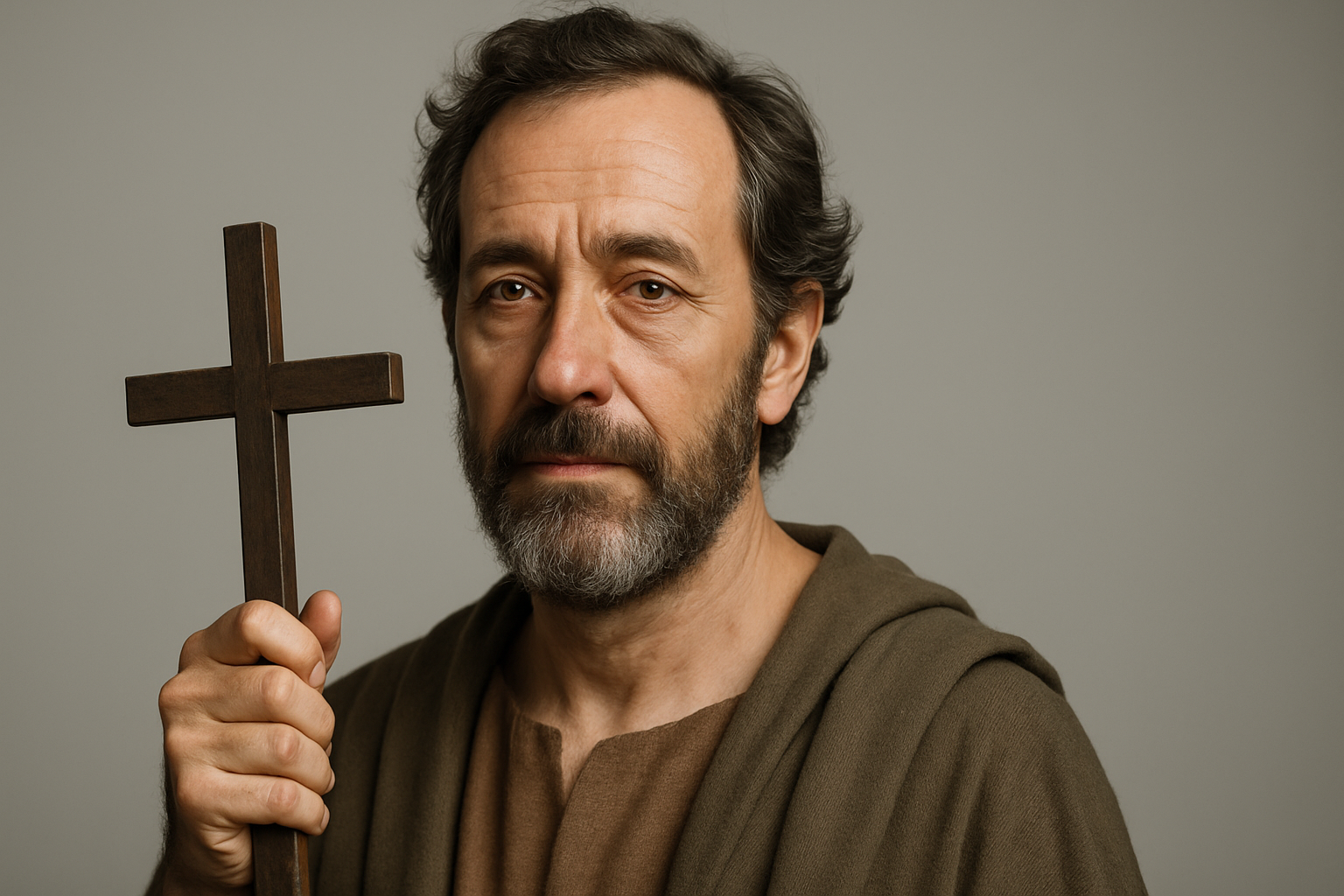
His lasting influence is felt not so much in specific doctrines bearing his name, but in his enduring example for evangelization and genuine seeking. In art, Philip is often depicted holding a cross, sometimes a tall staff topped with a cross, symbolizing his martyrdom and missionary work. He may also be shown with loaves of bread or a basket, referencing his role in the feeding of the five thousand. In some traditions, he is depicted with a serpent, commemorating a legend that he killed a large serpent or dragon in Hierapolis, signifying his triumph over paganism.
His feast day, celebrated with St. James the Less on May 3rd, unites two pillars of the early Church. While James represents the adherence to the Jerusalem tradition, Philip points towards the expansion of the Church to the Gentile world. His legacy reminds us that faith is both personal and communal, requiring both individual encounter and active outreach to the world.
Devotion Today
Devotion to St. Philip the Apostle remains strong, particularly in the Eastern Church and in various parts of the Catholic world. One of the most significant sites associated with him is Hierapolis (modern Pamukkale) in Turkey. For centuries, pilgrims have journeyed there, believing it to be the site of his tomb and martyrdom. Recent archaeological discoveries in the early 21st century have unearthed what is believed to be the tomb of St. Philip near the Hierapolis Martyrium, further intensifying interest and pilgrimage to this ancient city. The Martyrium itself, a unique octagonal structure built over a cave, has long been revered as the place of his death.
Churches and cathedrals bearing his name can be found globally, from the Philippines to Latin America, reflecting his role as a universal apostle. His joint feast day with St. James the Less on May 3rd is a significant occasion for remembrance and celebration, marked by special liturgies and prayers. He is invoked as a patron saint for various professions, including bakers, pastry chefs, and hatters, perhaps connecting to the loaves of bread in the feeding of the five thousand or other traditions. Many individuals named Philip or Philippa also claim him as their patron.
Through prayers, novenas, and the veneration of relics, the faithful continue to seek St. Philip’s intercession, particularly for guidance in sharing the Gospel, for practical wisdom in facing life’s challenges, and for a deeper understanding of God’s presence, much like Philip himself yearned to “see the Father.”
Reflections for Modern Readers
St. Philip’s life, though lived two millennia ago, offers incredibly relevant lessons for contemporary Catholics navigating the complexities of the 21st century. Here are a few actionable takeaways:
- Embrace the “Come and See” approach to Evangelization: Philip didn’t preach a long sermon to Nathanael; he simply invited him to encounter Jesus. In a world often wary of dogma, we can invite friends, family, or even acquaintances to “come and see” Christ through our actions, our communities, or even a simple conversation about faith. For example, instead of debating theology, invite a questioning friend to a service project or a community event where they can experience Christian love firsthand.
- Don’t Be Afraid to Ask Honest Questions: Philip’s earnest question, “Show us the Father,” led to one of Jesus’ most profound teachings. It’s okay, and even healthy, to have doubts, seek deeper understanding, or ask challenging questions about faith. God welcomes our sincerity, and these inquiries can lead to deeper revelations, both for ourselves and for others. If you’re struggling with a particular teaching, research it, talk to a trusted priest or mentor, and pray for clarity.
- Trust God Beyond Your Human Limits: Philip’s practical assessment of the crowd’s hunger, “Eight months’ wages would not buy enough,” highlights our human tendency to rely solely on what we can see and calculate. Jesus’ miracle showed that God’s resources are limitless. When facing overwhelming challenges—whether financial, relational, or spiritual—remember that God can work beyond your perceived limitations. Trust in divine providence, even when the numbers don’t add up.
- Be a Bridge for Others to Christ: Philip served as a bridge, bringing Nathanael to Jesus and later facilitating the encounter between the Greeks and Jesus. We too can be bridges, connecting people to Christ and His Church. This might mean introducing a lonely colleague to your parish community, sharing a hopeful message with a struggling friend, or simply embodying Christian joy and peace in your daily life, making others curious about your source of hope.
Symbols and Their Meaning:
In art and jewelry, St. Philip is commonly recognized by several symbols:
- The Cross or a Tall Staff Topped with a Cross: This is his most frequent emblem, directly symbolizing his martyrdom by crucifixion and his active missionary work spreading the Gospel. In some depictions, it’s a T-shaped (tau) cross, which is also associated with St. Anthony the Great.
- Loaves of Bread or a Basket: These refer to his role in the feeding of the five thousand, specifically when Jesus tested him about how to feed the multitude. It represents his practical nature and the miraculous provision of God.
- A Serpent or Dragon: This symbol derives from traditions that Philip battled and vanquished a large serpent or dragon in Hierapolis, signifying his triumph over pagan idolatry and evil through the power of Christ.
These symbols not only help identify St. Philip but also visually communicate key aspects of his life, his virtues, and his ultimate witness to Christ.
Timeline Summary
- 1st Century AD: Born in Bethsaida, Galilee.
- c. 30-33 AD: Directly called by Jesus with the words “Follow me.”
- c. 30-33 AD: Brings Nathanael (Bartholomew) to Jesus with the invitation “Come and see.”
- c. 31 AD: Is tested by Jesus before the feeding of the five thousand (John 6).
- c. 33 AD: Acts as an intermediary for Greeks seeking Jesus (John 12).
- c. 33 AD: At the Last Supper, asks Jesus to “Show us the Father” (John 14).
- After Pentecost (c. 33 AD): Embarks on missionary journeys, traditionally to Greece, Syria, and Phrygia.
- c. 80 AD: Martyred, traditionally by crucifixion, in Hierapolis, Phrygia (modern Turkey).
- Early 21st Century: Archaeological discoveries in Hierapolis suggest the location of his tomb.
Scripture for Reflection
St. Philip’s interactions with Jesus, recorded primarily in the Gospel of John, offer profound insights into his character and the divine teachings he occasioned:
John 1:43-46 (The Call of Philip and Nathanael):
“The next day Jesus decided to go to Galilee. He found Philip and said to him, ‘Follow me.’ Philip was from Bethsaida, the city of Andrew and Peter. Philip found Nathanael and told him, ‘We have found the one Moses wrote about in the Law, and about whom the prophets also wrote—Jesus of Nazareth, the son of Joseph.’ ‘Nazareth! Can anything good come from there?’ Nathanael asked. ‘Come and see,’ said Philip.”
This passage illustrates Philip’s immediate response to Jesus’ direct call and his spontaneous evangelistic zeal. His simple yet powerful “Come and see” is a timeless invitation for all who seek Christ. It emphasizes that personal encounter is often the most effective way to introduce someone to faith.
John 6:5-7 (The Feeding of the Five Thousand):
“When Jesus looked up and saw a large crowd coming toward him, he said to Philip, ‘Where shall we buy bread for these people to eat?’ He asked this only to test him, for he already had in mind what he was going to do. Philip answered him, ‘Eight months’ wages would not buy enough bread for each one to have a bite!’”
Here, we see Philip’s practical and realistic side, quickly calculating the impossible. Jesus’ test and subsequent miracle highlight the contrast between human limitations and divine power, teaching us to trust in God’s abundance even when our resources seem inadequate.
John 14:8-11 (“Show Us the Father”):
“Philip said, ‘Lord, show us the Father and that will be enough for us.’ Jesus answered, ‘Don’t you know me, Philip, even after I have been among you such a long time? Anyone who has seen me has seen the Father. How can you say, ‘Show us the Father’? Don’t you believe that I am in the Father, and that the Father is in me? The words I say to you I do not speak on my own authority. Rather, it is the Father, living in me, who is doing his work. Believe me when I say that I am in the Father and the Father is in me; or at least believe on the evidence of the works themselves.”
This pivotal exchange demonstrates Philip’s sincere longing for a deeper, more tangible understanding of God, even if his question reveals a nascent comprehension. Jesus’ response offers a profound theological insight into the intimate relationship and unity between the Father and the Son, a foundational truth for all Christians. It encourages us to boldly seek understanding, knowing that God will reveal Himself.
Prayers to St. Philip the Apostle
Prayer to St. Philip for Evangelization
O glorious St. Philip, who, upon hearing the direct call of Jesus, immediately followed Him and in turn brought your friend Nathanael to Him with the simple invitation, “Come and see,” we implore your intercession. Inspire us with your zeal for evangelization and your generous spirit. Help us to recognize Christ in our lives and to courageously share His love and truth with others, especially those who are hesitant or seeking. Guide us to be bridges, connecting souls to the heart of Jesus, so that many may come to know and believe in Him, as Nathanael did. Amen.
Prayer for Deeper Understanding (Inspired by St. Philip)
Heavenly Father, through the intercession of St. Philip the Apostle, who earnestly sought to know You more deeply and asked Your Son, “Show us the Father,” we pray for a greater understanding of Your divine presence in our lives. Illumine our minds and hearts, that we may recognize Jesus as the perfect image of Your love and mercy. When doubts arise or our faith feels weak, grant us the courage to ask questions and to seek truth with sincerity. Help us to see You in Your Son, and through Him, to experience the fullness of Your grace and wisdom. We ask this through Christ our Lord. Amen.