In the vibrant, sometimes volatile, world of the early Christian Church, certain figures shine as beacons of faith and unwavering commitment. Among these luminaries stands St. Polycarp of Smyrna, a man whose life bridges the apostolic age with the era of the Church Fathers. He was a direct disciple of St. John the Apostle, a revered bishop, and ultimately, a martyr whose fidelity to Christ inspired countless generations. This article will explore St. Polycarp’s remarkable journey, from his early life and significant ministries to his profound spiritual legacy, offering insights into his timeless relevance for believers today and inviting readers to reflect on his exemplary witness.
Quick Facts
| Category | Detail |
|---|---|
| Birth | Circa 69 AD, likely in Smyrna (modern-day Izmir, Turkey) |
| Death | Martyred circa 155 AD, Smyrna |
| Feast Day | February 23 (Western Church) |
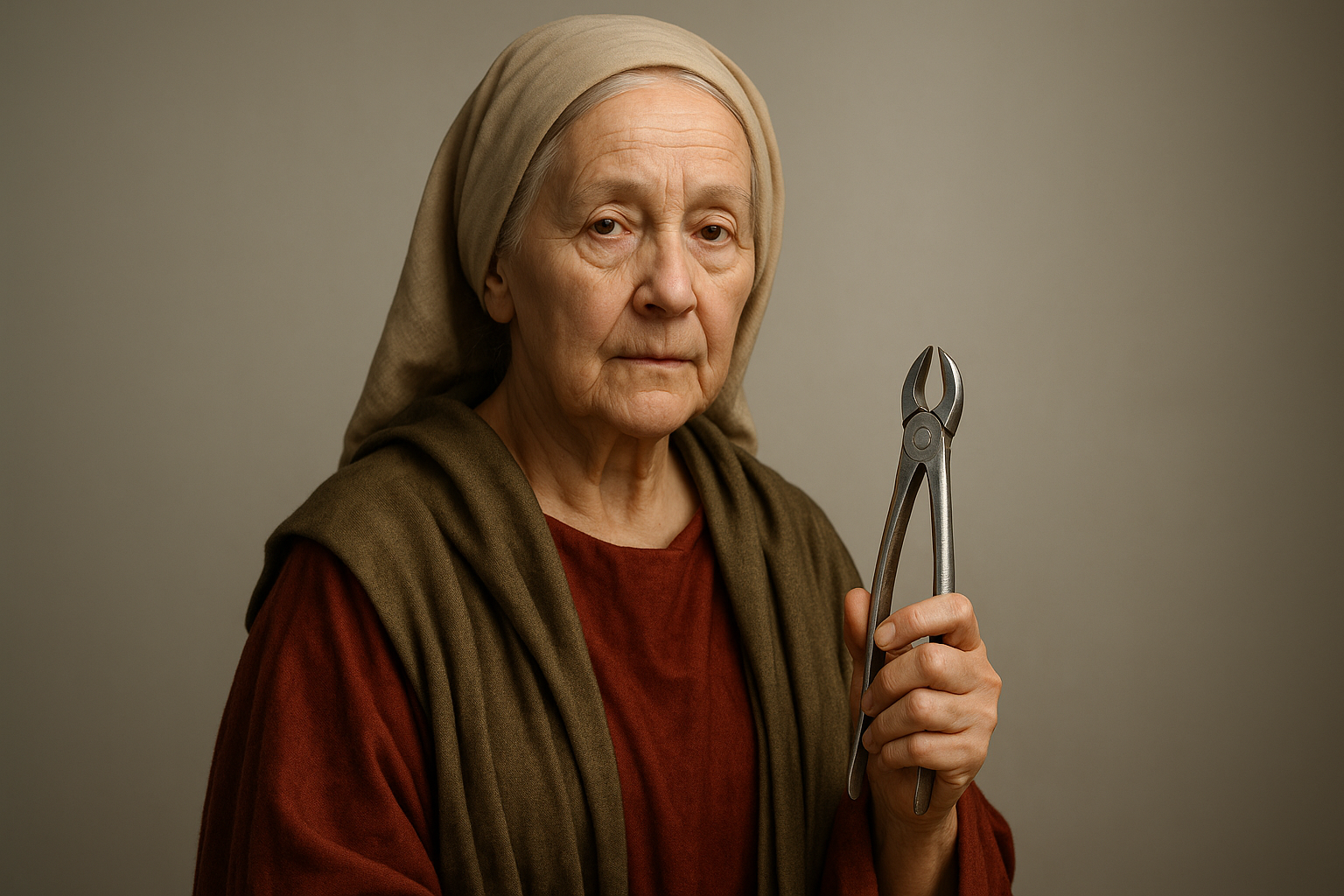
| Patronage | Against earaches, dysentery |
| Canonized | Pre-Congregation (recognized as a saint from early Church history) |
Historical Context & Early Life
To understand St. Polycarp, we must first glimpse the world he inhabited. The 1st and 2nd centuries AD were a pivotal time for both the Roman Empire and the nascent Christian Church. Rome, at its imperial zenith, ruled vast territories with an iron fist, maintaining peace through formidable military might and an extensive network of roads and trade routes. While this Pax Romana facilitated the spread of ideas, including Christianity, it also brought the early Church into direct conflict with Roman religious and political sensibilities.
Christians, with their exclusive worship of one God and refusal to participate in the imperial cult (worshipping the emperor as a deity), were often viewed with suspicion and accused of atheism, disloyalty, and even cannibalism (misinterpretations of the Eucharist). This tension frequently erupted into localized persecutions, creating a dangerous and unpredictable environment for believers.
Polycarp lived in Smyrna, a wealthy and strategically important port city on the Aegean coast of Asia Minor (modern-day Turkey). Smyrna was a bustling commercial hub, a center of Hellenistic culture, and a city deeply devoted to the Roman imperial cult, featuring grand temples to Roman gods and emperors. Within this cosmopolitan and pagan environment, a thriving Christian community had taken root, mentioned in the Book of Revelation (Revelation 2:8-11) as one of the seven churches of Asia, lauded for its faithfulness despite suffering.
Details about Polycarp’s family background are sparse, but tradition holds that he was born around 69 AD. Crucially, he was said to have been converted to Christianity at a young age and instructed by none other than St. John the Apostle himself. This direct connection to an eyewitness of Christ’s life, death, and resurrection positioned Polycarp as an invaluable link between the foundational teachings of Jesus and the burgeoning Church. He wasn’t just a hearer of stories; he was a recipient of living tradition, passed down directly from one of the Lord’s most beloved disciples. This unique position would shape his entire ministry and lend immense authority to his teachings in an era when the Church was still defining its identity and combating early heresies.
Calling & Key Milestones
A Disciple of the Apostles
Polycarp’s spiritual formation under St. John the Apostle was arguably the most significant influence on his life. He absorbed the apostolic teaching firsthand, learning about Christ’s miracles, parables, and sacrificial love directly from someone who had walked with Jesus. This direct lineage made him a living bridge to the very origins of Christianity, a point he would later emphasize in his debates against various Gnostic teachers who sought to introduce novel and often distorted interpretations of Christian truth. He reportedly associated with other apostolic figures as well, though St. John’s mentorship remained paramount. This personal connection imbued his preaching and leadership with an undeniable authority and authenticity, safeguarding the purity of the faith for future generations.
Bishop of Smyrna
By the turn of the 2nd century, Polycarp was established as the Bishop of Smyrna, a position of immense responsibility and spiritual authority. As bishop, he was tasked with leading the Christian community, overseeing liturgical worship, providing pastoral care, and, crucially, defending the apostolic faith against internal dissent and external pressures. His leadership was marked by a steadfast commitment to the truth he had received. He was known for his wisdom, patience, and profound love for Christ and His Church. During his episcopacy, Smyrna continued to grow as a vital center of Christianity, and Polycarp’s reputation as a true shepherd spread throughout the Roman world.
The Letter to the Philippians
One of Polycarp’s most enduring contributions is his “Letter to the Philippians,” written around 110-140 AD. This epistle offers a precious glimpse into the life and concerns of the early Church. In it, Polycarp encourages the Philippian Christians to remain steadfast in faith, to practice virtues like humility, charity, and patience, and to reject false teachings. He echoes many themes found in the Pauline epistles, emphasizing the importance of sound doctrine and moral living. The letter is a powerful witness to the continuity of Christian teaching from the apostles onward and highlights Polycarp’s pastoral heart and theological clarity. It reminds us that even in ancient times, Christian leaders sought to guide and affirm their flocks through challenging periods.
Meeting with Pope Anicetus
Around 150-155 AD, Polycarp made a significant journey to Rome to meet with Pope Anicetus. The primary purpose of this visit was to discuss the dating of Easter, a pastoral issue that created some disagreement between Eastern and Western churches. While they couldn’t reach a universal agreement on the specific date, their meeting was a powerful demonstration of Christian unity and mutual respect. Anicetus, acknowledging Polycarp’s unique apostolic link, even invited him to celebrate the Eucharist in the Roman assembly. This gesture underscored the profound esteem in which Polycarp was held and demonstrated the early Church’s commitment to maintaining communion despite differing practices on non-essential matters. It’s a beautiful example of how dialogue and respect can foster unity even amid diversity.
The Martyrdom of Polycarp
The crown of Polycarp’s life came with his martyrdom, one of the earliest and most detailed accounts of Christian sacrifice outside of the New Testament. Around 155 AD, during a local persecution in Smyrna, Polycarp, then an elderly man of 86 years, was sought out by Roman authorities. Though urged by friends to flee, he initially withdrew to a nearby farm for prayer. When soldiers finally apprehended him, he calmly offered them food and requested an hour for prayer, which they granted. His composure, even in the face of death, was remarkable.
Brought before the Roman proconsul, Statius Quadratus, Polycarp was pressured to renounce Christ, to swear by the emperor’s genius, and to say “Away with the atheists!” (referring to the Christians). His response is legendary: “Eighty-six years I have served Him, and He has done me no wrong. How can I blaspheme my King and my Savior?” Despite threats of wild beasts and being burned alive, Polycarp remained resolute. He declared, “You threaten me with fire that burns for a season and after a little while is quenched; but you are ignorant of the fire of the coming judgment and eternal punishment that is reserved for the ungodly. But why do you delay? Bring forth what you will.”
He was condemned to be burned at the stake. As the flames rose, a miraculous sight was reported: the fire formed an arch around him, not consuming his body, but glowing like gold. Seeing that the fire would not take his life, an executioner was ordered to stab him with a dagger. His death, recorded in “The Martyrdom of Polycarp,” became a profound testament to Christian courage and fidelity, inspiring countless believers through the centuries to stand firm in their faith, even unto death.
Spiritual Legacy & Theological Themes
St. Polycarp’s spiritual legacy is profound, touching upon many core virtues and theological themes that remain central to Catholic teaching. His life exemplifies:
- Apostolic Fidelity: Polycarp stands as a living testament to the unbroken chain of apostolic succession. Having learned directly from St. John, he faithfully transmitted the teachings of Christ without alteration. This emphasizes the importance of tradition – the living transmission of the Gospel through the Church, guided by the Holy Spirit – as a reliable source of divine truth, alongside Sacred Scripture.
- Courage and Steadfastness in Suffering: His martyrdom is a powerful witness to unwavering faith in the face of persecution. Polycarp’s calm demeanor, his refusal to deny Christ, and his ultimate embrace of death for his beliefs exemplify Christian fortitude. This aligns with scriptural calls to endure trials (James 1:12; Romans 5:3-5) and to be faithful even unto death (Revelation 2:10). His witness reminds us that true faith is tested and often refined through tribulation.
- Pastoral Care and Leadership: As Bishop of Smyrna, Polycarp demonstrated exemplary leadership. His “Letter to the Philippians” reveals his deep concern for his flock, his commitment to sound doctrine, and his gentle guidance in matters of faith and morals. He served as a model for bishops throughout history, emphasizing the shepherd’s duty to protect and nourish the sheep entrusted to his care.
- Unity in the Church: His journey to Rome to discuss the Easter controversy with Pope Anicetus, and their subsequent agreement to disagree respectfully while maintaining communion, highlights the early Church’s profound commitment to unity. It teaches us the importance of dialogue and mutual respect even when differences arise, prioritizing the bonds of faith over varied practices.
His lasting influence extends to the rich tradition of martyrology, providing one of the earliest and most detailed accounts of Christian martyrdom. This account helped to solidify the concept of the martyr as a heroic witness to Christ, whose blood becomes the seed of the Church. He is also considered an Apostolic Father, a designation given to early Christian writers who were either personally acquainted with the Apostles or their direct disciples, and whose writings are crucial for understanding the earliest expressions of Christian faith and practice.
Devotion Today
Devotion to St. Polycarp, while perhaps not as widespread as to some other saints, remains strong, particularly in the Eastern Church and among those who deeply appreciate early Christian history. His feast day is celebrated annually, offering an opportunity to remember his courageous witness and to reflect on his legacy.
Although specific large-scale shrines or pilgrimages dedicated solely to St. Polycarp are less common in the West compared to major Marian or apostolic sites, his memory is honored in churches worldwide. Many churches bear his name, especially in areas with historical connections to the early Christian communities of Asia Minor. His relics are said to be preserved in various locations, including some in Rome, venerated by the faithful.
In Smyrna, modern-day Izmir, Turkey, a Catholic church dedicated to St. Polycarp stands as a reminder of the ancient Christian presence in the city and his significant role. It is a place where pilgrims can connect with the roots of the faith he helped establish and nourish. His life continues to be studied by scholars and admired by believers who seek inspiration in his unwavering commitment to Christ.
Reflections for Modern Readers
St. Polycarp’s life, though lived nearly two millennia ago, offers profound and actionable lessons for contemporary believers:
- Stand Firm in Your Beliefs: In a world that often pressures us to conform or compromise our values, Polycarp’s unyielding fidelity to Christ is a powerful call to courage. He didn’t waver when faced with death, reminding us to examine the strength of our own convictions. Modern Example: When a popular cultural trend contradicts Christian teaching, ask yourself, “Am I willing to stand for truth, even if it means being unpopular or ridiculed, just as Polycarp stood firm against the imperial cult?”
- Embrace Your Spiritual Lineage: Polycarp valued his direct connection to St. John. We, too, are connected to a rich spiritual heritage through the Church’s teachings, the Sacraments, and the lives of the saints. Understanding this lineage strengthens our faith and roots us in something ancient and enduring. Modern Example: Take time to learn about the history of the Church, read the writings of the Church Fathers, or explore the lives of saints. See yourself as part of a long, unbroken chain of faith.
- Practice Humble, Steady Leadership: As a bishop, Polycarp led with wisdom and compassion, not power or arrogance. His pastoral letter highlights his gentle guidance. This is a model for all forms of leadership, whether in a family, community, or professional setting. Modern Example: In your leadership role, strive to serve those you lead with patience, clear communication, and a focus on their well-being, rather than personal gain or control.
- Seek Unity, Not Uniformity: His encounter with Pope Anicetus over the Easter date shows that unity does not require everyone to do things exactly the same way. What matters is a shared faith and mutual respect. Modern Example: In discussions with fellow Christians who hold different perspectives on non-essential matters, prioritize love, understanding, and the core truths of the faith over winning an argument.
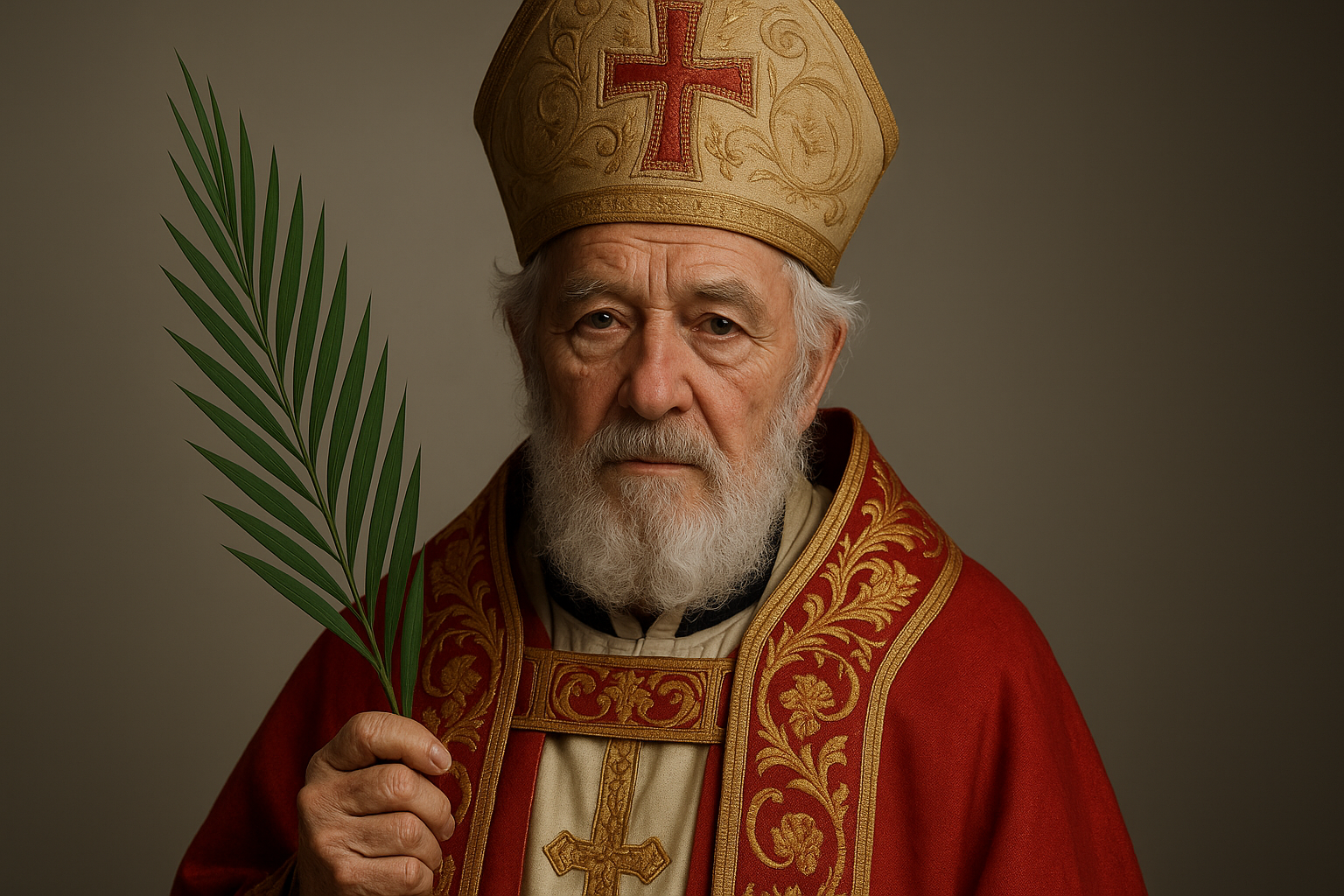
In art and jewelry, St. Polycarp is most commonly depicted as an elderly bishop, often with a white beard, wearing episcopal vestments. His primary symbols relate to his martyrdom:
- A Palm Branch: This is a universal symbol for martyrs, representing victory over death through Christ.
- Flames or a Burning Stake: These directly reference his execution by fire, symbolizing his unwavering faith even when facing a fiery death.
- A Sword or Dagger: Often seen in conjunction with the flames, this represents the final method of his execution, signifying his complete sacrifice.
- A Book or Scroll: This often signifies his role as a bishop and author of the “Letter to the Philippians,” highlighting his wisdom and teaching authority.
These symbols collectively remind us of his courage, his role as a leader, and his ultimate sacrifice for the faith.
Timeline Summary
- Circa 69 AD: Born in Smyrna (modern-day Izmir, Turkey).
- Late 1st Century AD: Converted to Christianity and became a disciple of St. John the Apostle.
- Circa 100 AD: Ordained as Bishop of Smyrna.
- Circa 110-140 AD: Wrote his “Letter to the Philippians.”
- Circa 150-155 AD: Traveled to Rome to meet with Pope Anicetus regarding the Easter controversy.
- Circa 155 AD (February 23): Martyred by being burned at the stake and then stabbed in Smyrna during the reign of Emperor Antoninus Pius.
Scripture for Reflection
St. Polycarp’s life beautifully echoes several scriptural themes, particularly those concerning faithfulness under trial and the enduring power of witness.
Revelation 2:10: “Do not fear what you are about to suffer. Behold, the devil is about to throw some of you into prison, that you may be tested, and for ten days you will have tribulation. Be faithful unto death, and I will give you the crown of life.”
Connection: This passage, addressed to the very church in Smyrna that Polycarp led, perfectly encapsulates his martyrdom. He was faithful unto death, receiving the crown of life. His story is a living illustration of this divine promise and exhortation.
1 Peter 4:12-16: “Beloved, do not be surprised at the fiery trial when it comes upon you to test you, as though something strange were happening to you. But rejoice insofar as you share Christ’s sufferings, that you may also rejoice and be glad when his glory is revealed. If you are insulted for the name of Christ, you are blessed, because the Spirit of glory and of God rests upon you… Yet if anyone suffers as a Christian, let him not be ashamed, but let him glorify God in that name.”
Connection: St. Polycarp endured a “fiery trial” literally and spiritually. His refusal to be ashamed of the name of Christ, even to the point of death, truly glorified God. He exemplifies rejoicing in sharing Christ’s sufferings, knowing that a greater glory awaits.
Prayers to St. Polycarp of Smyrna
A Prayer for Courage and Fidelity:
O glorious St. Polycarp, who for eighty-six years served Christ with unwavering devotion and faithfully defended the apostolic truth, we humbly ask for your intercession. You stood firm against persecution, choosing death over denying your King and Savior. Grant us, through your powerful prayers, the courage to live out our faith boldly in a world that often challenges our convictions. Help us to remain steadfast in the face of trials, to cherish the sacred traditions of the Church, and to witness to Christ’s love and truth with the same fidelity you displayed. May our lives, like yours, bring glory to God, and may we persevere in faith until we too receive the crown of life. Through Christ our Lord. Amen.
Prayer for the Preservation of Apostolic Faith:
St. Polycarp, disciple of St. John the Apostle and guardian of the early Church’s faith, we honor your memory and seek your aid. You meticulously preserved the teachings handed down from the apostles, confronting error and strengthening the faithful. Intercede for the Church today, that we may always uphold the purity of the Gospel, remain true to the apostolic succession, and discern truth from falsehood in all matters of faith and morals. Protect us from heresy and division, and inspire all bishops and priests to lead with your wisdom and pastoral heart. Amen.