In the annals of Catholic saints, some stories shine with extraordinary courage and an unwavering commitment to faith, even in the face of extreme suffering. St. Raymond Nonnatus is one such figure, a man whose very birth was miraculous and whose life became a testament to selfless love and perseverance. Born in 13th-century Spain, Raymond’s journey as a Mercedarian friar took him into the perilous world of ransoming Christian captives from North African Moors, a mission that tested his body and spirit to their limits. This article will delve into his remarkable early life, his radical vocation, the key milestones of his ministry, and the enduring spiritual legacy he leaves for modern believers, exploring how his virtues and patronage continue to inspire devotion today.
Quick Facts
| Detail | Information |
|---|---|
| Birth | c. 1200, Portell, Diocese of Urgell, Catalonia, Spain |
| Death | August 31, 1240, Cardona, Catalonia, Spain |
| Feast Day | August 31 |
| Patronage | Pregnant women, midwives, childbirth, unborn babies, people falsely accused, silence |
| Canonized | 1657 by Pope Alexander VII |
Historical Context & Early Life
To understand the life of St. Raymond Nonnatus, one must first grasp the turbulent backdrop of 13th-century Spain and the wider Mediterranean world. This was an era defined by the “Reconquista,” the centuries-long effort by Christian kingdoms to reclaim the Iberian Peninsula from Muslim rule. While significant progress had been made, particularly with the Christian victory at Las Navas de Tolosa in 1212, portions of Spain remained under Moorish control, and the seas were rife with piracy. Moorish raiders frequently captured Christian travelers, merchants, and coastal inhabitants, dragging them into slavery in North Africa. These captives faced harsh conditions, forced labor, and the constant threat of apostasy.
Amidst this volatile environment, new religious orders emerged, not just for prayer and contemplation, but for active service to those suffering under the yoke of war and oppression. One such order, founded in Barcelona in 1218, was the Mercedarians, or the Order of the Blessed Virgin Mary of Mercy, established by St. Peter Nolasco. Their specific charism—their unique spiritual mission—was to ransom Christian captives from the Saracens (as Muslims were then often called). This mission often involved traveling to dangerous lands, negotiating with captors, and sometimes even offering themselves as hostages in exchange for the freedom of others.
It was into this world that Raymond was born, around the year 1200, in the small village of Portell, located in the Diocese of Urgell in Catalonia. His birth itself was extraordinary and gave him the surname “Nonnatus,” which in Latin means “not born.” Raymond’s mother tragically died in labor, and it was only through the intervention of a local nobleman, who performed a rudimentary Cesarean section with a dagger, that Raymond was saved. This miraculous entry into the world would foreshadow a life marked by divine intervention and an intimate connection to the themes of life, death, and selfless sacrifice. His father, a wealthy gentleman, grieved the loss of his wife but raised Raymond with care. From a young age, Raymond showed a deep piety and a preference for spiritual pursuits over the worldly path his father envisioned for him, which involved managing the family estates.
While his father wanted him to pursue secular education and manage their property, Raymond felt a stronger pull towards God. He spent his youth as a shepherd, tending flocks in the fields. It was during these solitary hours that he frequently visited a nearby hermitage dedicated to the Blessed Mother, spending time in prayer and contemplation. This early devotion cultivated in him a profound spiritual sensitivity and a growing desire to dedicate his life entirely to God’s service, rather than succumbing to the pressures of wealth and worldly success. His family observed his deep piety, and eventually, despite initial resistance from his father, Raymond was permitted to follow his calling.
Calling & Key Milestones
Raymond’s profound spiritual inclinations eventually led him to a momentous decision: to join the newly formed Order of the Blessed Virgin Mary of Mercy, the Mercedarians. This choice was not merely a step into religious life but an embrace of a vocation that demanded extreme courage, unwavering faith, and a willingness to face the gravest dangers for the sake of others.
Joining the Mercedarians
Around 1218, at the age of eighteen, Raymond entered the Mercedarian Order, where he was mentored by its founder, St. Peter Nolasco. The Mercedarians’ unique mission resonated deeply with Raymond’s compassionate heart and his desire to serve the marginalized. He underwent his formation in Barcelona, immersing himself in the spiritual disciplines and practical training required for their perilous work. He took solemn vows, including a special fourth vow unique to the Mercedarians: to offer himself as a hostage in place of a captive if necessary, even unto death. This vow was not merely symbolic; it was a commitment that many Mercedarians, including Raymond, would be called upon to fulfill.
The Ministry of Ransom in North Africa
Raymond’s initial missions as a Mercedarian friar took him to North Africa, primarily to Algiers, a major hub for the enslavement of Christians. His task was to negotiate with Moorish captors for the release of their Christian prisoners. This was an incredibly dangerous endeavor, requiring diplomatic skill, courage, and often large sums of money. Raymond successfully ransomed many captives, often draining the Order’s coffers and risking his own safety in hostile territories. He would preach the Gospel to the captives, strengthening their faith, and even to the Moors, despite the severe prohibitions against such evangelism. His compassion and unwavering resolve earned him respect even from some of his adversaries.
The Ultimate Sacrifice: Hostage and Mutilation
One of the most defining and dramatic episodes of St. Raymond Nonnatus’s life occurred when he ran out of money during a mission in Algiers. Having exhausted all funds for ransom, and seeing that there were still many Christians suffering in chains, Raymond remembered his fourth vow. He offered himself as a hostage to the Moorish leaders in exchange for the freedom of several Christians. This act of radical self-sacrifice was accepted, and Raymond took the place of the captives, enduring the harsh conditions of imprisonment.
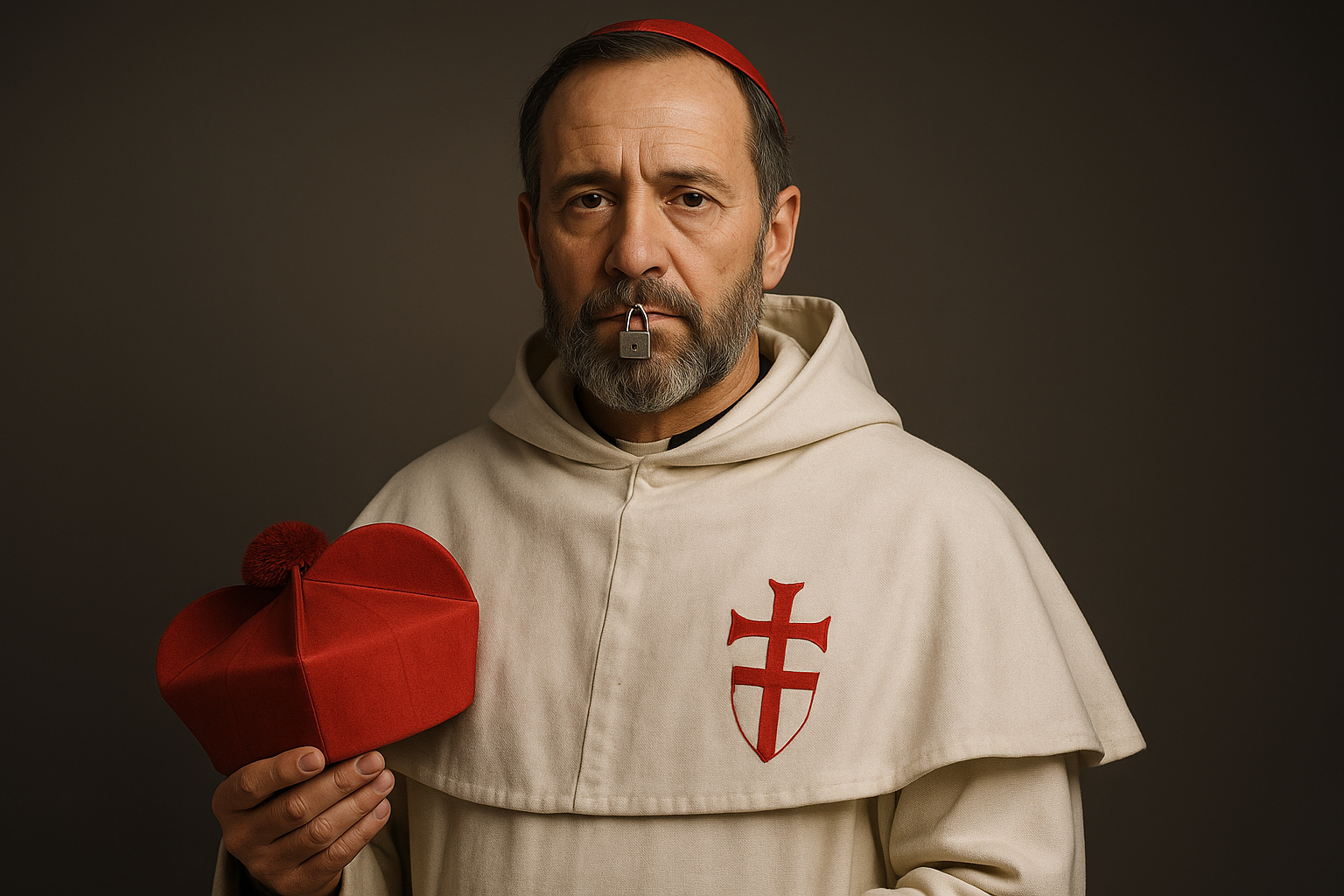
While imprisoned, Raymond continued to preach the Christian faith, not only to his fellow captives, strengthening their resolve, but also to his Muslim guards and others who came into contact with him. His impassioned words and unwavering conviction led several Moors to convert to Christianity. This enraged his captors, who could not tolerate such evangelism. To silence him, they subjected him to a gruesome punishment: his lips were pierced with a hot iron, and a padlock was passed through the holes, effectively sealing his mouth shut. He was allowed to speak only when given permission, typically when he was given food. This terrible ordeal, which he endured for eight months, became a powerful symbol of his unwavering commitment to proclaiming the truth, even when physically silenced, and his readiness to suffer for Christ.
Return to Spain and Cardinalate
Eventually, St. Peter Nolasco himself, having raised sufficient funds, journeyed to Algiers and successfully negotiated Raymond’s release. Raymond returned to Spain, weakened but spiritually triumphant. His heroic deeds and his incredible suffering for the faith quickly became known throughout the Christian world. In recognition of his extraordinary virtues and his dedication to the Church, Pope Gregory IX appointed Raymond a cardinal in 1239, an honor that brought him great surprise and humility. Despite his new dignity, Raymond remained a simple Mercedarian friar, never abandoning his humble habit or his commitment to service.
Death and Veneration
Shortly after his elevation to cardinal, Raymond was summoned by Pope Gregory IX to Rome. Despite his frail health, he embarked on the journey. However, he fell gravely ill on the way and died in the castle of Cardona, near Barcelona, on August 31, 1240, at the age of forty. Legend says that his funeral was hotly contested by the various towns that wished to claim his holy remains, but a miraculous sign—a blind man whose sight was restored upon touching Raymond’s coffin—indicated that he should be buried in the small hermitage of St. Nicholas, where he had often prayed as a shepherd boy. His tomb quickly became a place of pilgrimage, and countless miracles were attributed to his intercession, solidifying his reputation as a powerful saint.
Spiritual Legacy & Theological Themes
St. Raymond Nonnatus’s life embodies several profound spiritual virtues and theological themes that continue to resonate within the Catholic Church. His legacy is one of radical self-sacrifice, courageous witness, and an unwavering trust in divine providence.
Central to his spiritual example is the virtue of charity, specifically as exemplified by his fourth vow to offer himself as a hostage. This act aligns perfectly with Christ’s teaching in John 15:13, “Greater love has no one than this, that someone lay down his life for his friends.” Raymond literally lived this out, not only risking his life but willingly entering into captivity for the freedom of others. This goes beyond mere philanthropy; it is an active participation in Christ’s own sacrificial love for humanity.
His unwavering commitment to preaching the Gospel, even when it led to physical mutilation and silencing, highlights the virtue of courage and fidelity to truth. Raymond understood that the spiritual freedom of individuals was paramount. Even with his lips sealed by a padlock, his suffering body became a powerful sermon, a visible sign of his conviction and trust in God. This reflects the early Church martyrs who bore witness to Christ through their suffering, echoing Romans 8:35-39, which speaks of nothing separating us from the love of Christ.
The circumstances of his birth also underscore a profound theological theme: the sanctity of life. Born through an emergency procedure after his mother’s death, Raymond’s very existence was a testament to the value of every life, even in the most challenging circumstances. This theme is why he is revered as a patron of pregnant women, midwives, and unborn babies, connecting his unique origin to the miracle of birth and the sacredness of human life from conception.
Furthermore, Raymond’s life teaches us about humility and detachment from worldly honors. Despite being made a cardinal, he remained a simple friar, choosing to wear his humble habit and eschewing the pomp and prestige often associated with high ecclesiastical office. This demonstrates a deep understanding that true honor comes from service to God and others, not from earthly titles or positions.
His lasting influence is felt primarily in devotion, particularly concerning expectant mothers and those who face unjust accusations or are silenced. His story inspires empathy for prisoners and those suffering for their faith. Though not directly influencing liturgy or doctrine in a formal way, his powerful example reinforced the Church’s teaching on radical charity and the dignity of human life, becoming a practical illustration of the Gospel in action. In art, his image often serves as a reminder of the power of witness and the enduring strength found in silent suffering for a greater cause.
Devotion Today
St. Raymond Nonnatus continues to be a widely revered saint, particularly among those facing specific challenges related to his unique life story. His patronage has fostered a vibrant devotion that manifests in various ways across the globe.
He is perhaps most famously invoked as the patron saint of pregnant women, midwives, childbirth, and unborn babies. This patronage stems directly from his miraculous birth via a rudimentary Cesarean section after his mother’s death. Expectant mothers often pray to St. Raymond for a safe delivery and for the health of their unborn child. Many women wear medals depicting him or keep his image during their pregnancy as a source of comfort and intercession.
Beyond his connection to childbirth, St. Raymond is also sought as a protector of those who are falsely accused or those who are silenced or persecuted for speaking the truth. The harrowing account of his lips being padlocked shut while he was imprisoned by the Moors makes him a powerful intercessor for anyone whose voice has been suppressed or who faces injustice because of their beliefs. People pray to him for courage to speak up or for justice in situations where they feel unheard.
While there isn’t one singular, massive shrine dedicated to St. Raymond Nonnatus that rivals those of some other saints, his tomb in the hermitage of St. Nicholas in Cardona, Spain, remains a place of pilgrimage. Many local churches and hospitals, particularly in Spanish-speaking countries and communities with strong Hispanic roots, bear his name or feature his image. In these communities, annual feast day celebrations on August 31 often include special Masses for expectant mothers, blessings of babies, and prayers for those in difficult circumstances.
Devotion to St. Raymond Nonnatus is also often expressed through novenas and specific prayers. A novena, which is a nine-day period of prayer, is commonly recited by those seeking his intercession for a safe pregnancy, successful childbirth, or for justice in personal or legal battles. His story, emphasizing sacrificial love and unwavering faith, resonates deeply with those seeking strength and hope in challenging times.
Reflections for Modern Readers
St. Raymond Nonnatus, though living in a vastly different time, offers profound “life lessons” that remain remarkably relevant for us in the 21st century. His life story challenges us to consider our own priorities and the extent of our commitment to faith and charity.
- Embrace Radical Self-Sacrifice: Raymond’s willingness to become a hostage for the freedom of others is a powerful call to radical self-sacrifice. In a world often driven by self-interest, his example reminds us to look beyond our own needs and genuinely seek the good of others, even when it demands personal cost. Think of modern-day volunteers who put themselves in harm’s way to deliver aid during natural disasters, or those who dedicate their lives to serving the impoverished without seeking recognition.
- Courage to Speak Truth, Even When Silenced: Despite being physically silenced by a padlock, Raymond continued to preach through his actions and his unwavering spirit. This teaches us the importance of standing firm in our convictions and speaking truth, even when it’s unpopular or comes with personal risk. It’s relevant for whistleblowers exposing injustice, activists advocating for human rights, or simply individuals who refuse to compromise their moral integrity in the face of pressure.
- Trust in Divine Providence Amidst Adversity: Raymond faced extreme suffering, imprisonment, and torture, yet he never lost faith. His story is a testament to trusting in God’s plan, even when circumstances seem dire and beyond our control. This is a lesson for anyone facing severe illness, unemployment, or personal crisis – to hold onto hope and believe that even in suffering, God can work for good.
- The Sanctity of Every Human Life: His miraculous birth established his unique connection to life’s beginnings. For modern readers, his patronage reminds us of the profound value of every human life from conception to natural death. This is particularly relevant in contemporary discussions about bioethics, abortion, and the care of the vulnerable, urging us to uphold and protect life in all its stages.
- Humility in Service: Raymond became a cardinal but maintained his humble lifestyle as a friar. His humility reminds us that true influence and worth come not from titles or worldly recognition, but from genuine service and a heart dedicated to God. This applies to leaders in any field – the most effective often prioritize service over status and lead with integrity and humility.
In art and jewelry, St. Raymond Nonnatus is often depicted with specific symbols that tell his story:
- A padlock on his lips: This is perhaps his most distinctive and poignant symbol. It represents his silencing by the Moors to prevent him from preaching and symbolizes his courageous witness and enduring faith even in forced silence.
- A cardinal’s hat or vestments: This signifies his elevation to the cardinalate by Pope Gregory IX, though he is often shown wearing his simple Mercedarian habit underneath or alongside it, emphasizing his humility.
- Mercedarian habit: He is typically shown in the white habit of the Order of Mercy, often with their distinctive emblem (a shield with the four bars of Aragon and the cross of Barcelona). This identifies him with his religious order and its mission to ransom captives.
- A palm branch: A traditional symbol of martyrdom or great suffering endured for the faith, which perfectly encapsulates his ordeal.
- A purse or bags of coins: These represent the funds he carried to ransom Christian captives, highlighting his primary ministry.
- A baby or pregnant woman: Less common in historical art, but in modern devotional items, he is sometimes shown alongside a baby or a pregnant woman to represent his patronage of safe childbirth and unborn children.
These symbols not only visually narrate his remarkable life but also serve as powerful reminders of the virtues he exemplified and the challenges he overcame, encouraging modern believers to emulate his fidelity and courage.
Timeline Summary
- c. 1200: Born in Portell, Catalonia, Spain, via emergency Cesarean section after his mother’s death.
- Early Life: Works as a shepherd; develops a deep spiritual life and devotion to the Blessed Mother.
- c. 1218: Joins the Order of the Blessed Virgin Mary of Mercy (Mercedarians) in Barcelona.
- Ministry in North Africa: Undertakes missions to Algiers to ransom Christian captives from the Moors.
- Imprisonment and Mutilation: Offers himself as a hostage; has his lips pierced and padlocked to prevent him from preaching the Gospel.
- 1239: Ransomed and returns to Spain; appointed Cardinal by Pope Gregory IX.
- August 31, 1240: Dies in Cardona, Spain, while en route to Rome to meet the Pope.
- 1657: Canonized as a saint by Pope Alexander VII.
Scripture for Reflection
The life of St. Raymond Nonnatus resonates with several powerful scriptural themes, particularly those concerning radical love, suffering for justice, and the sanctity of life.
John 15:13: “Greater love has no one than this, that someone lay down his life for his friends.”
This passage perfectly encapsulates Raymond’s fourth vow and his decision to offer himself as a hostage for the freedom of others. It speaks to the ultimate act of selfless love, mirroring Christ’s own sacrifice, and challenges us to consider how we might extend such sacrificial love in our own lives.
Matthew 25:35-36, 40: “For I was hungry and you gave me food, I was thirsty and you gave me drink, a stranger and you welcomed me, naked and you clothed me, sick and you visited me, in prison and you came to me… Truly, I say to you, as you did it to one of the least of these my brothers, you did it to me.”
Raymond’s ministry was directly aimed at those in prison, those enslaved and suffering. His work embodies Christ’s call to mercy and service to “the least of these,” reminding us that serving the marginalized is serving Christ himself.
Philippians 2:5-8: “Have this mind among yourselves, which is yours in Christ Jesus, who, though he was in the form of God, did not count equality with God a thing to be grasped, but emptied himself, by taking the form of a servant… He humbled himself by becoming obedient to the point of death, even death on a cross.”
This passage reflects Raymond’s profound humility and his willingness to “empty himself” for the sake of others, enduring suffering and humiliation, much as Christ did. His acceptance of the cardinalate while retaining his simple habit also speaks to this humility.
Prayers to St. Raymond Nonnatus
Here are popular prayers for St. Raymond Nonnatus, often recited by those seeking his intercession:
Prayer for a Safe Delivery
O glorious St. Raymond, heavenly patron of the unborn and of all who yearn for the blessing of children, we humbly implore your powerful intercession. You, whose birth was miraculous and whose life was a testament to God’s providence, look with compassion upon us.
We especially pray for all expectant mothers, that through your prayers, they may experience a safe and healthy pregnancy and a joyous delivery, bringing forth new life into the world. Protect them from all harm, ease their anxieties, and bless them with strength and peace.
For those who long for the gift of a child, intercede, O St. Raymond, that God may open their wombs and grant them the fulfillment of their desires, according to His holy will. Bless all midwives and healthcare professionals, that they may assist in the miracle of birth with skill and compassion.
Through your intercession, may all children be born healthy and strong, dedicated to God, and raised in faith and love. Amen.
Prayer to St. Raymond Nonnatus for Protection and Justice
Holy St. Raymond Nonnatus, whose lips were sealed by a padlock for courageously proclaiming the truth of Christ, we seek your powerful intercession. You endured unjust imprisonment and suffering, yet remained steadfast in your faith. We humbly ask for your prayers for all who are falsely accused, unjustly imprisoned, or whose voices are silenced for speaking the truth.
Grant us the courage to stand firm in our convictions, even in the face of adversity. Protect us from those who seek to harm or oppress us, and intercede for justice to prevail in all situations. Help us to proclaim the Gospel through our lives, even when words fail. May we, like you, trust fully in God’s providence and mercy. Amen.