
Step into the pages of history and faith, and you’ll encounter figures whose lives continue to resonate through the ages. Among them stands St. James the Greater, one of Jesus Christ’s most trusted apostles and the first to lay down his life for the Gospel. More than just a name in the Bible, James was a fisherman transformed into a fervent evangelist, a man whose zeal earned him a special nickname from Jesus, and whose journey of faith has inspired countless pilgrims for centuries. This article will explore his dramatic call, his pivotal role in the early Church, the enduring traditions surrounding his life and mission, and the profound spiritual lessons his story offers us today, culminating in the vibrant devotion that continues to thrive in his honor around the world.
Quick Facts
| Category | Detail |
|---|---|
| Birth | Likely Bethsaida or Capernaum, Galilee (early 1st century AD) |
| Death | Jerusalem, Judea (c. AD 44), beheaded by order of Herod Agrippa I |
| Feast Day | July 25 |
| Patronage | Pilgrims, Spain, Chile, Guatemala, Nicaragua, rheumatics, arthritis, veterinarians, equestrians, apothecaries, hat makers |
| Canonized | Pre-Congregation (venerated as an Apostle and Martyr from the earliest days of the Church) |
Historical Context & Early Life
To understand St. James the Greater, we must first set the scene of his world: Galilee in the early first century AD. This was a land under Roman occupation, yet deeply rooted in Jewish tradition. The air was thick with expectation for a Messiah, a savior who would deliver Israel from its oppressors. Galilee itself was a bustling region, a crossroads of cultures, but its economy heavily relied on the fertile Sea of Galilee (also known as Lake Gennesaret or Sea of Tiberias), a hub for fishing and trade.
James was born into this vibrant setting, the son of a man named Zebedee and a woman traditionally identified as Salome. His family was not poor; they owned fishing boats and employed hired hands, suggesting a degree of prosperity. This is important because it tells us that when Jesus called James and his brother John, they weren’t desperate men seeking an escape from poverty. They were leaving a stable, successful family business to follow a radical itinerant preacher.
His brother was St. John the Apostle, known later as “the Beloved Disciple.” This sibling relationship, often marked by both competition and deep loyalty, played a significant role in their shared journey with Jesus. Growing up, James would have been immersed in Jewish customs, observing the Sabbath, attending synagogue, and learning the Scriptures. His formative years would have instilled in him a strong sense of his Jewish identity and a foundational understanding of the prophecies concerning the coming Messiah. This background provided a rich soil for the seeds of the Gospel to take root when Jesus arrived on the scene.
Calling & Key Milestones
St. James’s life took a dramatic turn when he encountered Jesus. His story is one of immediate, radical obedience and unwavering commitment, even to the point of martyrdom.
The Call by the Sea
The Gospels tell us that Jesus began his ministry by the Sea of Galilee, calling his first disciples from among the fishermen. James and his brother John were among them. As recounted in Mark 1:19-20, Jesus “saw James the son of Zebedee and John his brother, who were in their boat mending the nets. Immediately he called them, and they left their father Zebedee in the boat with the hired servants and followed him.” This moment illustrates James’s decisive character: no hesitation, no looking back, just an immediate response to the divine invitation. They left their livelihood, their family, and their security to embark on an unknown adventure with Jesus.
“Sons of Thunder”
James and John earned a unique nickname from Jesus: “Boanerges,” which means “Sons of Thunder” (Mark 3:17). This moniker hints at their passionate, fervent, and perhaps sometimes impetuous personalities. We see glimpses of this zeal in the Gospels. For instance, when a Samaritan village refused to receive Jesus, James and John asked, “Lord, do you want us to call down fire from heaven to consume them?” (Luke 9:54). Jesus rebuked them, teaching them a lesson in patience and divine love, showing that zeal must be tempered with mercy and understanding. This willingness to stand up for Jesus, even if misguided at times, marked their character.
Part of the Inner Circle
James belonged to the select group of three apostles—Peter, James, and John—who were privileged to witness some of Jesus’s most profound miracles and revelations. They were present at the raising of Jairus’ daughter from the dead (Mark 5:37-43), a private miracle of life-giving power. They ascended Mount Tabor with Jesus to witness the Transfiguration, where Jesus was revealed in his heavenly glory alongside Moses and Elijah (Mark 9:2-8). They were also with Jesus in the Garden of Gethsemane, sharing in his agony during his final hours before his crucifixion (Mark 14:33-42). These intimate moments reveal the deep trust Jesus placed in James, allowing him to experience the very heart of his ministry and messianic identity.
The Request for Glory
The “Sons of Thunder” also showed their human ambition. James and John, perhaps through their mother Salome, approached Jesus with a bold request: “Grant us to sit, one at your right hand and one at your left, in your glory” (Mark 10:37). This request shows their yearning for importance in God’s kingdom, but also their misunderstanding of its true nature. Jesus responded by asking if they could drink the cup he was about to drink and be baptized with the baptism he was undergoing. They confidently replied, “We can.” Jesus affirmed that they would indeed share in his suffering, but that positions of honor were for the Father to grant. This exchange foreshadows James’s ultimate sacrifice.
Missionary Zeal and the Tradition of Spain
After Jesus’s resurrection and ascension, the apostles were empowered by the Holy Spirit at Pentecost to spread the Gospel to all nations. While the Bible does not explicitly detail all of James’s missionary journeys, a strong and ancient tradition holds that he traveled to the Iberian Peninsula, specifically to what is now Spain, to preach the Good News. This tradition is incredibly powerful and forms the bedrock of St. James’s enduring legacy in Spain and throughout the Catholic world. While historical records from that precise period are scarce, the belief that James brought Christianity to the far reaches of the Roman Empire is a testament to the early Church’s mission and the apostles’ dedication.
The First Apostolic Martyr
St. James’s life came to a dramatic and heroic end, making him the first apostle to be martyred. The New Testament book of Acts records this event plainly in Acts 12:1-2: “About that time Herod the king laid violent hands upon some who belonged to the church. He killed James the brother of John with the sword.” This account signifies that James’s reputation as a leader and zealous preacher must have been significant enough to draw the attention of Herod Agrippa I, the Roman client king. His execution by beheading around AD 44 was a stark reminder of the dangers faced by the early Christians and a powerful witness to James’s steadfast faith. He drank the cup of suffering that Jesus had foretold, fulfilling his promise to share in his Lord’s passion.
Spiritual Legacy & Theological Themes
St. James the Greater’s life leaves us with a profound spiritual legacy, rich in theological themes that continue to inspire believers. His story exemplifies core virtues deeply rooted in Scripture and Catholic teaching.
One of his most striking virtues is immediate and radical obedience to God’s call. When Jesus called him, James left everything—his nets, his family, his livelihood—without hesitation. This act echoes the Old Testament calls of prophets like Abraham, who left his homeland, and sets a precedent for all Christians to respond generously when God calls, understanding that true discipleship often requires sacrifice and a willingness to step into the unknown. This theme of “leaving the nets” is a powerful metaphor for shedding worldly attachments to follow Christ more fully.
Another key theme is zeal tempered by divine love. As one of the “Sons of Thunder,” James possessed an ardent passion for Christ and his message. While this zeal sometimes manifested in human impatience or ambition, Jesus gently guided him, teaching him that true authority and power in God’s kingdom come through humble service and suffering, not through worldly status. His transformation from a fiery disciple desiring immediate retribution to a patient, courageous martyr shows his growth in understanding Jesus’s message of self-sacrificial love.
James also embodies unwavering faithfulness unto death. As the first apostle to suffer martyrdom, he demonstrated the ultimate witness to Christ. His death affirms the truth of the Gospel and serves as a powerful reminder that following Jesus can demand everything, even one’s life. This resonates with Christ’s words, “Whoever loses his life for my sake will find it” (Matthew 10:39). His martyrdom is not just an end but a powerful beginning—a seed that inspires countless others to remain steadfast in their faith, even amidst persecution.
His lasting influence on liturgy, devotion, and art is immense. The tradition of his evangelization in Spain led to the development of the Camino de Santiago, or the Way of St. James, one of the most significant Christian pilgrimages in the world. This pilgrimage embodies the spiritual journey of faith, walking in the footsteps of an apostle, seeking spiritual renewal, penance, and encounter with God. The Camino reminds us that our entire life is a pilgrimage towards our heavenly home.
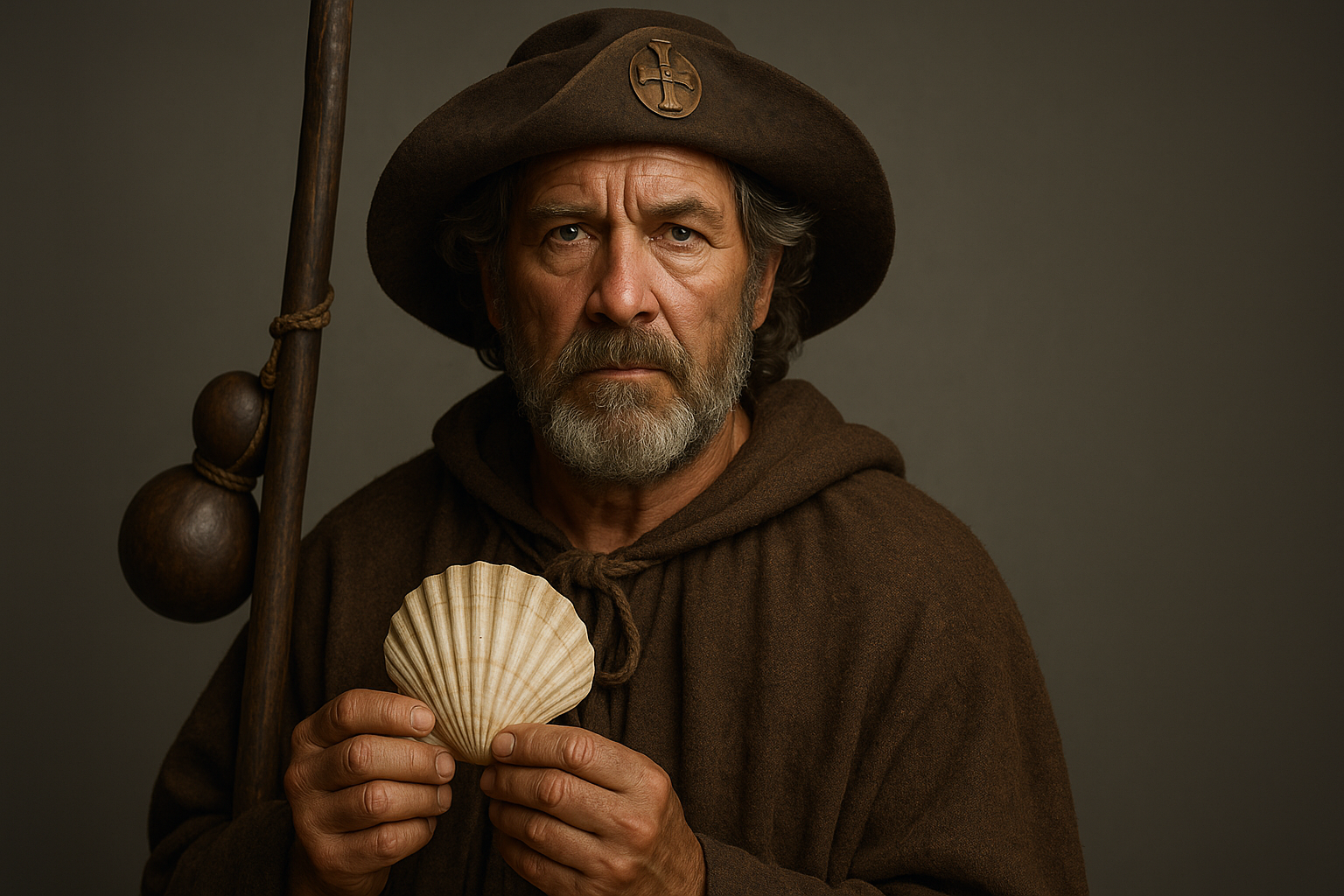
In art, James is often depicted as a pilgrim, complete with a staff, gourd, and a scallop shell, which became his iconic symbol. These images reinforce his role as the patron of pilgrims and the journey of faith. Theologically, his life reinforces the Catholic understanding of the apostolic succession and the importance of apostolic witness. The early Church, rooted in the teachings and sacrifices of apostles like James, spread the Gospel globally, laying the foundation for Christian communities for millennia. His story reminds us that the Church is built on the blood of martyrs and the courage of those who dared to proclaim Christ’s truth.
Devotion Today
Devotion to St. James the Greater remains incredibly vibrant today, centered primarily around his traditional burial site and the famous pilgrimage routes associated with him. The heart of this devotion is the city of Santiago de Compostela in Galicia, Spain. Here, the magnificent Cathedral of Santiago de Compostela stands as the believed resting place of St. James’s relics. For over a millennium, pilgrims have journeyed from across Europe and beyond to venerate the apostle and seek spiritual renewal.
The Camino de Santiago, or “The Way of St. James,” is not just a single path but a network of ancient pilgrim routes leading to Santiago. While the most famous is the French Way, numerous routes crisscross Spain, Portugal, and France, each offering its unique landscapes and challenges. Millions have walked the Camino, not only for religious reasons but also for personal reflection, adventure, and community. The experience often involves introspection, physical endurance, and a deep sense of connection to history and faith. Upon reaching Santiago, pilgrims typically attend a special Mass, visit the tomb of St. James, and symbolically embrace the statue of the saint behind the main altar.
Annual celebrations for St. James the Greater reach their peak on his feast day, July 25. In Santiago de Compostela, this day is a grand festival with solemn Masses, processions, fireworks, and cultural events that draw large crowds of pilgrims and tourists alike. Throughout Spain and in many Catholic communities worldwide, churches named after St. James (like “St. James the Apostle” or “Santiago”) hold special liturgies and celebrations, often marked by traditional dances, music, and local customs.
Beyond the Camino, devotion to St. James is expressed in various ways. Many individuals facing physical ailments, particularly arthritis or rheumatism, invoke his intercession due to his traditional patronage. Fishermen and those involved in maritime professions also look to him as their protector. His image, often depicted as a pilgrim with a staff and scallop shell, adorns countless churches, homes, and religious articles, serving as a constant reminder of his enduring legacy and his call to journey with Christ.
Reflections for Modern Readers
St. James the Greater’s life, though lived two millennia ago, offers timeless wisdom and practical lessons for contemporary believers navigating the complexities of the 21st century. His journey from fisherman to martyr provides a powerful blueprint for Christian living.
- Respond Decisively to God’s Call: James and John “immediately left their nets” when Jesus called them. In our fast-paced world, it’s easy to get caught up in distractions and hesitate when we feel a spiritual prompting. St. James reminds us to cultivate an attitude of readiness and trust. When God asks us to serve, to forgive, to step out in faith, or to re-evaluate our priorities, our most profound response can be immediate obedience. For example, if you feel called to volunteer at your parish or spend more time in prayer, don’t overthink it; take the first step.
- Embrace Zeal, But Temper It with Love: The “Sons of Thunder” were passionate, sometimes to a fault. Jesus, however, patiently taught them about true discipleship, which is rooted in humble service and love, not aggressive power. This teaches us that while enthusiasm for our faith is vital, it must always be expressed with charity, understanding, and respect for others, rather than judgment or condemnation. Imagine encountering someone with different beliefs; instead of immediately trying to “correct” them, seek to understand and build a bridge with love.
- Courageously Witness to Your Faith: St. James was the first apostle to be martyred, demonstrating ultimate faithfulness. While most of us won’t be called to physical martyrdom, we are all called to be courageous witnesses to Christ in our daily lives. This might mean speaking up for justice, standing firm in our values amidst popular opinion, or simply living authentically as a Catholic in a secular world, even when it’s uncomfortable. For instance, defending the sanctity of life or the dignity of marriage in a respectful but unwavering manner.
- Life is a Pilgrimage: The Camino de Santiago, a pilgrimage in St. James’s honor, perfectly symbolizes the Christian life. We are all pilgrims on a journey towards our eternal home, facing challenges, experiencing fellowship, and seeking spiritual growth along the way. Embrace the journey, its ups and downs, and remember that each step is an opportunity to draw closer to God. This could mean intentionally setting aside time for spiritual growth, like reading a spiritual book or taking a silent retreat, to nourish your soul on your life’s pilgrimage.
In art and jewelry, St. James the Greater is commonly recognized by several powerful symbols. The most pervasive is the scallop shell, often depicted on his hat or cloak. This shell has multiple meanings: it was a practical tool for pilgrims to drink water, a symbol of the pilgrimage itself (often given to those who completed the Camino), and a reminder of baptism, washing away sins. Another frequent symbol is a pilgrim’s staff, representing the journey, support, and protection on the Way. He is also sometimes shown holding a sword, commemorating his martyrdom by beheading. Less frequently, a scroll or book might be present, signifying his role as an Apostle and a bearer of the Gospel message. These symbols collectively paint a picture of a man dedicated to his faith, journeying for Christ, and ultimately making the supreme sacrifice.
Timeline Summary
- Early 1st Century AD: Born in Galilee, son of Zebedee and Salome, brother of John.
- c. AD 30: Called by Jesus to be an apostle while fishing by the Sea of Galilee.
- c. AD 30-33: Becomes part of Jesus’s inner circle (Peter, James, John), witnessing key events like the Transfiguration and the Agony in Gethsemane.
- c. AD 33: Present at Pentecost, receiving the Holy Spirit.
- c. AD 33-44: Engages in missionary work (traditional accounts include evangelization in Spain).
- c. AD 44: Martyred by beheading in Jerusalem under Herod Agrippa I, becoming the first apostle to die for his faith.
- 9th Century: Traditional discovery of his relics in Compostela, Spain, leading to the establishment of the pilgrimage route.
Scripture for Reflection
The life of St. James the Greater is beautifully illuminated by several passages from the Gospels and the Acts of the Apostles, revealing his character and mission.
Mark 1:19-20 (The Call of James and John):
“Going on a little farther, he saw James the son of Zebedee and John his brother, who were in their boat mending the nets. Immediately he called them; and they left their father Zebedee in the boat with the hired servants, and followed him.”
This passage highlights James’s immediate and decisive response to Jesus’s call. It speaks to the radical nature of discipleship and the willingness to leave behind worldly comforts and security to follow Christ. For modern readers, it challenges us to consider what “nets” we might need to leave behind to more fully embrace God’s will.
Mark 3:17 (Sons of Thunder):
“James the son of Zebedee and John the brother of James, to whom he gave the name Boanerges, that is, Sons of Thunder.”
This verse gives us insight into James’s fiery and zealous personality. While Jesus later refined this zeal, the nickname itself points to a passionate spirit. It reminds us that God calls people with diverse personalities, and even our strong emotions can be sanctified and used for His glory when channeled through love and humility.
Acts 12:1-2 (The Martyrdom of James):
“About that time Herod the king laid violent hands upon some who belonged to the church. He killed James the brother of John with the sword.”
This stark and brief account records James’s ultimate witness to Christ. It affirms his courage and faithfulness unto death, making him the first apostle to be martyred. This passage serves as a powerful testament to the cost of discipleship and the unwavering conviction of the early Christians, inspiring us to stand firm in our faith even in the face of adversity.
Prayers to St. James the Greater
O glorious Apostle, St. James, who by reason of thy fervent and generous heart wast chosen by Jesus to be a witness of His glory on Mount Tabor, and of His agony in Gethsemane; thou, whose love of the Master was so great that thou wast the first of the Apostles to shed thy blood for Him; obtain for us a like strength and generosity in the unhesitating acceptance of all sacrifices which Almighty God may require of us, in the service of His will and in the support of His Church. Strengthen us, O Lord, that we may be ever zealous in the duties of our state of life and unwavering in our loyalty to the faith. Grant us, we pray, the grace to live as true pilgrims on this earth, always seeking the face of God and journeying towards our heavenly home. Amen.





