
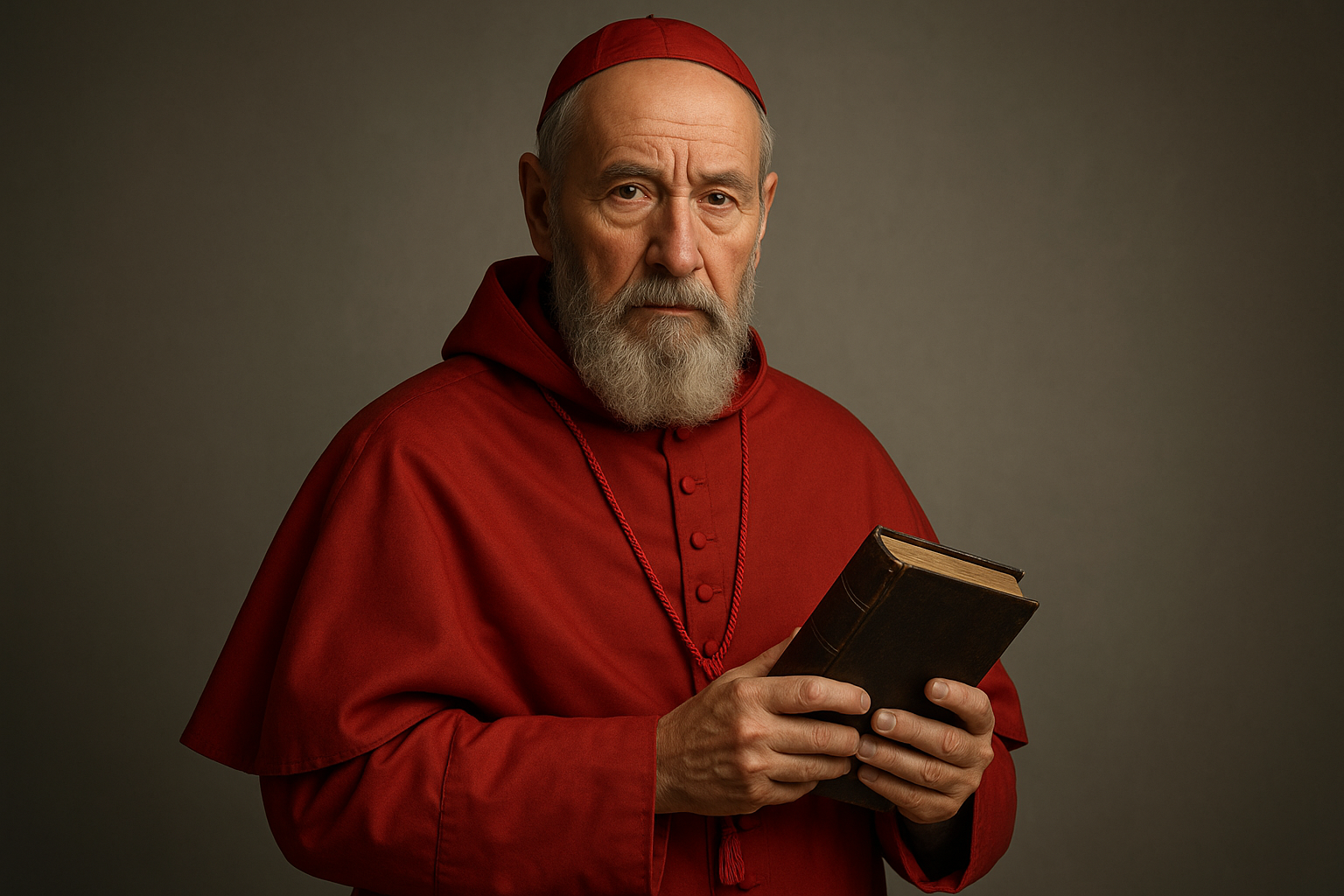
In a period of immense change and conflict for the Catholic Church, when clarity of thought and courageous defense of truth were paramount, emerged a towering figure whose intellectual brilliance was matched only by his deep piety: St. Robert Bellarmine. This remarkable Jesuit cardinal, theologian, and Doctor of the Church navigated the turbulent waters of the Counter-Reformation with grace, logic, and an unwavering commitment to the faith. From his early life in Tuscany to his pivotal role in defending Catholic doctrine against Protestant challenges and his profound impact on Church governance, Bellarmine’s story offers a compelling blend of scholarly rigor, pastoral care, and personal sanctity. This article will explore his formative years, his significant contributions to theology, his enduring spiritual legacy, and how his life continues to inspire believers today, offering a definitive look at a saint who shaped the very intellectual landscape of Catholicism.
Quick Facts
| Category | Detail |
|---|---|
| Birth | October 4, 1542, Montepulciano, Tuscany, Papal States |
| Death | September 17, 1621, Rome, Papal States |
| Feast Day | September 17 |
| Patronage | Catechists, canon lawyers, Archdiocese of Cincinnati, Montepulciano, Bellarmine University |
| Canonized | June 29, 1930, by Pope Pius XI |
Historical Context & Early Life
To understand St. Robert Bellarmine, one must first appreciate the dramatic stage upon which his life unfolded. Born in 1542, he entered a world grappling with the profound theological, political, and social upheavals of the Protestant Reformation. Martin Luther had initiated his reforms just decades earlier, and by the mid-16th century, Europe was sharply divided. The Council of Trent, which began its sessions in 1545, was the Catholic Church’s monumental response, aiming to clarify doctrine, reform abuses, and rejuvenate spiritual life. It was an era of intense theological debate, burgeoning scientific inquiry, and fierce religious wars. Intellectuals on both sides of the Reformation were driven to articulate and defend their beliefs with unprecedented rigor.
Robert Bellarmine, originally named Roberto Francesco Romolo Bellarmino, hailed from Montepulciano, a picturesque hill town in Tuscany, then part of the Papal States. His family was well-connected and of noble lineage; his mother, Cinzia Cervini, was the sister of Pope Marcellus II. This connection, however, did not guarantee him an easy path to prominence, but it did expose him to the intellectual and spiritual currents of his time from an early age. His family, though not wealthy, ensured he received a good education, recognizing his exceptional intellect. From his youth, Robert showed a profound inclination towards study and prayer. He was known for his sharp mind, remarkable memory, and a serious, devout disposition that set him apart from his peers. He excelled in Latin and literature, even composing poetry. Despite his natural gifts and opportunities for secular advancement, a deeper calling tugged at his heart.
Calling & Key Milestones
St. Robert Bellarmine’s life was a testament to a divine calling that fused intellectual rigor with profound spiritual commitment, making him one of the most significant figures of the Catholic Counter-Reformation.
Entry into the Society of Jesus
At the age of 18, in 1560, Robert Bellarmine made a pivotal decision that would shape his entire life: he entered the newly founded Society of Jesus, the Jesuits, at their Roman College. This order, established by St. Ignatius of Loyola, was at the forefront of the Church’s efforts to respond to the Reformation through education, missionary work, and intellectual defense of the faith. Bellarmine’s superiors quickly recognized his extraordinary talents. His Jesuit formation involved rigorous studies in philosophy, theology, and the humanities across various European centers, including Rome, Florence, and Padua. He was ordained a priest in 1570 in Ghent, Belgium, after completing his theological studies.
Professor at Louvain and the Roman College
Soon after his ordination, Bellarmine began his career as a university professor at the Jesuit college in Louvain, then part of the Spanish Netherlands. For seven years, he taught theology and preached in Latin, attracting students from across Europe. It was here that he first engaged deeply with the theological challenges posed by Protestantism. His clarity of thought and persuasive arguments quickly established his reputation as a formidable debater and defender of Catholic truth. In 1576, he was called back to Rome to become the chair of controversial theology at the prestigious Roman College (later the Gregorian University), a position he held for eleven years. This was perhaps the most intellectually demanding period of his life, requiring him to master and systematically refute every major Protestant objection to Catholic doctrine.
Writing “Disputations on the Controversies of the Christian Faith”
During his tenure at the Roman College, Bellarmine produced his magnum opus, the multi-volume work known as “Disputationes de Controversiis Christianae Fidei adversus hujus temporis haereticos” (Disputations on the Controversies of the Christian Faith Against the Heretics of This Time), commonly referred to simply as the “Controversies.” Published between 1586 and 1593, this work was a comprehensive, systematic defense of all major Catholic doctrines attacked by Protestant reformers. Bellarmine meticulously analyzed the arguments of Luther, Calvin, and other reformers, responding with reasoned arguments drawn from Scripture, tradition, and patristic writings. It became the standard textbook for Catholic apologists for centuries and earned him immense respect and notoriety throughout Christendom. This work cemented his legacy as a preeminent theologian and apologist.
Cardinal and Archbishop
Bellarmine’s intellectual prowess and unwavering loyalty to the Holy See did not go unnoticed. In 1599, Pope Clement VIII elevated him to the College of Cardinals, an honor he humbly accepted, though he preferred the life of a scholar. Despite his new exalted status, he continued to live a life of simplicity and prayer, often donating his cardinal’s income to the poor. In 1602, he was appointed Archbishop of Capua, an archdiocese near Naples. Though he served for only three years, he took his pastoral duties seriously, diligently visiting parishes, preaching, and working to implement the reforms of the Council of Trent, demonstrating that his theological understanding translated into practical, loving service to God’s people.
Papal Theologian and Counselor
Throughout his later life, particularly after returning to Rome, Cardinal Bellarmine served as a trusted advisor to several popes, including Clement VIII, Paul V, and Gregory XV. He held various important positions, including Prefect of the Vatican Library and a member of numerous curial congregations. He advised on matters of doctrine, governance, and ecumenical relations, always striving for truth and the welfare of the Church. His wisdom was sought on complex issues, even those involving nascent scientific discoveries, such as the case of Galileo Galilei. Bellarmine, while open to scientific inquiry, also upheld the Church’s understanding of Scripture, urging caution and demanding rigorous proof for claims that seemed to contradict biblical interpretations common at the time. He advocated for a careful handling of Galileo’s theories, trying to find a path that respected both scientific freedom and theological integrity, rather than an immediate condemnation.
Doctor of the Church
St. Robert Bellarmine died peacefully in 1621 at the age of 78. His life was marked by profound intellectual achievement, tireless service, and deep personal holiness. He was canonized as a saint by Pope Pius XI in 1930 and declared a Doctor of the Church, a title reserved for saints whose writings and preaching have made an outstanding contribution to Catholic theology and doctrine, the same year. This recognition officially affirms the enduring significance of his work and his exemplary life for the entire Church.
Spiritual Legacy & Theological Themes
St. Robert Bellarmine’s spiritual legacy is as profound as his intellectual one, rooted in the core virtues he exemplified and the theological truths he so eloquently defended. His life embodied a seamless integration of faith and reason, prayer and action, humility and courage.
One of Bellarmine’s most enduring virtues was his intellectual humility. Despite his immense learning and reputation, he always approached theological debate with a spirit of inquiry and a desire for truth, rather than personal victory. He famously acknowledged when he was convinced by an opponent’s argument. This humility allowed him to be a fair and thorough scholar, which in turn made his defenses of Catholic teaching even more compelling. This virtue aligns beautifully with Scripture’s call for humility, as seen in
Philippians 2:3: “Do nothing out of selfish ambition or vain conceit. Rather, in humility value others above yourselves.”
He was a beacon of courage and conviction in defending Catholic truth. In an age where theological disagreements often led to persecution and violence, Bellarmine stood firm, articulating complex doctrines with unwavering resolve. He faced opposition not only from Protestants but also from within Catholic circles, yet he never compromised what he believed to be the revealed truth. This courage flowed from a deep faith and trust in God’s providence, mirroring the exhortation in
1 Peter 3:15: “Always be prepared to give an answer to everyone who asks you to give the reason for the hope that you have. But do this with gentleness and respect.”
His theological contributions profoundly influenced Catholic doctrine, especially in the areas of ecclesiology (the study of the Church), papal authority, and the sacraments. Bellarmine meticulously clarified the nature of the Church as a visible society, emphasizing the importance of its hierarchical structure and the Pope as the visible head, the successor of Peter. His explanations of grace, free will, and justification were crucial in differentiating Catholic teaching from various Protestant interpretations. He helped define the Church’s understanding of herself in a way that has lasted for centuries.
Beyond his intellectual pursuits, Bellarmine was known for his pastoral heart and deep prayer life. As a cardinal and archbishop, he dedicated himself to the spiritual welfare of the faithful, preaching, hearing confessions, and implementing reforms. He wrote numerous spiritual works, including “The Art of Dying Well” and “On the Ascent of the Mind to God,” which reflect his profound interior life and practical guidance for spiritual growth. These writings emphasize meditation, detachment from worldly goods, and a loving submission to God’s will.
His lasting influence on liturgy, devotion, and doctrine is immense. His “Controversies” provided a systematic framework for Catholic theology that remained dominant for generations. He shaped the training of priests and theologians, ensuring a robust and intellectually sound understanding of the faith. Even his involvement in challenging cases like Galileo’s showed a commitment to truth, trying to uphold both theological and scientific integrity as understood at the time, demonstrating a balanced approach that sought harmony rather than conflict between different spheres of knowledge.
Devotion Today
While St. Robert Bellarmine may not be as widely known in popular devotion as some other saints, his impact continues to be felt and appreciated, particularly among those dedicated to Catholic education, apologetics, and Church law. His feast day is celebrated annually on September 17th.
He is a highly revered figure within the Society of Jesus, who consider him one of their most brilliant and influential members. Jesuit institutions around the world often honor him, and his writings remain a cornerstone of Jesuit intellectual tradition. Many universities, colleges, and schools are named after him, such as Bellarmine University in Louisville, Kentucky, where his intellectual and spiritual legacy is kept alive through academic programs and spiritual formation.
Given his role as a defender of the faith and a systematic theologian, St. Robert Bellarmine is recognized as the patron saint of catechists – those who teach the Catholic faith – and canon lawyers, who specialize in the Church’s legal system. His clear explanations and rigorous logical arguments serve as an ideal model for anyone striving to communicate Catholic truths effectively.
While there are no major international pilgrimage sites solely dedicated to St. Robert Bellarmine, his tomb is located in the Church of Saint Ignatius of Loyola in Rome, where his relics are venerated. This church is a significant pilgrimage destination for Jesuits and those interested in the history of the Society of Jesus. Visitors can offer prayers and reflect on his extraordinary life there.
His works, particularly his spiritual writings and theological treatises, continue to be studied and are available in various translations, allowing modern readers to connect with his deep spirituality and intellectual insights. These resources foster a personal devotion to him, inspiring individuals to emulate his virtues of intellect, humility, and steadfast faith.
Reflections for Modern Readers
St. Robert Bellarmine’s life, lived centuries ago, offers timeless lessons that are remarkably relevant for navigating the complexities of the 21st century. His example encourages us to integrate faith and reason, pursue truth with diligence, and engage in dialogue with both courage and humility.
1. Integrate Faith and Reason: Bellarmine was a preeminent scholar who used his brilliant intellect in service of God. In an age often tempted to separate faith from reason, his life reminds us that true faith is not afraid of intellectual inquiry; rather, it can be deepened and strengthened by it. For a modern reader, this means not shying away from difficult questions about faith, but actively seeking understanding, knowing that faith and reason are two wings upon which we ascend to the contemplation of truth. For instance, when facing scientific theories that seem to challenge religious belief, Bellarmine’s example encourages us to understand both sides deeply rather than immediately rejecting one.
2. Speak Truth with Clarity and Charity: Bellarmine was a master of clear communication, able to articulate complex theological points in an accessible and persuasive manner. He engaged his opponents not with insults but with reasoned arguments. In today’s often polarized and aggressive communication environment, his approach is a powerful antidote. This lesson can be applied in everyday conversations: whether discussing controversial topics with friends or family, or engaging in online debates, we are called to present our beliefs with clarity, respect, and a genuine desire for understanding, not just to win an argument.
3. Embrace Humility in Learning: Despite his vast knowledge, Bellarmine remained humble, always open to new insights and even admitting when he found an opponent’s argument compelling. This humility is essential for continuous growth, both intellectually and spiritually. For us, this means being open to learning from others, acknowledging what we don’t know, and approaching new information with a learner’s mindset, rather than presuming we have all the answers. It’s about listening intently to different perspectives in a team meeting or being willing to admit a mistake and learn from it.
4. Stand Firm in Conviction Amidst Challenges: Bellarmine lived through a time of intense religious upheaval and faced significant pressure, yet he consistently defended what he believed to be the truth of the Catholic faith. His steadfastness reminds us of the importance of developing strong convictions rooted in faith and morality, and of having the courage to uphold them, even when it is unpopular or difficult. This could mean advocating for justice in your community, standing up for a moral principle in your workplace, or maintaining your religious practices even when others around you do not understand.
5. Balance Active Service with Contemplative Prayer: Bellarmine was a prolific writer, professor, cardinal, and archbishop, yet he maintained a deep and active prayer life, which nourished all his work. His example highlights the critical need for balance between our active duties and our spiritual formation. For contemporary individuals, this means carving out time for prayer, meditation, or quiet reflection amidst busy schedules, recognizing that true effectiveness in service springs from a rich interior life. It’s taking a few minutes each morning for prayer before starting a demanding workday or making Sunday Mass a non-negotiable part of your week.
Symbols and Representations
In art and statuary, St. Robert Bellarmine is most commonly depicted with symbols that highlight his various roles and achievements:
- Cardinal’s Hat and Robes: These immediately identify him as a Cardinal of the Church, signifying his high ecclesiastical office and his role as a trusted advisor to popes.
- Book, Quill, or Pen: These are perhaps his most common attributes, representing his monumental intellectual output, particularly his “Controversies,” and his status as a Doctor of the Church. They symbolize wisdom, scholarship, and his dedicated defense of the faith through writing.
- Crucifix: Often seen in his hand or on his desk, the crucifix signifies his deep personal piety, his focus on Christ, and his Jesuit spirituality, which emphasizes devotion to the crucified Lord. It also reminds us that all his intellectual endeavors were rooted in faith and a desire to serve Christ and His Church.
- Jesuit Emblem (IHS Monogram): Occasionally present, this symbol of the Society of Jesus (the first three letters of Jesus’ name in Greek) identifies his religious order, emphasizing his Jesuit formation and identity.
These symbols collectively portray St. Robert Bellarmine as both a brilliant intellectual and a devout man of God, whose learning was always at the service of faith.
Timeline Summary
- 1542: Born Roberto Francesco Romolo Bellarmino in Montepulciano, Tuscany.
- 1560: Enters the Society of Jesus (Jesuits) at the Roman College.
- 1570: Ordained a priest in Ghent, Belgium.
- 1570-1576: Teaches theology at the Jesuit college in Louvain.
- 1576: Appointed professor of controversial theology at the Roman College, Rome.
- 1586-1593: Publishes his multi-volume masterpiece, “Disputations on the Controversies of the Christian Faith.”
- 1590: Becomes Rector of the Roman College.
- 1599: Elevated to the College of Cardinals by Pope Clement VIII.
- 1602: Appointed Archbishop of Capua.
- 1605: Resigns as Archbishop and returns to Rome to serve in various curial offices.
- 1616: Involved in the theological discussions surrounding Galileo Galilei’s heliocentric theories.
- 1621: Dies in Rome on September 17.
- 1930: Canonized a saint and declared a Doctor of the Church by Pope Pius XI.
Scripture for Reflection
St. Robert Bellarmine’s life beautifully illustrates several scriptural themes:
1 Peter 3:15: “Always be prepared to give an answer to everyone who asks you to give the reason for the hope that you have. But do this with gentleness and respect.”
This verse perfectly encapsulates Bellarmine’s life work. He dedicated himself to being meticulously prepared to articulate and defend the Catholic faith. His “Controversies” was a monumental fulfillment of this scriptural mandate, and his approach, though firm, was always characterized by a profound respect for truth and a desire for clarity, not merely combativeness.
James 1:5: “If any of you lacks wisdom, you should ask God, who gives generously to all without finding fault, and it will be given to you.”
Bellarmine was renowned for his intellectual gifts and profound wisdom. His life demonstrates that true wisdom is a gift from God, cultivated through diligent study and fervent prayer. He continually sought divine wisdom to understand and explain the mysteries of faith, showing us that our intellectual pursuits, when offered to God, can be sources of immense grace and insight.
Philippians 2:3: “Do nothing out of selfish ambition or vain conceit. Rather, in humility value others above yourselves.”
Despite his towering intellect and influential positions, Bellarmine was known for his humility and detachment from worldly accolades. He lived a simple life, gave away much of his income, and preferred scholarly work to pomp. This verse reminds us that true greatness in the eyes of God is found not in self-promotion but in humble service and valuing others, a virtue Bellarmine consistently exemplified.
Prayers to St. Robert Bellarmine
Here is a prayer often recited in honor of St. Robert Bellarmine, invoking his intercession:
O glorious Saint Robert Bellarmine, you were a man of profound intellect and unwavering faith, a zealous defender of Holy Mother Church, and a humble servant of God. You dedicated your life to clarifying and upholding the truths of our Catholic faith against the errors of your time. We ask for your intercession today.
Inspire us, we pray, with your intellectual courage and your ardent love for the truth. Help us to deepen our understanding of our faith and to articulate it with clarity, gentleness, and respect in a world often confused and divided. Guide all catechists and teachers of the faith, that they may, like you, effectively transmit the saving truths of the Gospel.
Grant us the grace to imitate your humility, your integrity, and your prayerful spirit amidst our daily duties and challenges. May we, through your example, always seek to serve God with our whole heart, mind, and strength, and grow in true holiness.
Through your powerful intercession, we ask this of God, in the name of Jesus Christ, our Lord. Amen.





