
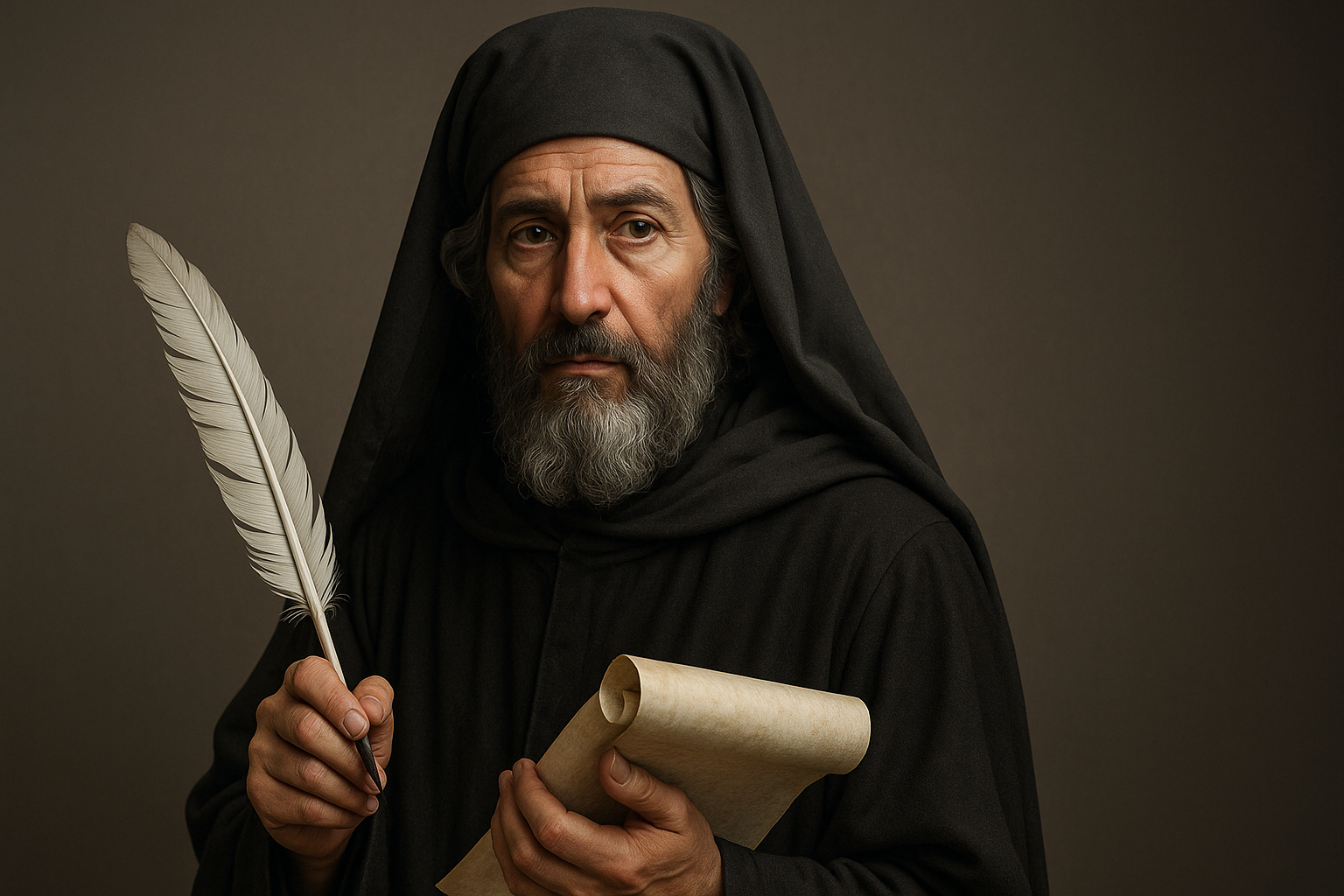
In the vibrant tapestry of early Christianity, few figures shine as brightly and uniquely as Saint John Damascene. Born into a Christian family in Muslim-ruled Damascus during the 7th century, John’s life bridged cultures, faiths, and empires, positioning him as a remarkable defender of the faith during a tumultuous era. His story is one of intellectual brilliance, unwavering courage, and profound spiritual depth, offering timeless lessons on integrating faith with reason, standing for truth, and finding God amidst shifting worldviews. This article will explore his extraordinary early life and historical context, his crucial calling in defending holy images, his enduring spiritual and theological legacy, and how his wisdom continues to resonate with believers today.
Quick Facts
| Attribute | Detail |
|---|---|
| Birth | c. 675 AD, Damascus, Syria |
| Death | c. 749 AD, Mar Saba Monastery, Judean Desert |
| Feast Day | December 4 (Western Church); December 4 (Eastern Church) |
| Patronage | Theologians, writers, iconographers, pharmacists |
| Canonized | Venerated as a saint shortly after his death; declared a Doctor of the Church by Pope Leo XIII in 1890 |
Historical Context & Early Life
Saint John Damascene lived in a period of dramatic change and conflict, a true crossroads of civilizations. Born around 675 AD, his childhood and early adulthood unfolded in Damascus, a city that had fallen under the control of the Umayyad Caliphate in 635 AD. This meant John grew up as a Christian living under Muslim rule, a unique position that deeply shaped his worldview and theological understanding. While the Byzantine (Eastern Roman) Empire still existed, it was constantly at odds with the rising Islamic power, often leading to territorial disputes and cultural clashes.
Damascus, however, was a melting pot, and the Umayyad rulers, while Muslim, often employed Christians and Jews in high administrative roles due to their education and experience. John’s family, known as Mansour, was prominent and well-respected within the Christian community. His grandfather, Mansour ibn Sarjun, had served as a high-ranking financial official under the Byzantines and later continued in a similar capacity under the early Umayyad caliphs. This tradition of public service continued with John’s father, Sergius, who also held an important position in the caliph’s court.
From an early age, John received an exceptional education, a luxury afforded by his family’s status. Legend has it that his father, seeking the best possible tutor, acquired a learned Italian monk named Cosmas from Sicily, who had been captured by pirates. Cosmas, a man of vast knowledge, educated young John not only in Christian theology, philosophy, and rhetoric but also in Greek literature, mathematics, and music. This rigorous intellectual formation equipped John with a formidable intellect and a profound understanding of both secular and sacred wisdom, making him fluent in Greek, Syriac, and likely Arabic. This multicultural and multi-religious environment provided him with a unique perspective, enabling him to engage with different intellectual traditions and to articulate Christian faith in a way that was both deeply rooted in tradition and powerfully reasoned.
Calling & Key Milestones
John Damascene’s life was marked by several pivotal moments, showcasing his commitment to Christ and the Church, first in public service and then as a devoted monk and theologian.
Early Service in Damascus
Following in his family’s footsteps, John initially entered civil service under the Umayyad Caliph Abd al-Malik and later under his successor, Yazid I. He rose to the influential position of chief financial administrator, or vizier, a role of significant responsibility and power within the caliphate. This period saw him deeply involved in the administration of a vast empire, navigating the complexities of governance and interfaith relations. His position allowed him to observe and understand the political and religious currents of his time, which would later inform his theological work.
The Iconoclast Controversy and His Defense of Holy Images
While serving in Damascus, a major theological storm erupted in the Byzantine Empire, far to the west of his home, known as the Iconoclast Controversy. “Iconoclasm” refers to the movement that sought to destroy or forbid religious images (icons) because some believed their veneration amounted to idolatry—worshiping the image itself rather than what it represented. Emperor Leo III, an iconoclast, began systematically destroying icons and persecuting those who defended them.
Despite being outside the direct jurisdiction of the Byzantine emperor, John felt compelled to defend the sacred tradition of venerating icons. He wrote three powerful treatises, known collectively as On the Divine Images (or Apologetic Treatises against Those Who Decry Holy Images). In these works, John argued eloquently that icons were not idols but rather windows to the divine, visible representations that helped believers connect with the invisible God. He drew a crucial distinction: Christians do not worship the wood or paint, but rather they show reverence to the person or mystery depicted, extending honor through the image to the prototype.
John’s most groundbreaking argument centered on the Incarnation—the belief that God became human in Jesus Christ. He reasoned that if God, who is invisible, chose to make Himself visible in the person of Jesus, then it is permissible, even necessary, to depict Christ and the saints in art. To reject images, he argued, was to deny the reality of the Incarnation, implying that God could not or would not take on a visible form. His arguments were so compelling and persuasive that they quickly spread throughout the Christian world, bolstering the spirits of those suffering persecution for their defense of icons. These writings were instrumental in shaping the Church’s final stance, which affirmed the rightful veneration of icons at the Second Council of Nicaea in 787 AD, long after John’s death.
Retirement to Mar Saba and Monastic Life
Around 730 AD, perhaps sensing the growing spiritual urgency of his calling or desiring a life of deeper contemplation, John made a momentous decision. He resigned his prestigious position in the caliph’s court and, along with his foster brother Cosmas of Maiuma, journeyed to the ancient Mar Saba Monastery in the Judean Desert, near Jerusalem. There, he embraced the monastic life, dedicating himself to prayer, asceticism, and scholarly work. This was a profound shift, moving from the corridors of power to the quiet solitude of the desert, illustrating a deep humility and commitment to God.
At Mar Saba, John continued his prolific writing, composing hymns, homilies, and, most importantly, his magnum opus, The Fount of Knowledge (also known as The Fountain of Wisdom). This encyclopedic work is divided into three parts:
- Philosophical Chapters (Dialectic): A collection of philosophical terms and concepts, largely drawn from Aristotle, to provide a logical framework for understanding Christian doctrine.
- On Heresies: A detailed catalog of 100 heresies, from ancient times up to his own day, including a significant section on Islam.
- An Exact Exposition of the Orthodox Faith: The most significant part, a systematic presentation of Christian doctrine based on the teachings of the Greek Church Fathers. It covers the Trinity, creation, the Incarnation, the Sacraments, and the resurrection. This section became a foundational text for both Eastern and Western theology, influencing scholastic theologians like Thomas Aquinas centuries later.
His contributions to hymnography are also immense. He is considered one of the greatest hymnographers of the Eastern Church, credited with composing much of the ‘Oktoechos,’ a collection of hymns arranged according to the eight tones used in Orthodox worship. His Paschal (Easter) Canon, “The Day of Resurrection,” is still sung with great joy in Eastern churches today.
Doctor of the Church
While John Damascene was recognized as a saint and revered shortly after his death, his exceptional contributions to Christian theology were formally acknowledged much later in the Western Church. In 1890, Pope Leo XIII officially declared him a Doctor of the Church, a title given to saints whose writings and preaching have made particularly significant contributions to doctrine or theology. This recognition solidified his place as one of the Church’s most important intellectual and spiritual luminaries.
Spiritual Legacy & Theological Themes
Saint John Damascene’s life and writings offer a rich tapestry of spiritual and theological insights that continue to inspire and instruct the faithful. He exemplified several core virtues, notably courage, intellectual integrity, and profound devotion, all deeply aligned with Scripture and Catholic teaching.
Courage and Steadfastness in Faith: John’s willingness to stand firm against the powerful currents of Iconoclasm, even from a seemingly vulnerable position under Muslim rule, showcases immense spiritual courage. He defended the Incarnation and the rightful place of sacred art when many others wavered, echoing scriptural calls to be “strong in the Lord and in the strength of his might” (Ephesians 6:10). His life demonstrates that truth must be upheld, regardless of personal cost or popular opinion.
Integration of Faith and Reason: John was a master of both philosophy and theology. His Fount of Knowledge explicitly uses philosophical tools to explain and defend Christian doctrines. He believed that reason, properly applied, could serve faith, helping to articulate its mysteries and refute falsehoods. This harmonizes with Catholic teaching that faith and reason are “like two wings on which the human spirit rises to the contemplation of truth” (Pope John Paul II, Fides et Ratio), and resonates with passages like 1 Peter 3:15, which encourages believers to “always be prepared to make a defense to anyone who asks you for a reason for the hope that is in you.”
Theological Significance of the Incarnation: The very heart of John’s defense of icons was his deep understanding of the Incarnation. He argued that God, by taking on human flesh in Jesus, sanctified matter and made it capable of representing the divine. This principle underpins the Catholic understanding of sacraments, sacramentals, and the use of material creation to convey spiritual truth. It reinforces the goodness of creation and God’s desire to encounter humanity in tangible ways, a theme found throughout the Bible, from the Tabernacle to the Eucharist.
Systematic Theology: John Damascene is widely regarded as the first systematic theologian of the Christian East. His Exact Exposition of the Orthodox Faith organized Christian doctrine in a comprehensive and logical manner, drawing together centuries of patristic thought. This systematic approach provided a clear framework for understanding the faith, influencing countless subsequent theologians in both East and West. His work laid intellectual groundwork that would mature in the Western scholastic tradition.
Liturgical and Devotional Influence: Beyond his theological treatises, John’s hymnography profoundly shaped Eastern Christian worship. His hymns, such as the Paschal Canon, continue to be sung, enriching the liturgical experience and expressing profound theological truths in poetic form. His devotion to the Theotokos (God-bearer, i.e., Mary) is also evident in his homilies and hymns, contributing to the rich Marian tradition of the Church.
His lasting influence on doctrine is undeniable, particularly in the understanding of Christology (the study of Christ) and Mariology (the study of Mary). He articulated the “hypostatic union” (the doctrine that Christ is one divine person with two distinct natures, human and divine) with clarity, building on previous councils. His theological contributions solidified the Church’s understanding of key tenets of faith, guiding future generations.
Devotion Today
Saint John Damascene remains a highly revered figure in both the Eastern Orthodox Church and the Roman Catholic Church. His feast day is celebrated annually on December 4th in both traditions, though some Eastern Churches observe it on other dates like October 29th or December 17th, depending on their calendar.
In the Eastern Orthodox world, John Damascene is particularly celebrated as one of the great Fathers of the Church, a pillar of Orthodoxy, and a champion of icons. His hymns are still central to the liturgical life, especially his Paschal Canon, which joyfully proclaims Christ’s resurrection during the Easter season. Icons of St. John Damascene are widely venerated, often depicting him as a monastic scholar holding a scroll or a book, or sometimes with his hand miraculously restored, a reference to a legend about his persecution by an iconoclastic emperor.
For pilgrims, the ancient Mar Saba Monastery, where he spent his monastic life, is a significant site. Located in the arid Judean Desert, southeast of Jerusalem, this sprawling monastery continues to be an active community of monks today. While access can be restricted, the monastery remains a powerful symbol of his dedication to God in solitude and contemplation, and a living testament to ancient Christian monasticism. Visitors to the Holy Land often seek to experience the spiritual depth of this remarkable place.
In the Catholic Church, his designation as a Doctor of the Church highlights his universal importance. He is invoked as a patron saint by theologians, writers, and artists, especially iconographers, who find inspiration in his eloquent defense of sacred art. His systematic approach to theology continues to be studied in seminaries and universities, underscoring his timeless contribution to Christian thought.
Reflections for Modern Readers
Saint John Damascene’s life, though lived centuries ago, offers powerful and actionable takeaways for anyone navigating faith in the 21st century. His example calls us to:
- Stand Firm in Your Convictions, Even When Unpopular: John bravely defended the truth of the Incarnation and the veneration of icons against powerful emperors and societal trends. In a world often swayed by fleeting opinions or fear of cancel culture, his life reminds us to discern truth through prayer and study, and then to articulate and defend it with grace and courage. For instance, when contemporary culture challenges fundamental Christian teachings on family, life, or identity, St. John encourages us to understand deeply, speak clearly, and stand faithfully, just as he did for icons.
- Integrate Faith and Reason: John was a scholar who used philosophical tools to explain theological truths. He shows us that faith is not blind, but an intelligent assent supported by reason. Modern believers are often pressured to separate their faith from their intellectual life, but St. John teaches us to engage with the world’s ideas, to think critically, and to use our minds to better understand and share our faith. For a student facing challenging academic ideas, or a professional navigating ethical dilemmas, John Damascene’s approach encourages thoughtful, prayerful engagement rather than either an unthinking acceptance or an unthinking rejection of the secular world.
- Recognize the Sacred in the Tangible: His defense of icons was a defense of the idea that God can be known and honored through physical means, a core aspect of Catholic sacramental theology. In a highly digital and often disembodied world, John reminds us to find God in the beauty of creation, in the sacred art that lifts our hearts, and most especially, in the tangible realities of the sacraments, like the Eucharist. When we struggle to feel connected to God, looking at a beautiful crucifix, holding a rosary, or reverently receiving Communion can be a gateway to deeper spiritual experience, echoing the purpose of the icons John defended.
- Embrace a Life of Learning and Contemplation: From a prestigious government position, John chose a life of monastic solitude and scholarship. This doesn’t mean everyone must become a monk, but it highlights the value of continuous learning, deep study, and intentional time for prayer and contemplation. In our busy, distraction-filled lives, dedicating time to read scripture, delve into spiritual books, or simply sit in quiet prayer, emulates his journey and enriches our spiritual lives, helping us to hear God’s voice amidst the noise.
Common Symbols and Representations:
- A Pen and Scroll/Book: This is perhaps his most common symbol, representing his prolific writings, particularly The Fount of Knowledge and his treatises on icons. It signifies his role as a great theologian, scholar, and Doctor of the Church.
- An Icon: Often, he is depicted holding an icon, specifically an icon of Christ or the Theotokos. This directly symbolizes his pivotal role in defending the veneration of holy images during the Iconoclast Controversy and his enduring legacy in the theology of sacred art.
- Monastic Habit: As he spent a significant portion of his life as a monk at Mar Saba, he is frequently shown in the dark robes of a Byzantine monk, symbolizing his ascetic life, humility, and dedication to God in solitude.
- Hand or Hands: A less common but powerful symbol refers to the legend that his right hand was miraculously restored after being cut off by an iconoclast emperor (though historically this story is disputed, it reflects the deep respect for his defense of icons). When depicted this way, it underscores the miraculous nature of his theological defense.
Timeline Summary
- c. 675 AD: Born in Damascus, Syria, into a prominent Christian family.
- Late 7th/Early 8th Century: Receives a comprehensive education from Cosmas the Monk.
- Early 8th Century: Serves as a high-ranking financial official (vizier) in the court of the Umayyad Caliphs in Damascus.
- c. 726 AD: Byzantine Emperor Leo III begins the Iconoclast Controversy, prohibiting and destroying holy images.
- c. 726-730 AD: John Damascene writes his three foundational treatises On the Divine Images, defending the veneration of icons.
- c. 730 AD: Resigns his political office and enters the Mar Saba Monastery in the Judean Desert, embracing monastic life.
- c. 730-749 AD: Composes his monumental work, The Fount of Knowledge, which includes An Exact Exposition of the Orthodox Faith. He also writes numerous hymns and homilies.
- c. 749 AD: Dies at Mar Saba Monastery.
- 787 AD: The Second Council of Nicaea, after his death, confirms the theological arguments John Damascene made in defense of icons.
- 1890 AD: Declared a Doctor of the Church by Pope Leo XIII.
Scripture for Reflection
Saint John Damascene’s defense of images is deeply rooted in the Christian understanding of the Incarnation, the belief that God became flesh in Jesus Christ. The following passages illuminate the core of his spiritual legacy:
Colossians 1:15: “He is the image of the invisible God, the firstborn of all creation.”
This verse speaks directly to the heart of John Damascene’s argument. If Jesus is the visible “image” of the invisible God, then depicting Jesus in art is not only permissible but can also draw us closer to understanding the divine. It signifies that God chose to make Himself known in a tangible, visible form, validating the idea that matter can convey spiritual truth.
Philippians 2:6-8: “Though he was in the form of God, he did not regard equality with God as something to be exploited, but emptied himself, taking the form of a slave, being born in human likeness. And being found in human form, he humbled himself and became obedient to the point of death—even death on a cross.”
This passage beautifully describes Christ’s Incarnation and humility. John Damascene argued that because God humbled Himself to take on “human likeness,” He sanctified human form and human experience. This humility allows us to represent Christ and the saints in art, not as idols, but as reminders of God’s love and the holiness attainable through Him. It emphasizes the profound connection between the divine and human that makes sacred art possible and meaningful.
Prayers to St. John Damascene
While specific “official” prayers or novenas exclusively to St. John Damascene are less common in general Catholic devotion than some other saints, his profound theological contributions and monastic piety are honored through general prayers for wisdom, defense of faith, and intercession. Here is a prayer reflecting on his life and legacy:
A Prayer to Saint John Damascene
O glorious Saint John Damascene, Doctor of the Church and steadfast defender of truth, we humbly implore your intercession.
You, who navigated the complexities of worldly power and then embraced the solitude of the desert, guide us to discern God’s will in every season of our lives. Grant us the courage to stand firm in our Catholic faith, even when faced with opposition or misunderstanding, just as you bravely defended the holy icons against those who sought to diminish their sacred role.
Inspired by your profound intellect and spiritual wisdom, help us to integrate faith and reason, to seek truth diligently, and to articulate the mysteries of God with clarity and love. May we, like you, recognize the divine presence in both the visible and invisible, honoring God in His creation and in the sacred art that draws us closer to Him.
For theologians and writers, be a patron; for artists and iconographers, be an inspiration; for all who seek to understand and defend the teachings of the Church, be a guide. Teach us to live lives of deep contemplation and unwavering devotion.
Through your prayers, may we grow in holiness, strengthen our resolve to serve Christ, and ultimately attain the eternal joy of heaven. Amen.





