
In the vast tapestry of Catholic saints, some figures shine with a particularly intense light, illuminating the darkest corners of human history with the radical love of Christ. St. Peter Claver is undeniably one such soul. Born into privilege in 17th-century Spain, he chose a path of profound humility and relentless service, dedicating his entire adult life to the most dehumanized people of his era: the enslaved Africans arriving in the bustling, brutal port of Cartagena, New Granada (modern-day Colombia). His story is one of unwavering compassion, extraordinary courage, and an enduring commitment to justice that transcends centuries, offering a powerful blueprint for how to live out the Gospel in the face of immense suffering and injustice. This article will explore his early life, his courageous ministry, his profound spiritual legacy, and how his witness continues to inspire devotion and action in the modern world.
Quick Facts
| Category | Details |
|---|---|
| Birth | June 26, 1580, Verdú, Catalonia, Spain |
| Death | September 8, 1654, Cartagena, New Granada (modern-day Colombia) |
| Feast Day | September 9 |
| Patronage | Slaves, African Americans, Colombia, seafarers, foreign missions, social justice |
| Canonized | January 16, 1888, by Pope Leo XIII |
Historical Context & Early Life
To fully appreciate the heroism of St. Peter Claver, one must understand the tumultuous world into which he was born and where he served. The 17th century was a period of immense global expansion and brutal exploitation, dominated by European colonial powers. Spain, a fervent Catholic nation, was at the forefront of this era, establishing vast empires across the Americas. While the Catholic Church had declared the inherent dignity of all people, including indigenous populations, the economic demands of the burgeoning colonies led to the horrifying institution of the transatlantic slave trade. Millions of Africans were forcibly removed from their homes, subjected to unimaginable cruelty, and transported across the Atlantic to work in mines and on plantations.
Cartagena, a major port city on the Caribbean coast of what is now Colombia, became a notorious epicenter for this trade. It was a gateway through which countless enslaved individuals, having survived the brutal Middle Passage, first touched American soil. They arrived in appalling conditions, often emaciated, sick, traumatized, and speaking no Spanish, facing a future of relentless servitude and cultural annihilation. This was the dark backdrop against which Peter Claver would choose to dedicate his life.
Peter Claver was born in 1580 into a devout and prosperous farming family in Verdú, a small town in Catalonia, Spain. His parents were deeply religious and instilled in him a strong sense of faith and moral rectitude from an early age. He received a good education, first locally and then at the University of Barcelona, where he studied classics and philosophy. Even as a young man, Peter demonstrated a quiet piety and a profound intellectual curiosity, suggesting a path that might have led him to a comfortable academic or ecclesiastical career.
However, God had a different plan. In 1602, at the age of 22, Peter felt a powerful calling to religious life and entered the Society of Jesus, a dynamic and intellectually robust order known for its missionary zeal and commitment to education. His early formation as a Jesuit was rigorous, emphasizing spiritual discipline, theological study, and a deep commitment to service. It was during his studies at the Jesuit college of Montesión in Palma de Mallorca that a pivotal encounter would change the course of his life forever.
Calling & Key Milestones
The Inspiration of Saint Alphonsus Rodriguez
While studying on Mallorca, Peter Claver met Brother Alphonsus Rodriguez, an elderly Jesuit doorkeeper renowned for his profound humility, mysticism, and spiritual wisdom. Alphonsus, though holding a humble position, possessed an extraordinary spiritual insight. He became Peter’s spiritual mentor, discerning in the young Jesuit a deep capacity for self-sacrifice and a burning desire to serve God in the most challenging circumstances. Alphonsus famously prophesied that Peter was destined for great work in the Indies, specifically encouraging him to devote himself to the enslaved peoples arriving in the New World. This encounter profoundly impacted Peter, solidifying his nascent missionary desires and directing them towards a specific, urgent need.
Journey to the New World
Inspired by Alphonsus and his own deepening spiritual conviction, Peter Claver volunteered for the missions in the Spanish colonies. In 1610, he sailed across the Atlantic, arriving in Cartagena, New Granada. The sight that greeted him in this bustling port city was heartbreaking. Ships regularly arrived overflowing with enslaved Africans, most of whom were in horrific physical and spiritual states. The sheer scale of suffering was overwhelming, but rather than shrinking from it, Peter embraced it as his mission field. He continued his theological studies in Bogotá and then in Cartagena, preparing for his ordination. During this time, he was profoundly influenced by another Jesuit, Father Alonso de Sandoval, who had already begun ministering to the enslaved and wrote extensively about the injustices of the slave trade. Sandoval’s work provided Peter with both a model and practical guidance for his future ministry.
Ordination and the Vow to be “Slave of the Slaves”
In 1616, Peter Claver was ordained a priest in Cartagena. This was not merely a ceremonial event for him; it was a profound commitment. Immediately after his ordination, he made a personal vow, famously declaring himself to be “slave of the slaves forever.” This was no mere pious phrase; it was a total dedication of his life to those considered the lowest in society, a radical embrace of solidarity that would define his entire priesthood. He understood that to truly serve them, he had to become one with them in their suffering, forsaking all worldly comfort and status.
Ministry to the Enslaved
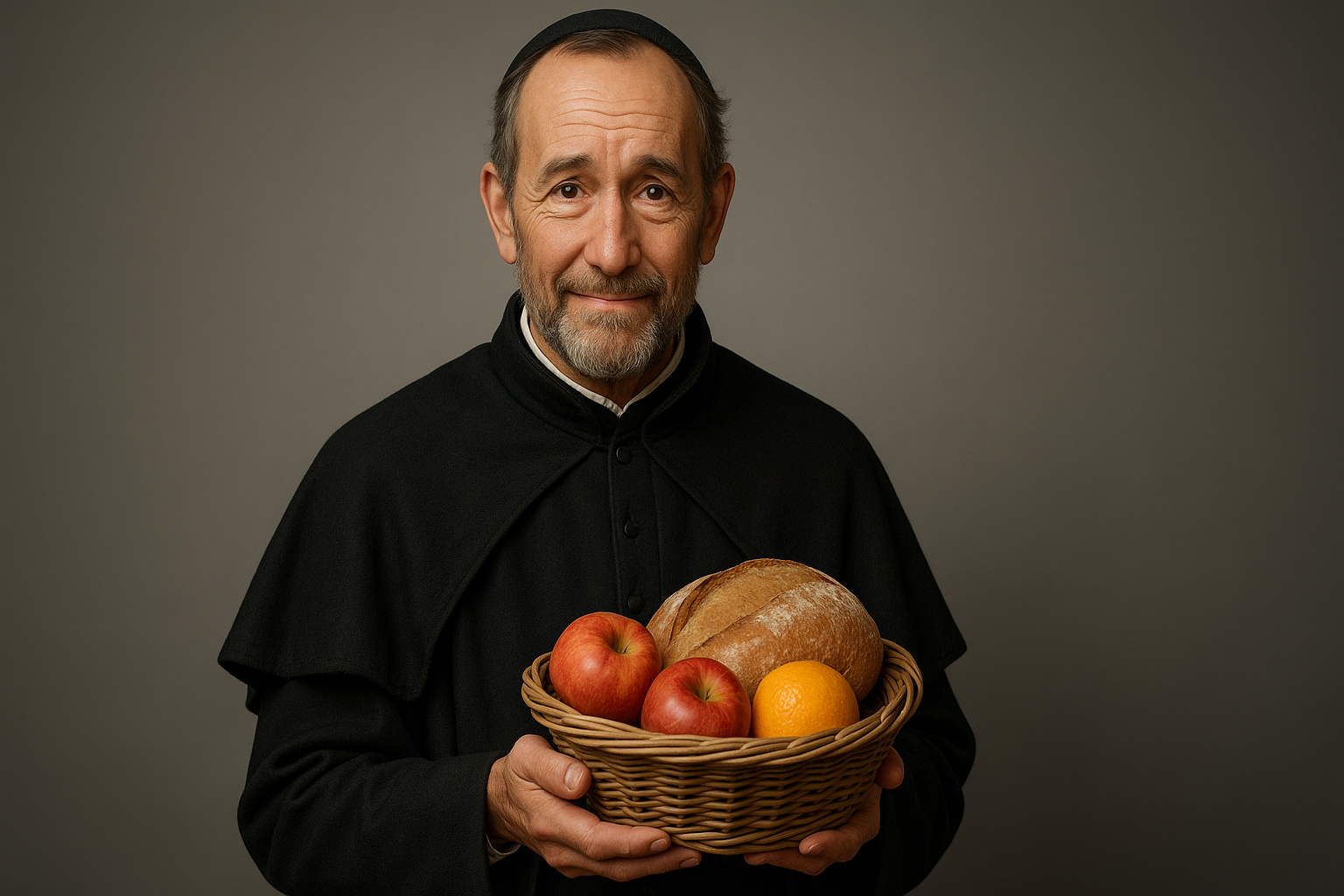
For the next 38 years, St. Peter Claver dedicated himself tirelessly to the enslaved people arriving in Cartagena. His ministry began the moment the slave ships were sighted on the horizon. Ignoring the stench, the disease, and the danger, he would rush to the docks, often accompanied by a small group of helpers, including some of his former African converts. He carried a basket filled with bread, fruit, brandy, tobacco, and medicines – simple provisions that offered immediate physical comfort to the emaciated and traumatized captives.
His approach was holistic. He understood that these individuals needed both physical relief and spiritual sustenance. He would enter the cramped, disease-ridden holds of the ships, where conditions were unspeakable. He learned their diverse languages, or at least enough phrases to convey welcome and comfort, using interpreters when possible. He would bathe their wounds, offer them food and water, tend to the sick and dying, and most importantly, offer them the love of Christ. He baptized an estimated 300,000 enslaved Africans during his ministry, not out of a desire for mere numbers, but from a profound conviction that they deserved the dignity of God’s children and the hope of eternal life, regardless of their earthly bondage.
Apostle of Cartagena
Peter Claver’s ministry extended beyond the ships and the initial welcome. He followed the enslaved into the disease-ridden slave pens and barracks, tending to them, listening to their stories, and defending them from cruel masters when he could. He celebrated Masses for them, taught them catechism, and advocated for their basic human rights within the confines of the existing brutal system. He sought to instill in them a sense of their inherent dignity as children of God, even when the world around them conspired to strip them of it. His work was often met with resistance, even scorn, from slave owners and parts of colonial society who saw his actions as radical and disruptive. Yet, he persevered with unwavering charity and courage.
Years of Illness and Death
Towards the end of his life, St. Peter Claver himself suffered from prolonged illness and physical infirmity, becoming largely incapacitated during his last four years. Ironically, during this period, he was often neglected and poorly cared for by a hired slave, mirroring the very indignities he had fought against for others. Despite this personal suffering, his faith never wavered. He died on September 8, 1654, at the age of 74. At his death, the entire city of Cartagena recognized the loss of a truly holy man. The authorities who had sometimes obstructed him now honored him, and thousands, especially the very people he had served, flocked to pay their respects, hailing him as a saint.
Spiritual Legacy & Theological Themes
St. Peter Claver’s life is a vibrant testament to several core Catholic virtues and theological themes that continue to resonate powerfully today.
Radical Charity and Solidarity: The cornerstone of his legacy is his profound, unconditional love for the marginalized. His vow to be “slave of the slaves” was a complete embodiment of Christ’s command to love one’s neighbor as oneself, especially “the least of these” (Matthew 25:40). He didn’t just feel pity; he actively entered into solidarity with the suffering, sharing their conditions and advocating for their dignity. This radical charity challenged the prevailing social norms and revealed the true face of Christian love.
Humility and Self-Sacrifice: Peter Claver, a well-educated man from a good family, deliberately chose the lowest possible status to serve those even lower. He embraced arduous, dirty, and dangerous work, forsaking personal comfort, prestige, and even good health. His life perfectly illustrates the Pauline exhortation to “have among yourselves the same attitude of mind Christ Jesus had: Who, being in very nature God, did not consider equality with God something to be used to his own advantage; rather, he emptied himself” (Philippians 2:5-7).
Unwavering Faith and Perseverance: His ministry was not easy. He faced cultural barriers, resistance from authorities, the constant exposure to disease, and the emotional toll of witnessing immense human suffering. Yet, his faith in God’s love and the inherent dignity of every person propelled him forward. His perseverance reminds us that true faith is not passive but an active, sustained commitment to justice and love, even in the face of daunting obstacles.
Justice and Human Dignity: While St. Peter Claver operated within the brutal reality of the slave trade, his actions consistently affirmed the human dignity of every enslaved person. By baptizing them, teaching them, providing for their needs, and offering spiritual comfort, he acknowledged their full humanity and their status as children of God, directly contradicting the prevailing view that they were mere chattel. His life is a powerful, early witness against systemic injustice and a prefigurement of modern Catholic Social Teaching, which consistently calls for the defense of human dignity and the preferential option for the poor.
St. Peter Claver’s influence extends beyond his immediate ministry. He is a patron saint of human rights and justice, inspiring missionaries, social workers, and advocates for the marginalized. His legacy underscores the Church’s call to confront social evils directly and to serve those on the periphery. His life continues to challenge Catholics to look beyond comfortable pieties and engage actively in the struggle for justice and human liberation.
Devotion Today
Devotion to St. Peter Claver remains strong, particularly in Latin America and among communities dedicated to social justice. His legacy is celebrated as an enduring symbol of compassion and human rights.
Shrines and Pilgrimages: The most significant center of devotion to St. Peter Claver is in Cartagena, Colombia, where his earthly remains are venerated at the San Pedro Claver Church and Monastery. This beautiful Jesuit complex, where he lived and served, now houses a museum dedicated to his life and ministry, and his tomb is a place of pilgrimage for many. Visitors can see the cell where he lived, the confessional where he heard countless confessions, and learn about the conditions of the enslaved people he served. Annually, thousands visit this shrine, seeking his intercession and drawing inspiration from his radical commitment to the poor.
Feast Day Celebrations: St. Peter Claver’s feast day is celebrated worldwide on September 9th. This day is marked by special Masses, prayers, and reflections in parishes, especially within Jesuit institutions, schools, and organizations dedicated to social justice. In Cartagena, his feast day is a major event, often including processions and acts of service inspired by his example.
Patronage and Advocacy: As the patron saint of slaves, African Americans, and human rights, St. Peter Claver is invoked by individuals and organizations working for racial justice, combating modern slavery (human trafficking), and serving marginalized communities globally. Many schools, hospitals, and social service agencies are named after him, continuing his mission of education, healing, and advocacy. He inspires a global movement of Christians to see Christ in the suffering and to act with courage and compassion.
Reflections for Modern Readers
St. Peter Claver lived centuries ago, but the lessons from his life are remarkably relevant to the challenges and opportunities of the 21st century. His story offers powerful, actionable takeaways for anyone seeking to live a more authentically Christian life.
1. See Christ in the Marginalized: Peter Claver literally saw Jesus in the faces of the sick, terrified, and dehumanized enslaved people. For modern readers, this means actively seeking out and acknowledging the inherent dignity of those on the margins of society: the homeless person on the street, the immigrant, the victim of prejudice, the lonely elderly person. It’s about more than just feeling sympathy; it’s about seeing their full humanity and God-given worth. Real-world example: Instead of walking past a person experiencing homelessness, stop, make eye contact, offer a genuine smile, and perhaps a bottle of water or a simple greeting, recognizing them as a fellow child of God.
2. Active Compassion Over Passive Pity: St. Peter Claver didn’t just feel bad for the enslaved; he plunged into the squalor and danger to bring them immediate physical and spiritual comfort. We are called to move beyond mere empathy to concrete action. Compassion means “to suffer with,” but it also demands doing something to alleviate that suffering. Real-world example: If you hear about a local food drive for families in need, don’t just feel sad; actively donate food or volunteer your time. If you learn about an injustice, educate yourself and consider how you can support organizations working for change.
3. Break Down Barriers, Build Bridges: He learned languages, crossed cultural divides, and braved social disapproval to connect with those deemed “other.” In an increasingly polarized world, we are called to intentionally reach out to people from different backgrounds, cultures, and beliefs, seeking understanding rather than judgment. Real-world example: Seek out opportunities to learn about cultures different from your own, whether through reading, cultural events, or engaging in respectful dialogue with people from diverse backgrounds.
4. Persevere in the Face of Difficulty: His ministry was grueling, thankless, and often opposed. Yet, he never gave up. Our own spiritual journeys and efforts to do good will inevitably encounter obstacles, setbacks, and discouragement. St. Peter Claver reminds us of the power of unwavering faith and perseverance through prayer and trust in God’s grace. Real-world example: If you’re involved in a challenging volunteer project or an advocacy effort that feels overwhelming, remember that incremental progress and faithful persistence can eventually lead to significant change. Don’t give up on good works, even when they’re hard.
5. Commitment to Justice and Dignity: St. Peter Claver’s life was a living protest against a system that stripped people of their dignity. We are called to be vigilant against injustice in all its forms, whether systemic or individual. This means not only serving the victims of injustice but also challenging the structures and attitudes that perpetuate it. Real-world example: Support fair labor practices, advocate for equitable access to education or healthcare, and speak out against discrimination or prejudice whenever you encounter it, both online and in person.
Common Symbols and Representations:
In art and iconography, St. Peter Claver is often depicted with several symbolic elements that encapsulate his life and ministry:
- Chains or Shackles: These represent the bondage of the enslaved people he served, and his dedication to their liberation, both spiritual and physical.
- Basket of Provisions (or Food, Water, and Medicine): This symbolizes his practical, immediate acts of charity and care for the newly arrived, sick, and starving enslaved individuals. It shows his commitment to tending to their physical needs before their spiritual ones.
- A Cross: As with many saints, the cross signifies his deep faith and the self-sacrificial love of Christ that motivated his entire ministry.
- African Individuals: He is often shown surrounded by or ministering to African people, highlighting the specific focus of his life’s work.
- A Scroll or Book with the Inscription “Aethiopum Servus” (Slave of the Africans): This Latin phrase represents his famous vow, “slave of the slaves forever,” a profound declaration of solidarity.
Timeline Summary
- 1580: Born on June 26 in Verdú, Catalonia, Spain.
- 1602: Enters the Society of Jesus (Jesuits).
- c. 1605: Meets and is inspired by St. Alphonsus Rodriguez in Mallorca.
- 1610: Sails to the New World, arriving in Cartagena, New Granada.
- 1616: Ordained a priest in Cartagena; immediately takes his vow to be “slave of the slaves forever.”
- 1616-1654: Dedicates himself to ministering to enslaved Africans arriving in Cartagena.
- 1650: Falls ill, becoming incapacitated during his last four years.
- 1654: Dies on September 8 in Cartagena.
- 1850: Beatified by Pope Pius IX.
- 1888: Canonized by Pope Leo XIII on January 16.
Scripture for Reflection
The life of St. Peter Claver vividly brings to life several key passages from Scripture, offering profound insights into the heart of Christian love and service.
Matthew 25:31-46 (The Judgment of the Nations): This passage is arguably the most direct scriptural parallel to St. Peter Claver’s ministry. Jesus says, “Truly I tell you, whatever you did for one of the least of these brothers and sisters of mine, you did for me.” (v. 40). Peter Claver literally fed the hungry, gave drink to the thirsty, welcomed the stranger, clothed the naked, and visited the sick and imprisoned among the enslaved. He saw Christ’s face in each suffering individual he served, making this Gospel passage the very blueprint of his life.
Philippians 2:5-8 (The Humility of Christ): “Have among yourselves the same attitude of mind Christ Jesus had: Who, being in very nature God, did not consider equality with God something to be used to his own advantage; rather, he emptied himself by taking the very nature of a servant, being made in human likeness. And being found in appearance as a man, he humbled himself by becoming obedient to death—even death on a cross.” St. Peter Claver, born to comfort, deliberately chose to “empty himself” of status and comfort, taking on the role of a servant to the most debased, mirroring Christ’s own self-sacrificial humility.
1 John 4:7-12 (God Is Love): “Dear friends, let us love one another, for love comes from God. Everyone who loves has been born of God and knows God. Whoever does not love does not know God, because God is love… Dear friends, since God so loved us, we also ought to love one another.” St. Peter Claver’s life was a magnificent demonstration of God’s love made manifest through human action. His selfless care for the enslaved was a testament to the belief that genuine love for God is inseparable from genuine love for one’s neighbor, especially the most vulnerable.
Prayers to St. Peter Claver
A simple prayer can help us connect with the spirit of St. Peter Claver and seek his intercession:
Prayer to St. Peter Claver for Justice and Compassion
O glorious St. Peter Claver, who, out of burning love for Jesus, became the faithful servant of the enslaved and the advocate for the oppressed, we honor your courageous life of charity and justice. You saw the face of Christ in every suffering soul and dedicated your very being to their liberation and spiritual comfort.
We implore your intercession: inspire us to imitate your profound humility, your unwavering compassion, and your selfless commitment to the marginalized of our own time. Open our eyes to the injustices around us, and strengthen our hearts to respond with active love, just as you did. Help us to break down barriers of prejudice and indifference, and to see every person as a beloved child of God.
May your example motivate us to speak truth to power, to defend the dignity of all human life, and to work tirelessly for a world where freedom, equality, and divine love reign supreme. Through your prayers, may we grow in grace and always strive to bring comfort and hope to those who suffer, for the greater glory of God. Amen.





