
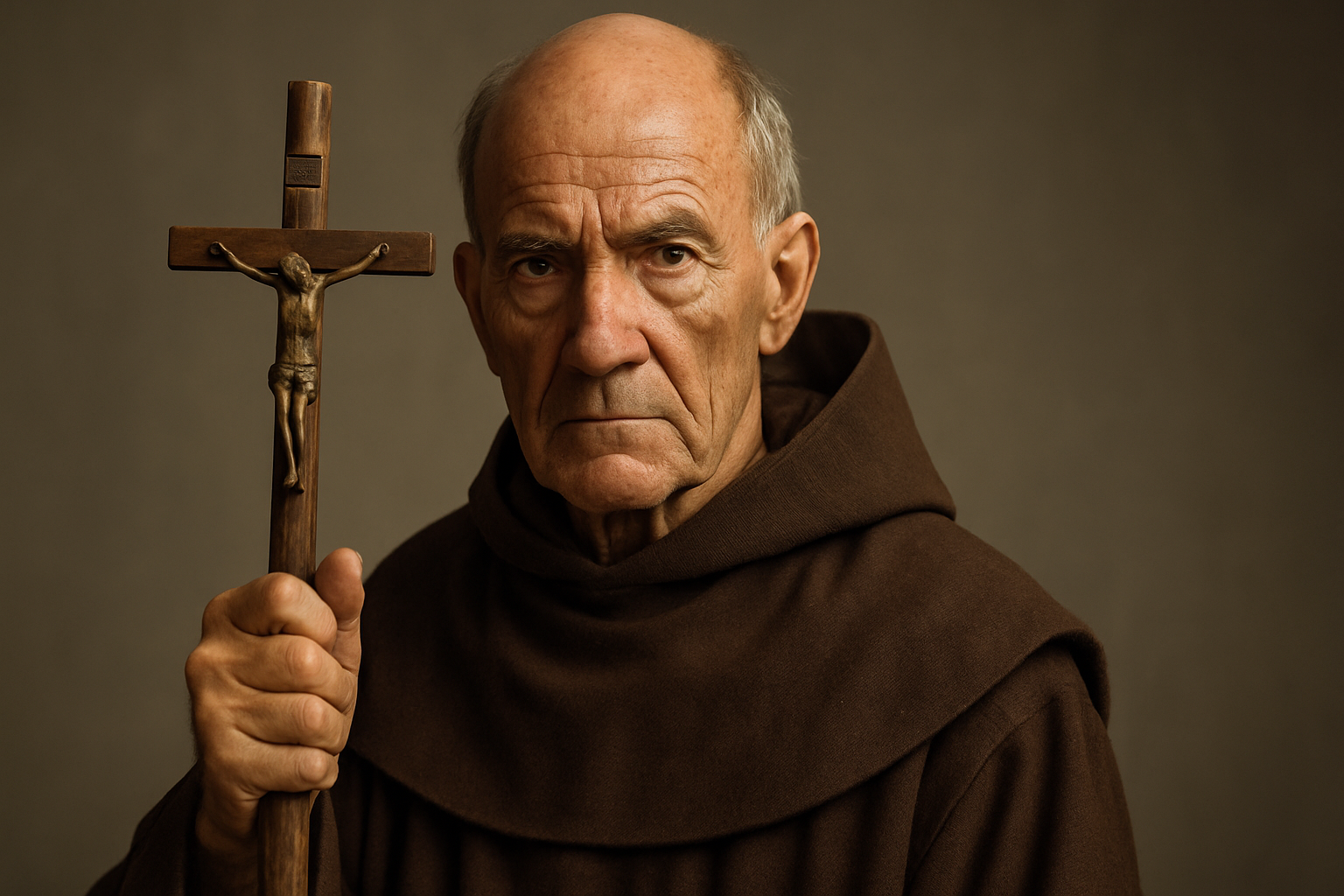
St. Junípero Serra, a Franciscan friar from 18th-century Spain, embarked on a monumental journey across the Atlantic to evangelize the indigenous peoples of the New World. His name is inextricably linked with the founding of the California mission system, a series of religious outposts that would become the foundation of many modern Californian cities. Serra’s life was a testament to unwavering faith, tireless zeal for souls, and profound personal sacrifice, often undertaken amidst severe physical hardship and the immense challenges of a new frontier. This article will delve into his early life, his transformative missionary calling, the lasting spiritual legacy he left behind, and the ways in which his complex story continues to inspire and challenge us today.
Quick Facts
| Fact | Detail |
|---|---|
| Birth | November 24, 1713, Petra, Mallorca, Spain |
| Death | August 28, 1784, Mission San Carlos Borromeo, Carmel, California, New Spain |
| Feast Day | July 1 |
| Patronage | California vocations, environmental conservation |
| Canonized | September 23, 2015, by Pope Francis |
Historical Context & Early Life
The 18th century was a period of immense global change, marked by the Enlightenment in Europe, the expansion of colonial empires, and a renewed missionary fervor within the Catholic Church. Spain, a dominant maritime power, sought to solidify its claim over vast territories in the Americas, and religious missions played a dual role: evangelizing native populations and extending the Spanish crown’s influence. The Franciscan order, known for its commitment to poverty and direct engagement with the poor, was at the forefront of these efforts.
Born Miquel Josep Serra i Ferrer in the small village of Petra on the Spanish island of Mallorca, Junípero Serra entered a world shaped by deep Catholic tradition. His family, humble farmers, instilled in him a strong faith and a sense of duty. From a young age, Miquel showed exceptional intelligence and piety. He attended a Franciscan primary school in Petra, where the friars recognized his potential. At just 16 years old, he joined the Franciscan order, taking the name Junípero, in honor of St. Junípero, one of St. Francis of Assisi’s original companions, known for his humility and joy.
Serra quickly distinguished himself in his studies. He became a brilliant student of theology and philosophy, eventually earning a doctorate and being appointed a professor of philosophy at the Convento de San Francisco in Palma de Mallorca. For many years, he enjoyed a comfortable and prestigious academic life, teaching, preaching, and gaining a reputation as a gifted orator. Yet, beneath the surface of his scholarly achievements, a profound longing for missionary service began to stir.
Calling & Key Milestones
A Scholar’s Call to the Frontier
Despite his success in the academic world, Father Junípero Serra felt an insistent pull towards the missionary life, a desire to preach the Gospel to those who had not yet heard it. The stories of martyrs and missionaries in the New World deeply moved him. In 1749, at the age of 35, he made the momentous decision to leave behind his prestigious academic career and comfortable life in Spain. He volunteered for the arduous and often dangerous mission to the Americas. This decision exemplified a radical commitment to his faith, echoing the words of Christ to leave everything and follow Him.
Journey to the New World and Early Ministry
The journey across the Atlantic was long and perilous. Serra arrived in Veracruz, New Spain (modern-day Mexico) in 1749. During the overland trek from Veracruz to Mexico City, a journey of over 200 miles, he suffered an insect bite that would plague him with a painful, open wound on his leg for the rest of his life. Despite this chronic ailment, which often made walking excruciatingly difficult, Serra never wavered in his commitment. For nine years, he ministered among the Pame people in the Sierra Gorda region of central Mexico, learning their language, establishing missions, and teaching them new agricultural techniques. His time there was marked by tireless work, deep compassion for the indigenous people, and a profound understanding of their cultural practices, which he sought to integrate respectfully with Christian teachings where possible.
Establishing the California Missions
Serra’s most impactful work began in 1769 when he was chosen to lead the Franciscan effort to establish missions in Alta California (present-day California). This venture was part of a larger Spanish expedition, combining military and religious objectives, to secure the northern frontier against potential Russian or British encroachment. Despite his advanced age of 55 and his debilitating leg injury, Serra personally walked much of the 600 miles from Loreto (Baja California) to San Diego. Upon arrival, he founded Mission San Diego de Alcalá, the first of the 21 California missions, often referred to as “the Mother of the California Missions.”
Over the next 15 years, Serra tirelessly oversaw the establishment of nine missions: San Diego de Alcalá, San Carlos Borromeo de Carmelo (his headquarters), San Antonio de Padua, San Gabriel Arcángel, San Luis Obispo de Tolosa, San Francisco de Asís, San Juan Capistrano, Santa Clara de Asís, and San Buenaventura. These missions were not just churches; they were self-sufficient communities where friars taught trades, farming, and Spanish language alongside Christian doctrine. Serra’s vision was to create a new Christian society where indigenous people could live peacefully, learn new skills, and embrace the Catholic faith. He often personally participated in the manual labor of building, demonstrating humility and solidarity with the native converts.
Advocacy for Indigenous Peoples
Throughout his missionary career, Serra consistently acted as a staunch defender of the indigenous peoples against abuses by Spanish soldiers and colonial authorities. He frequently clashed with military commanders over their treatment of the natives, advocating for their rights and dignity. One notable instance was his journey to Mexico City in 1773, where he presented a “Representación” (Memorial) to the Viceroy, a list of 32 articles outlining abuses by the military and requesting reforms. He successfully secured a “Reglamento” (Regulation) that gave missionaries greater authority over their missions and protected the rights of the neophytes (new converts). This journey, undertaken despite his severe leg pain, underscores his profound commitment to justice and his role as a protector of the vulnerable.
Spiritual Fortitude Amidst Hardship
Serra’s life was a continuous testament to spiritual fortitude. He endured constant physical pain from his leg, frequent hunger, and the emotional toll of setbacks and dangers. He faced hostility from some indigenous groups, skepticism from some Spanish officials, and the immense logistical challenges of building new communities in a wilderness. Yet, through it all, he remained deeply rooted in prayer, penance, and devotion to the Eucharist and the Blessed Mother. His letters reveal a man entirely consumed by his mission, willing to suffer any hardship for the spread of the Gospel and the salvation of souls. He saw his suffering as a way to unite himself more closely with Christ, inspiring those around him to persevere through their own difficulties.
Spiritual Legacy & Theological Themes
The spiritual legacy of St. Junípero Serra is rich with profound theological themes and virtues that resonate deeply with Catholic teaching. At its core, Serra’s life exemplifies radical obedience to Christ’s Great Commission: “Go, therefore, and make disciples of all nations, baptizing them in the name of the Father, and of the Son, and of the Holy Spirit” (Matthew 28:19). His willingness to leave everything for the sake of the Gospel is a powerful witness to the call to evangelization.
Perseverance and Self-Sacrifice: Serra’s life was a marathon of hardship. His debilitating leg injury, the grueling journeys, and the constant challenges of frontier life would have broken a lesser man. Yet, he pressed on, driven by an unshakeable faith. This perseverance, rooted in a deep trust in divine providence, aligns with biblical calls to “run with endurance the race that is set before us” (Hebrews 12:1). His self-sacrifice, giving up comfort, academic prestige, and even his own health, mirrors Christ’s ultimate sacrifice on the cross and the call to take up one’s own cross daily.
Love for the Poor and Marginalized: While the historical context of the missions is complex, Serra’s personal motivation was undeniably rooted in a genuine love for the indigenous peoples, whom he sought to bring into the fold of the Church. He saw them as children of God, deserving of salvation and the material benefits that the missions could provide. His vigorous advocacy for their protection against military abuses demonstrates a commitment to social justice and the defense of the vulnerable, echoing Christ’s identification with “the least of these” (Matthew 25:40).
Missionary Zeal and Inculturation: Serra’s burning desire to spread the Catholic faith was the engine of his life. He believed firmly in the salvific truth of the Gospel and felt compelled to share it. While his methods were products of his time and culture, he also showed a remarkable degree of cultural sensitivity for his era, learning native languages and seeking to adapt Catholic practices where possible to local customs. This nascent form of inculturation, the respectful adaptation of Christian expression to local cultures, foreshadows later Church teachings on missionary activity.
Franciscan Spirituality: As a Franciscan, Serra embodied the charism of St. Francis of Assisi: poverty, humility, and a deep love for creation and all humanity. He lived simply, embracing hardship, and tirelessly worked among the people, just as Francis taught. His devotion to the Eucharist and the Blessed Mother also reflect a cornerstone of Franciscan piety, serving as his constant sources of strength and consolation.
Serra’s lasting influence is profound, particularly in California, where the missions he founded remain vital historical and spiritual landmarks. His work laid the groundwork for the development of California’s unique cultural blend, though this process was not without tragic consequences for the indigenous populations, a reality the Church continues to reflect upon. He represents the missionary spirit of the Church, a perennial call to share the Good News, always striving for human dignity and spiritual flourishing.
Devotion Today
Devotion to St. Junípero Serra today is a dynamic and sometimes complex phenomenon, particularly in California. Despite historical controversies, his significance as a Catholic saint and a foundational figure in California’s history continues to draw pilgrims and inspire the faithful.
The most prominent centers of devotion are the California missions themselves. All 21 missions, including the nine founded by Serra, are still active Catholic parishes or historical sites maintained by the Church or state. Mission San Carlos Borromeo de Carmelo, where Serra lived and is buried, serves as a significant pilgrimage destination. Visitors can explore his cell, pray at his tomb, and walk the historic grounds that he once walked. Many missions feature statues and artwork depicting Serra, and some have dedicated museums preserving artifacts from his time.
Annual celebrations include his feast day on July 1st, often observed with special Masses, processions, and educational events at the missions. Various Catholic organizations, particularly those focused on vocations and evangelization, hold events honoring his legacy. Serra clubs, named in his honor, support vocations to the priesthood and religious life worldwide.
Serra’s canonization by Pope Francis in 2015 brought renewed attention to his life and mission. Pope Francis lauded Serra as a “founding father” of the United States and an embodiment of “the Church’s missionary impulse to go forth.” This act of canonization, while celebrated by many, also sparked considerable debate and protest due to the destructive impact of the mission system on Native American cultures and populations. Modern devotion often involves grappling with this nuanced history, recognizing Serra’s personal holiness and missionary zeal while also acknowledging the tragic consequences and systemic injustices that unfolded during the colonial era. For many Catholics, his story offers a challenging yet hopeful call to compassionate evangelization and a constant examination of how faith intersects with complex cultural and historical realities. It prompts reflection on how to honor a saint’s virtues while also seeking reconciliation and justice for historical wrongs.
Reflections for Modern Readers
St. Junípero Serra’s life, though lived in a vastly different era, offers several profound and actionable takeaways for modern readers striving to live a virtuous and impactful life in the 21st century.
-
Embrace Perseverance in Adversity: Serra faced immense physical pain, rejection, and logistical nightmares, yet he never gave up on his mission. For us, this means not being easily deterred by obstacles in our personal, professional, or spiritual lives. If you’re struggling with a difficult project at work, a challenging family situation, or a crisis of faith, Serra’s example calls us to prayerful endurance, trusting that God will provide the strength. Imagine facing a persistent, debilitating illness as Serra did, yet choosing to walk hundreds of miles for a cause you believe in.
-
Practice Radical Generosity and Self-Gift: Serra gave his entire life, his intellect, his health, and his comfort to serve others and spread the Gospel. This challenges us to consider where we are holding back. Are we generous with our time, talent, and treasure? Are we willing to step out of our comfort zones for the sake of a greater good? This could mean volunteering at a local charity, dedicating extra effort to mentor someone, or making sacrifices for the well-being of our family and community, even when it’s inconvenient or costly.
-
Advocate for the Vulnerable: Serra’s consistent efforts to defend the indigenous peoples against exploitation, even at personal risk and inconvenience, highlight the importance of standing up for those who are marginalized or powerless. In our modern world, this could involve advocating for immigrants, supporting fair labor practices, speaking out against injustice, or working to protect human dignity in all its forms. It encourages us to be a voice for the voiceless in our communities and beyond.
-
Cultivate a Missionary Heart: While we may not be called to evangelize in distant lands, Serra’s zeal reminds us that every Christian is called to be a missionary in their own context. This means sharing our faith not just through words, but through our actions, our love, and our witness in daily life. It means being open to encountering people different from ourselves, seeking to understand them, and sharing the hope that we have, whether in our workplace, neighborhood, or family. It calls us to live our faith authentically and joyfully, attracting others to Christ.
Common Symbols and Representations:
-
Franciscan Habit: Serra is almost always depicted in the simple brown robes of the Franciscan order, often with a rope cord around his waist. This symbolizes his commitment to poverty, humility, and his identity as a follower of St. Francis of Assisi.
-
Staff and Crucifix: He is frequently shown carrying a walking staff, symbolizing his extensive journeys and his role as a pilgrim and guide. Often, a crucifix is affixed to the staff or held prominently, representing his devotion to Christ and the centrality of the cross in his missionary work.
-
Mission Architecture/Bells: Images of mission buildings or mission bells in the background signify his role as the founder of the California missions, which became centers of both evangelization and community life. The bells, in particular, symbolize the call to prayer and the gathering of the faithful.
-
Injured Leg: Sometimes, though less frequently in traditional art, his injured leg is subtly depicted or referenced, highlighting his physical suffering and perseverance in the face of chronic pain.
Timeline Summary
- 1713: Born Miquel Josep Serra i Ferrer in Petra, Mallorca, Spain.
- 1730: Enters the Franciscan order, taking the name Junípero.
- 1737: Ordained a priest.
- 1743: Earns a doctorate in theology and becomes a professor at the University of Palma.
- 1749: Leaves Spain for the New World, arriving in Veracruz, New Spain (Mexico). Suffers a leg injury during the journey to Mexico City.
- 1749-1758: Ministers among the Pame people in the Sierra Gorda region of Mexico.
- 1767: Appointed president of the former Jesuit missions in Baja California after the Jesuits are expelled from Spanish territories.
- 1769: Arrives in San Diego and founds Mission San Diego de Alcalá, the first of the California missions.
- 1770: Establishes Mission San Carlos Borromeo de Carmelo, which becomes his headquarters.
- 1773: Travels to Mexico City to advocate for the rights of indigenous peoples, successfully securing the “Reglamento.”
- 1776: Founds Mission San Juan Capistrano.
- 1777: Founds Mission Santa Clara de Asís.
- 1782: Founds Mission San Buenaventura, his ninth and final mission.
- 1784: Dies at Mission San Carlos Borromeo de Carmelo and is buried there.
- 1988: Beatified by Pope John Paul II.
- 2015: Canonized by Pope Francis in Washington D.C., becoming the first Hispanic saint canonized on U.S. soil.
Scripture for Reflection
The life of St. Junípero Serra beautifully illustrates several scriptural themes, especially those related to evangelization, perseverance, and humble service.
Matthew 28:19-20 (The Great Commission):
“Go, therefore, and make disciples of all nations, baptizing them in the name of the Father, and of the Son, and of the Holy Spirit, teaching them to observe all that I have commanded you. And behold, I am with you always, until the end of the age.”
Connection: This passage is the very bedrock of Serra’s mission. His entire life was a direct response to Christ’s command to spread the Gospel, leading him across continents and into challenging frontiers to bring the message of salvation to new peoples.
Philippians 4:13 (Strength in Christ):
“I can do all things in him who strengthens me.”
Connection: Serra’s physical ailments and the immense difficulties of his missionary work might have deterred anyone. Yet, he consistently pushed forward, demonstrating an unwavering faith that his strength came from Christ alone. This verse perfectly encapsulates his spirit of perseverance against all odds.
Matthew 25:40 (Service to the Least):
“And the King will answer them, ‘Truly, I say to you, as you did it to one of the least of these my brothers, you did it to me.'”
Connection: Despite the historical complexities, Serra’s personal efforts to protect the indigenous peoples from military abuse and to provide for their material and spiritual needs align with Christ’s teaching on serving the marginalized. He saw the dignity of Christ in those he sought to serve.
Prayers to St. Junípero Serra
Prayer for the Intercession of St. Junípero Serra
O God, who in your providence chose Saint Junípero Serra to bring the light of faith to the peoples of America, grant, through his intercession, that by spreading the Gospel we may be fruitful in labor and be brought to your eternal dwelling. Through our Lord Jesus Christ, your Son, who lives and reigns with you in the unity of the Holy Spirit, God, forever and ever. Amen.
A Shorter Prayer to St. Junípero Serra
Saint Junípero Serra, model of priestly life and apostolic zeal, you left all to follow Christ and proclaim His Gospel to the indigenous peoples of California. Strengthen us in faith, grant us perseverance in our trials, and inspire us to share the joy of the Gospel with all whom we meet. Protect all who labor for justice and peace, and guide us in building up God’s kingdom on earth. Amen.





