
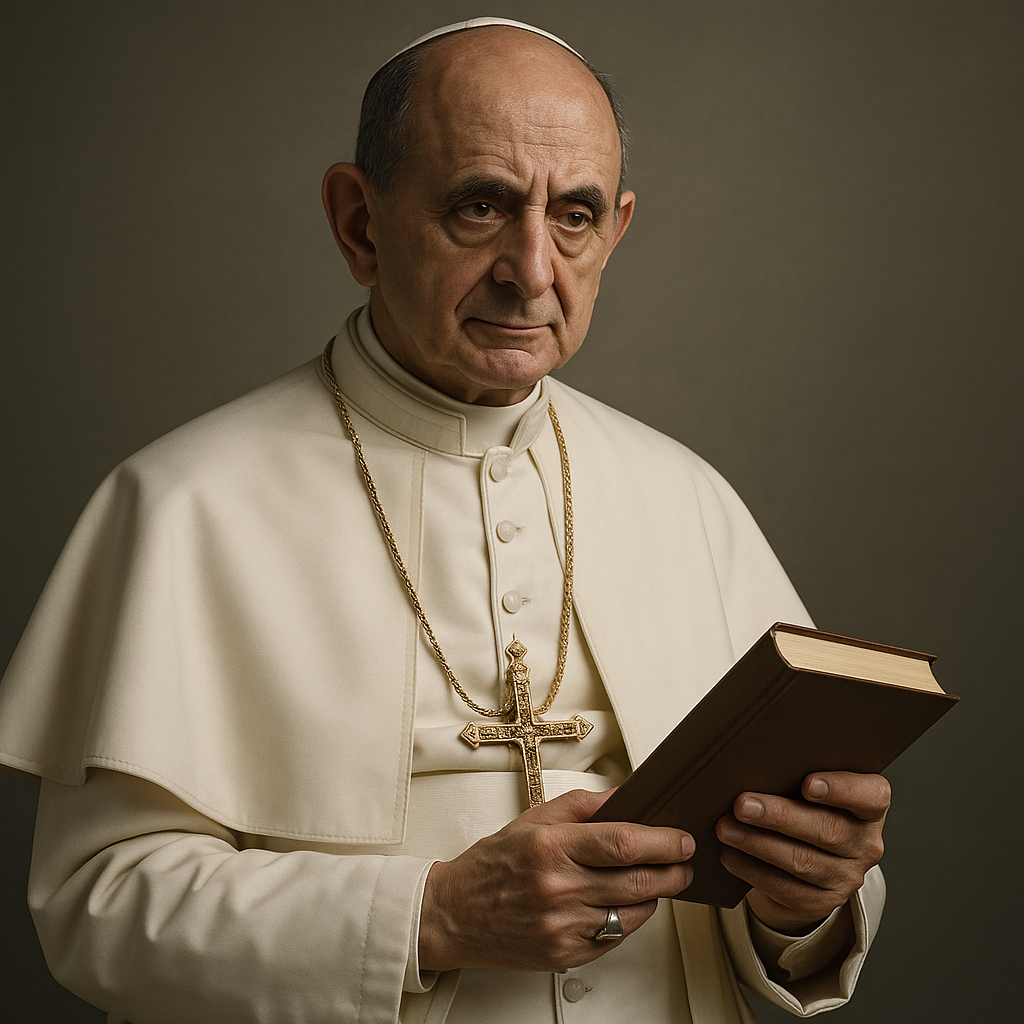
In the sweeping narrative of the Catholic Church, few figures stand as profoundly at the crossroads of tradition and modernity as St. Paul VI. Born Giovanni Battista Montini in a time of great upheaval, his life spanned two world wars and an era of rapid social and technological change. As Pope, he inherited the immense task of guiding the Church through the momentous Second Vatican Council and then implementing its visionary reforms. His papacy, marked by both profound spiritual insight and immense personal suffering, laid foundational stones for how the Church engages with the contemporary world. This article will delve into his early life and call to service, explore the key milestones of his pontificate—including the completion of Vatican II and his groundbreaking encyclicals—examine his enduring spiritual legacy, and consider how his life and teachings continue to offer powerful lessons for modern believers.
Quick Facts
| Category | Detail |
|---|---|
| Birth | Giovanni Battista Montini, September 26, 1897, Concesio, Italy |
| Death | August 6, 1978, Castel Gandolfo, Italy |
| Feast Day | May 29 |
| Patronage | Ecumenism, interfaith dialogue, modern papal leadership, those discerning their vocation in a complex world |
| Canonized | October 14, 2018, by Pope Francis |
Historical Context & Early Life
Giovanni Battista Montini’s early life unfolded against a backdrop of profound change in Italy and across Europe. Born in 1897, his formative years coincided with the burgeoning industrial age, rising nationalism, and the shadow of World War I. Italy itself was a relatively new nation, still navigating the complex relationship between the secular state and the deeply rooted Catholic Church, a tension often referred to as the “Roman Question.” The Church, for its part, was grappling with the challenges of modernity, scientific advancements, and new philosophical currents, often responding with caution and a renewed emphasis on traditional teachings.
Giovanni’s family played a crucial role in shaping his intellectual and spiritual development. His father, Giorgio Montini, was a distinguished lawyer, editor of a Catholic newspaper, and a respected member of the Italian Parliament. He was a prominent figure in Catholic social action and politics, instilling in his son a deep understanding of the Church’s role in public life and the importance of engaged citizenship. His mother, Giuditta Alghisi, was a woman of deep faith and culture, known for her piety and intellectual curiosity. From her, Giovanni inherited a sensitive spirit and a profound appreciation for beauty and the arts.
As a child, Montini was often frail and delicate, leading to much of his early education taking place at home. This period allowed him to cultivate a strong intellectual curiosity and a love for reading. Despite his delicate health, his call to the priesthood was clear and unwavering. He entered the seminary in Brescia in 1916 and was ordained a priest in 1920. His superiors quickly recognized his exceptional intellect and organizational skills, leading him to pursue further studies at the Gregorian University, the University of Rome La Sapienza, and the Pontifical Ecclesiastical Academy, where he trained for the Vatican diplomatic service.
His career soon took him into the heart of the Holy See’s administration. He served for decades in the Vatican’s Secretariat of State, working closely with figures like Eugenio Pacelli, who would later become Pope Pius XII. Montini’s roles included managing the daily affairs of the Holy See, addressing international crises, and fostering the Church’s diplomatic relations across the globe. He was particularly involved in assisting refugees and prisoners of war during World War II, a period that deeply influenced his understanding of human suffering and the need for peace. This long and intimate experience within the Vatican gave him an unparalleled understanding of the global Church’s complexities, its structures, and its challenges, preparing him for the monumental tasks that awaited him as Pope.
In 1954, Pope Pius XII appointed Montini as the Archbishop of Milan, one of the largest and most influential dioceses in the world. This appointment marked a significant shift, moving him from the curial bureaucracy to direct pastoral leadership. In Milan, he became known as a compassionate pastor, a dynamic preacher, and a tireless advocate for the poor and working class. He engaged with the city’s intellectual and industrial life, always seeking to bridge the gap between faith and modern society. His time in Milan solidified his pastoral heart and provided him with invaluable experience in leading a vast and diverse flock, further honing his skills for the highest office in the Church.
Calling & Key Milestones
The call to serve God and the Church led Giovanni Battista Montini through a distinguished career, culminating in his election to the papacy. His pontificate was a period of immense challenge and innovation, marked by several pivotal moments that reshaped the Catholic Church.
Papal Election and the Continuation of Vatican II
In 1958, Pope John XXIII, having succeeded Pius XII, elevated Montini to the College of Cardinals. Just five years later, following John XXIII’s death in June 1963, Cardinal Montini was elected as his successor, taking the name Paul VI. His election signaled a clear mandate: to continue and bring to completion the Second Vatican Council, which Pope John XXIII had courageously opened in 1962. This was no small task. The Council was a gathering of bishops from around the world, aimed at renewing the Church and adapting its message to the modern age. Paul VI understood the Council’s profound significance, stating that it was “the most important event in the history of the Church in our time.” He skillfully guided the remaining three sessions, ensuring theological rigor while fostering a spirit of dialogue and pastoral outreach. His leadership brought the Council to a successful conclusion in December 1965, laying out a vision for a Church deeply engaged with the contemporary world.
Global Travels and Ecumenical Dialogue
Paul VI was a true pioneer in papal travel, becoming the first Pope in history to visit five continents. His historic pilgrimage to the Holy Land in 1964 was particularly momentous, where he met with the Ecumenical Patriarch Athenagoras I of Constantinople. This meeting, the first between a Pope and an Orthodox Patriarch in over five centuries, led to the mutual lifting of the excommunications of 1054 that had caused the Great Schism. He also visited the United Nations, delivering a powerful address on peace, and traveled to India, Africa, and the Americas, bringing the papacy directly to the faithful across the globe. These journeys were not mere symbolic gestures; they were concrete expressions of his deep commitment to ecumenism (unity among Christians) and interfaith dialogue, demonstrating the Church’s universal mission and its desire for peace and understanding among all peoples.
Key Encyclicals and Apostolic Exhortations
Throughout his pontificate, Paul VI issued a series of influential encyclicals (papal letters) and apostolic exhortations that addressed the pressing issues of his time and continue to shape Catholic thought.
- Ecclesiam Suam (1964): His first encyclical, it set the tone for his papacy by emphasizing the Church’s mission of dialogue with the modern world, other Christians, other religions, and non-believers.
- Mysterium Fidei (1965): This encyclical reaffirmed the Church’s traditional teaching on the Real Presence of Christ in the Eucharist, amidst new theological interpretations following Vatican II.
- Populorum Progressio (1967): One of his most significant social encyclicals, it addressed the urgent need for global development, justice, and peace. Paul VI powerfully articulated that “development is the new name for peace,” calling for an integral human development that respects both material and spiritual needs, and advocating for the poor and marginalized nations.
- Sacerdotalis Caelibatus (1967): This encyclical reaffirmed the discipline of priestly celibacy in the Latin Rite of the Catholic Church, explaining its theological and pastoral reasons.
- Humanae Vitae (1968): Perhaps the most well-known and controversial of his encyclicals, Humanae Vitae addressed the regulation of birth, affirming the Church’s consistent teaching against artificial contraception. The encyclical provoked significant debate both within and outside the Church, but Paul VI, with profound conviction, upheld the sanctity of life and the unitive and procreative meanings of marital love, foreseeing potential societal consequences of separating these aspects.
- Evangelii Nuntiandi (1975): This apostolic exhortation, issued at the end of his pontificate, is considered a foundational document for modern evangelization. It articulated a comprehensive vision for how the Church should proclaim the Gospel in the contemporary world, emphasizing the importance of witness, inculturation, and the integral liberation of humanity.
Liturgical Reform and the Synod of Bishops
Paul VI courageously implemented the liturgical reforms mandated by Vatican II. This involved a comprehensive revision of the Roman Missal, leading to the Mass being celebrated in vernacular languages (local languages) rather than exclusively in Latin. These reforms, while sometimes met with resistance, were intended to promote “active participation” of the faithful in the liturgy, making the sacred rites more accessible and understandable. Furthermore, he established the Synod of Bishops in 1965, an institution designed to bring bishops from around the world together to advise the Pope on important matters facing the Church. This move strengthened the principle of collegiality, emphasizing the shared responsibility of the bishops with the Pope in governing the universal Church.
Spiritual Legacy & Theological Themes
St. Paul VI’s spiritual legacy is characterized by his profound commitment to dialogue, his courageous navigation of tradition and modernity, and his deep compassion for all humanity. He exemplified virtues that remain deeply relevant for the Church today, rooted firmly in Scripture and Catholic teaching.
One of the core virtues he embodied was an unyielding belief in the power of **dialogue**. For Paul VI, dialogue was not merely polite conversation but a spiritual imperative, a pathway to understanding and communion. In his first encyclical, Ecclesiam Suam, he outlined four “circles of dialogue”: with the world, with other faiths, with other Christians, and within the Catholic Church itself. This approach aligns perfectly with the scriptural call to “always be ready to give an explanation to anyone who asks you for a reason for your hope, but do it with gentleness and reverence” (1 Peter 3:15). He believed that through respectful engagement, the Church could both share its truth and learn from the world’s experiences, fostering reconciliation and peace.
He also championed **integral human dignity and development**. His encyclical Populorum Progressio remains a landmark document in Catholic social teaching. It moved beyond a simplistic view of aid to advocate for holistic human development, encompassing economic, social, cultural, and spiritual well-being. This vision resonates with the words of Christ, “Truly I tell you, whatever you did for one of the least of these brothers and sisters of mine, you did for me” (Matthew 25:40), extending the Church’s mission to address not just spiritual poverty but also material deprivation and injustice. He saw the fight against poverty and oppression as an essential part of evangelization.
Paul VI’s papacy was also marked by a profound sense of **courage in conviction**, particularly evident in his reaffirmation of traditional teaching on life and marriage in Humanae Vitae. Despite knowing the controversy it would ignite, he stood firm in upholding the Church’s understanding of the unitive and procreative aspects of marital love. This act of fidelity to Catholic doctrine, even in the face of immense pressure, reflects the biblical call to “stand firm in the faith” (1 Corinthians 16:13). He believed that true pastoral care sometimes requires speaking difficult truths out of love for humanity’s authentic good.
His lasting influence on the Church is multifaceted. He successfully concluded and began the implementation of the **Second Vatican Council**, ensuring that its decrees translated into lived reality for the universal Church. He reformed the **liturgy**, making it more accessible and participatory, and established the **Synod of Bishops**, strengthening the principle of collegiality—the shared responsibility of bishops with the Pope in governing the Church. He also significantly contributed to **Mariology** by declaring Mary the “Mother of the Church” during Vatican II, fostering a deeper devotion to the Blessed Mother as a model for the Church’s maternity.
Ultimately, Paul VI’s theological approach sought to bridge the gap between immutable truths of faith and the changing needs of humanity, offering a compassionate yet clear voice to a world searching for meaning. He lived out his pontificate with intense personal suffering and a deep sense of responsibility, often feeling the weight of the Church’s divisions and the challenges of the modern age. This suffering, offered up to Christ, only deepened his spiritual resolve and his reliance on divine providence.
Devotion Today
Devotion to St. Paul VI, while still growing given his recent canonization in 2018, is already taking root in various forms across the Catholic world. He is revered as the Pope who courageously guided the implementation of the Second Vatican Council and articulated the Church’s response to the complex challenges of the modern era.
Though not associated with specific ancient shrines like many older saints, St. Paul VI is honored in churches and basilicas around the globe, particularly in Rome. His tomb is located in the crypt of St. Peter’s Basilica, where pilgrims can visit and offer prayers. Many dioceses and parishes, especially those that have undergone significant post-Vatican II renewal, hold him in high esteem and commemorate his life and teachings.
His feast day is celebrated annually on May 29, a date chosen not for his birth or death, but for his priestly ordination in 1920, emphasizing his identity as a priest who faithfully served Christ and the Church. On this day, Masses are offered in his honor, and homilies often reflect on his contributions to ecumenism, human development, and the renewal of the liturgy. Catholics are encouraged to reflect on his encyclicals, especially Populorum Progressio and Evangelii Nuntiandi, to deepen their understanding of Catholic social teaching and the call to evangelization.
Organizations dedicated to Catholic social justice, interfaith dialogue, and missionary work often look to St. Paul VI as an inspiration and guide. His groundbreaking travels and his institution of the Synod of Bishops serve as models for how the Church can engage globally and collaboratively. Seminaries and theological institutions frequently study his writings, especially his profound insights into dialogue and the modern world.
For many, his life offers a powerful example of steadfast faith and pastoral courage in the face of immense change and opposition. Devotion to St. Paul VI today often involves praying for Christian unity, for the poor and marginalized, and for clarity and courage in proclaiming the Gospel in a complex world, echoing the very concerns that defined his remarkable pontificate.
Reflections for Modern Readers
St. Paul VI, often called the “Pope of Dialogue,” offers a wealth of wisdom and actionable lessons for us living in the 21st century. His life and pontificate speak powerfully to our own challenges and aspirations.
- Embrace Dialogue in a Polarized World: Paul VI taught us that dialogue is essential for understanding and peace, not just between nations or religions, but also within communities and families. In an age of social media echo chambers and political polarization, his call to respectful listening and clear, charitable communication is more vital than ever. For example, instead of immediately dismissing someone’s viewpoint online, we can try to understand the concerns beneath their words, seeking common ground even amidst disagreement, much like Paul VI sought common ground with other Christian leaders.
- Courage in Conviction: Paul VI faced tremendous pressure and opposition, particularly after the publication of Humanae Vitae. Yet, he held firm to what he believed was God’s truth, even when it was unpopular. This teaches us the importance of developing our own moral compass based on faith and reason, and having the courage to stand by our convictions when they are challenged. This might mean advocating for ethical choices in our workplaces, defending the sanctity of life, or choosing integrity over expediency in our personal lives, even when it’s difficult.
- Global Citizenship and Care for the Poor: Through Populorum Progressio, St. Paul VI urged us to see the world as interconnected and to recognize our shared responsibility for the development and well-being of all peoples. He challenged the rich nations to assist the poor, emphasizing that “development is the new name for peace.” For modern readers, this translates into being conscious consumers, supporting fair trade, advocating for policies that promote global justice, and actively participating in efforts to alleviate poverty and inequality both locally and internationally.
- Faithful Adaptation and Renewal: Paul VI skillfully guided the Church through the post-Vatican II era, implementing reforms that brought the Church closer to the modern world while preserving its core teachings. This reminds us that faithfulness to tradition does not mean rigidity, but rather a dynamic engagement with the present. We can apply this by seeking to deepen our own faith understanding, engaging with Catholic teaching in contemporary contexts, and finding new ways to express timeless truths in a relevant way, whether in our parishes, our families, or our personal prayer lives.
- Enduring Suffering with Hope: His pontificate was marked by significant personal suffering due to the challenges within the Church and the world. Yet, he faced these trials with humility and unwavering hope in Christ. This offers a powerful lesson on accepting difficulties and setbacks in our own lives, viewing them not as roadblocks but as opportunities for spiritual growth and deeper reliance on God, knowing that even in hardship, God is at work.
In art and jewelry, St. Paul VI is often represented with symbols reflecting his pivotal role in the modern Church. He is commonly depicted wearing a **papal tiara**, even though he famously laid aside his own to be sold for the poor, as it represents the papacy he inherited and reformed. A **dove** might symbolize his commitment to peace, dialogue, and the Holy Spirit’s guidance during Vatican II. A **cross and globe** reflect his groundbreaking travels and his vision for a universal Church deeply engaged with the entire world. Sometimes, he is shown with a **book or scroll**, representing his many important encyclicals and the documents of the Second Vatican Council, which he brought to completion. These symbols remind us of his legacy as a leader who bridged eras, initiated dialogue, and championed human dignity amidst the complexities of modern life.
Timeline Summary
- 1897: Born Giovanni Battista Montini in Concesio, Italy.
- 1920: Ordained a priest for the Diocese of Brescia.
- 1922-1954: Served in the Vatican Secretariat of State, working closely with Pope Pius XII.
- 1954: Appointed Archbishop of Milan by Pope Pius XII.
- 1958: Created Cardinal by Pope John XXIII.
- 1963: Elected Pope, taking the name Paul VI; continued the Second Vatican Council.
- 1964: Historic pilgrimage to the Holy Land; met with Ecumenical Patriarch Athenagoras I. Issued first encyclical, Ecclesiam Suam.
- 1965: Successfully brought the Second Vatican Council to its conclusion. Established the Synod of Bishops. Mutually lifted excommunications with Patriarch Athenagoras I.
- 1967: Issued the social encyclical Populorum Progressio and Sacerdotalis Caelibatus.
- 1968: Published the controversial but prophetic encyclical Humanae Vitae.
- 1975: Issued the influential apostolic exhortation Evangelii Nuntiandi on evangelization.
- 1978: Died on August 6 at Castel Gandolfo.
- 2014: Beatified by Pope Francis.
- 2018: Canonized by Pope Francis, officially recognized as a saint.
Scripture for Reflection
The life and teachings of St. Paul VI are deeply illuminated by various passages from Sacred Scripture, particularly those emphasizing dialogue, courageous witness, and care for the human family.
-
For Dialogue and Respectful Engagement: 1 Peter 3:15
“But sanctify Christ as Lord in your hearts. Always be ready to give an explanation to anyone who asks you for a reason for your hope, but do it with gentleness and reverence.”St. Paul VI’s entire pontificate can be seen as an embodiment of this verse. He understood the Church’s mission to engage with the modern world not through condemnation, but through a genuine desire for understanding, delivered with humility and respect. His call for dialogue, both within the Church and with the wider world, exemplifies the “gentleness and reverence” called for by St. Peter.
-
For Human Dignity and Integral Development: Matthew 25:40
“And the King will answer, ‘Truly I tell you, whatever you did for one of the least of these brothers and sisters of mine, you did for me.'”This foundational passage for Christian social teaching profoundly animated Paul VI’s work, especially in his encyclical Populorum Progressio. He recognized that caring for the poor, promoting justice, and fostering the integral development of every person is not just philanthropy, but a direct service to Christ Himself. He saw the face of Christ in the marginalized and suffering across the globe.
-
For Courage and Trust Amidst Trials: John 16:33
“I have told you this so that you might have peace in me. In the world you will have trouble, but take courage, I have conquered the world.”St. Paul VI experienced immense personal suffering and profound challenges during his papacy, navigating the turbulent post-conciliar period and facing opposition for some of his teachings. Yet, he consistently exhibited courage and an unwavering trust in Christ’s victory. This verse speaks to his conviction that despite worldly difficulties and internal Church struggles, peace is found in Christ, and hope is always justified because Christ has already triumphed.
Prayers to St. Paul VI
O Holy Father, St. Paul VI, who, in your pontificate, guided the Church through the implementation of the Second Vatican Council and courageously proclaimed the Gospel to a modern world, we humbly ask for your intercession.
You, who dedicated your life to dialogue, peace, and the integral development of all peoples, pray for us that we may have open hearts and minds to engage with others, fostering understanding and communion in our polarized world. Grant us the wisdom to uphold truth with charity and the courage to witness to our faith, even amidst difficulty, as you did with your steadfast leadership.
Inspire us to care deeply for the poor, the marginalized, and all those who suffer, that we may work tirelessly for justice and peace, seeing Christ in our brothers and sisters. Help us to embrace the reforms of the Church with a spirit of faithfulness and zeal, always seeking renewal guided by the Holy Spirit.
St. Paul VI, pray for the unity of Christians and for fruitful dialogue among all religions. May your example strengthen our commitment to evangelization, that Christ’s saving message may reach every corner of the earth. Amen.





