
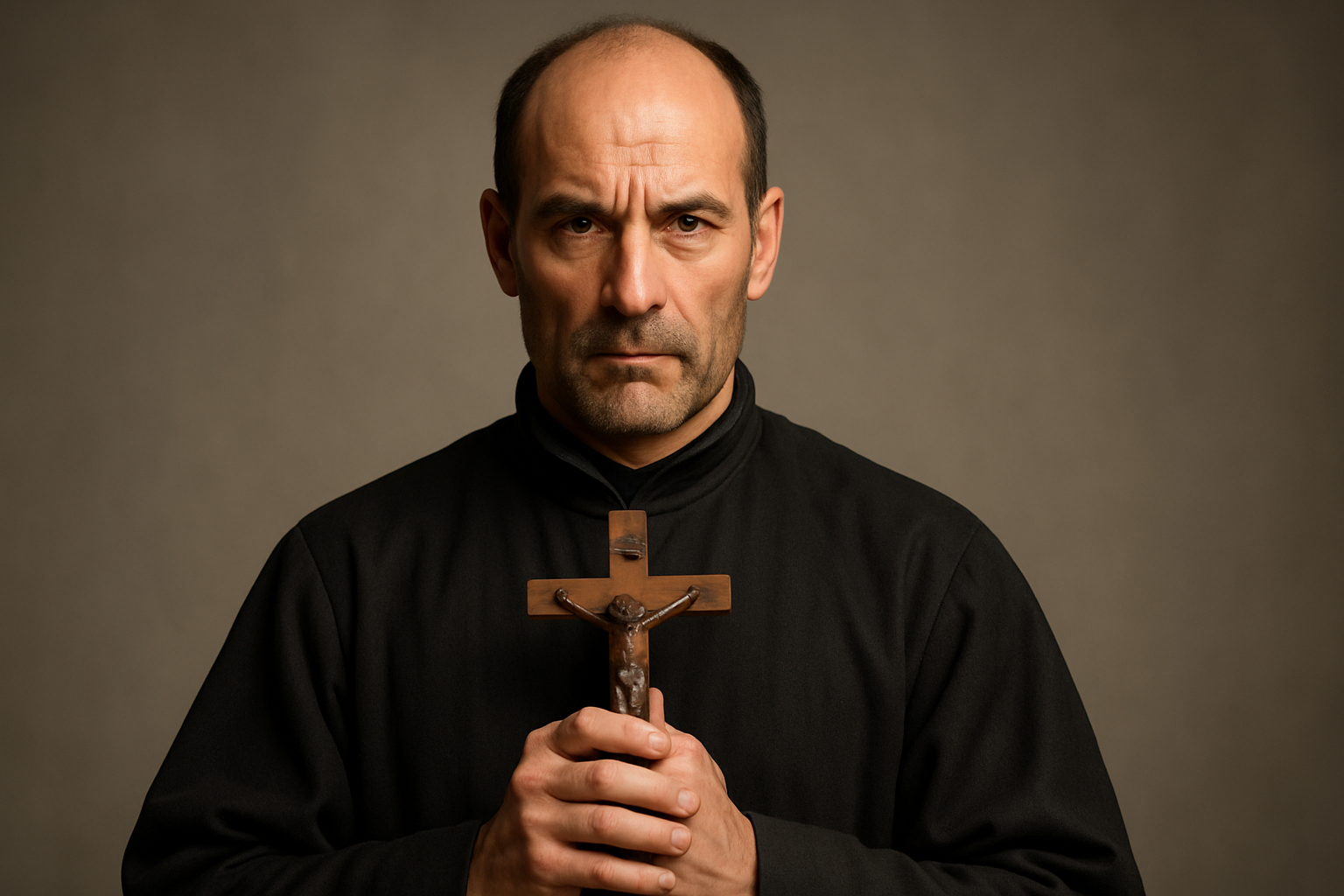
The story of Saints Jean de Brébeuf and his companions, often known as the North American Martyrs, is a compelling testament to unwavering faith and incredible fortitude in the face of unimaginable hardship. These eight Jesuit missionaries and lay associates embarked on a perilous mission to bring the Catholic faith to the indigenous peoples of what is now Canada and upstate New York during the 17th century. Their lives of dedicated service, cultural immersion, and ultimately, heroic martyrdom, offer profound lessons on courage, perseverance, and the boundless love for God and neighbor. This article will explore their historical context, delve into their remarkable callings and ministries, examine their enduring spiritual legacy, and reflect on how their sacrifices continue to inspire believers in the modern world.
Quick Facts
| Attribute | Detail |
|---|---|
| Birth | Jean de Brébeuf: March 25, 1593 (Condé-sur-Vire, France). Companions born between 1593 and 1620. |
| Death | Martyred between 1642 and 1649 in New France (present-day Canada and U.S.). |
| Feast Day | October 19 (Universal Church); September 26 (Canada). |
| Patronage | Canada, North America, missionaries, Huron-Wendat people, torture victims. |
| Canonized | June 29, 1930, by Pope Pius XI. |
Historical Context & Early Life
The 17th century was a tumultuous and transformative period, marked by the zealous spirit of the Catholic Counter-Reformation and the Age of Exploration. Following the Council of Trent, the Catholic Church experienced a powerful resurgence, with new religious orders, particularly the Society of Jesus (Jesuits), at the forefront of missionary endeavors. These missionaries felt a profound call to spread the Gospel to distant lands, driven by a desire for souls and a renewed sense of purpose.
In Europe, nations like France, England, and Spain were vying for colonial dominance, establishing settlements and trade routes in the Americas. New France, encompassing vast territories around the St. Lawrence River, was a frontier characterized by dense forests, harsh winters, and complex relationships with various indigenous nations. The French colonists were primarily interested in the lucrative fur trade, which brought them into contact and often conflict with the native inhabitants.
Among the indigenous peoples, two powerful confederacies dominated the region: the Huron-Wendat (allied with the French) and the Haudenosaunee (Iroquois, often allied with the Dutch or English). Their ongoing warfare profoundly impacted the lives of both colonists and missionaries, creating a volatile and dangerous environment.
Jean de Brébeuf, the most prominent of the North American Martyrs, was born in 1593 in Condé-sur-Vire, Normandy, France, into a noble family. He received a good education and, at the age of 24, entered the Society of Jesus. His formation as a Jesuit was rigorous, emphasizing intellectual discipline, spiritual development, and a strong commitment to missionary work. Brébeuf was known for his robust physique, his gentle but determined spirit, and a remarkable aptitude for languages, qualities that would prove invaluable on the mission field. His companions came from similar backgrounds of faith and education, each feeling a personal call to dedicated service despite the known dangers of the New World.
Calling & Key Milestones
The call to missionary life in New France was not for the faint of heart. It meant leaving behind family, culture, and comfort for a life of extreme hardship, constant danger, and immense uncertainty. Yet, for Jean de Brébeuf and his companions, this call was an undeniable divine imperative.
The Journey to New France and Early Missions
Jean de Brébeuf first arrived in New France in 1625, making him one of the earliest Jesuit missionaries in the region. He spent his initial years living among the Montagnais people (now Innu) before being assigned to the Huron-Wendat confederacy, who resided in what is now Huronia, Ontario. His early experiences were foundational, as he dedicated himself to learning the Huron language and customs, recognizing that deep understanding was crucial for effective evangelization. This immersion was not without significant challenges, including adapting to a radically different diet, climate, and way of life, as well as overcoming initial suspicion from the indigenous communities.
Life Among the Huron and the Sainte-Marie Mission
Brébeuf returned to France for a period due to political tensions but eagerly returned to Huronia in 1634. He, along with companions like Antoine Daniel and Charles Garnier, established missions deep within Huron territory. Their primary mission post became Sainte-Marie among the Hurons, a fortified compound that served as a spiritual center, a hospital, and a hub for missionary activities. Here, the Jesuits lived closely with the Huron people, sharing their daily lives, teaching about Christianity, and tending to their spiritual and physical needs. Brébeuf’s unique linguistic talents allowed him to translate Christian doctrine into the Huron language and even compose a Huron catechism. He produced detailed reports, known as the “Jesuit Relations,” which offer invaluable ethnographic insights into 17th-century Huron society and the challenges of missionary life.
Despite their efforts, conversion was slow and fraught with difficulties. The Huron faced devastating epidemics of European diseases, which they often attributed to the “blackrobes,” leading to mistrust and hostility. The missionaries themselves endured severe privations, hunger, and the constant threat of intertribal warfare, particularly from the aggressive Iroquois.
The Escalation of Conflict and the Martyred Companions
The rivalry between the Huron and the Iroquois intensified throughout the 1640s. The Iroquois, better armed and strategically positioned, launched increasingly devastating raids. It was during this period of escalating violence that the companions met their heroic deaths.
- René Goupil (Lay Brother) and Isaac Jogues (Priest): In 1642, Isaac Jogues, a young, fervent priest, and René Goupil, a lay brother, were captured by Iroquois warriors near Lake Champlain. Goupil was martyred for making the Sign of the Cross on a child. Jogues endured brutal torture but was later ransomed by the Dutch. Despite his physical deformities from torture, he felt compelled to return to his mission. He was martyred by the Mohawk (an Iroquois nation) in 1646 at Ossernenon (present-day Auriesville, New York), becoming the first priest martyred in North America.
- Antoine Daniel (Priest): In 1648, Father Daniel was killed during an Iroquois raid on the Huron village of Teanaostaye. He was shot through with arrows and his body thrown into a fire while ministering to his flock.
- Jean de Brébeuf and Gabriel Lalemant (Priests): The most harrowing martyrdoms occurred in March 1649. Brébeuf and Lalemant were captured during an Iroquois assault on the mission village of St. Louis. They were subjected to prolonged and unspeakable torture, designed to break their spirits. Brébeuf, a giant of a man, reportedly endured hours of agony, even having boiling water poured over him in mockery of baptism, yet he continued to preach Christ until his last breath. Lalemant, a more delicate man, suffered even longer, for seventeen hours. Their fortitude in the face of such brutality deeply impressed their captors, even as they killed them.
- Charles Garnier (Priest): A few months later, in December 1649, Charles Garnier was martyred during another Iroquois raid on a Huron village. He was shot and tomahawked while giving absolution to dying converts.
- Noël Chabanel (Priest): Also in December 1649, Father Chabanel, who struggled with the rigors of mission life, was killed by an apostate Huron.
These eight men—Jean de Brébeuf, Isaac Jogues, Gabriel Lalemant, Antoine Daniel, Charles Garnier, Noël Chabanel (all priests), and René Goupil, Jean de La Lande (lay associates, the latter martyred with Jogues)—were united in their mission and their ultimate sacrifice, giving rise to the title “North American Martyrs.”
Spiritual Legacy & Theological Themes
The spiritual legacy of the North American Martyrs is one of profound courage, steadfast faith, and radical love. Their lives exemplify several core virtues that resonate deeply with Catholic teaching and Scripture.
Courage and Endurance: Faced with unimaginable suffering, torture, and death, these saints did not waver. Their unwavering commitment to their vows and their mission in the face of such brutality is a testament to the virtue of fortitude. This aligns with Christ’s words in
Matthew 10:22, “And you will be hated by all for my name’s sake. But the one who endures to the end will be saved.”
Their stories challenge us to examine the depth of our own convictions and our willingness to endure hardship for the sake of our faith.
Evangelical Zeal and Self-Sacrifice: Driven by an intense desire to spread the Gospel and bring souls to Christ, they abandoned all comfort and security. Their self-sacrifice mirrors Christ’s ultimate sacrifice on the cross.
John 15:13 states, “Greater love has no one than this, that someone lay down his life for his friends.”
The martyrs literally laid down their lives, not only for their fellow missionaries but for the spiritual well-being of the indigenous peoples they sought to serve, even those who became their tormentors. This radical self-giving for the sake of the Gospel remains an enduring inspiration for all missionaries and indeed, for every Christian called to bear witness to their faith.
Cultural Sensitivity and Incarnational Ministry: Jean de Brébeuf, in particular, demonstrated a remarkable effort to understand and adapt to Huron culture. His extensive linguistic work and detailed ethnographic reports were groundbreaking. While operating within a colonial framework, his approach to evangelization emphasized living among the people, learning their language, respecting their customs (where they did not contradict Christian principles), and building relationships. This “incarnational” approach, where missionaries immerse themselves in the lives of those they serve, reflects the Incarnation of Christ himself, who fully entered into human experience to redeem humanity. This model of respectful engagement, despite the tragic outcomes, continues to inform missionary approaches today.
Their lasting influence is palpable. They are patrons of Canada and North America, a powerful reminder of the foundational sacrifices made for the faith on this continent. Their canonization in 1930 galvanized devotion and inspired countless individuals to consider missionary vocations or to deepen their commitment to Christ in their own lives. Their stories are depicted in art, literature, and film, serving as a powerful visual and narrative reminder of the cost of discipleship. The very ground where they suffered has become a place of pilgrimage, a tangible link to their heroic witness.
Devotion Today
Devotion to the North American Martyrs remains strong, particularly in Canada and the United States, where their sacrifices hold special significance. The most prominent center of devotion is the Martyrs’ Shrine in Midland, Ontario, located near the reconstructed site of Sainte-Marie among the Hurons. This beautiful basilica and pilgrimage site draws thousands of visitors annually, offering a place for prayer, reflection, and honoring the memory of these saints. The Shrine includes a museum, outdoor stations of the cross, and a powerful sense of history and spirituality.
Another significant site is the Shrine of Our Lady of Martyrs in Auriesville, New York, built on the very ground where Saint Isaac Jogues and Saint René Goupil were martyred. This shrine also offers pilgrims a chance to walk in the footsteps of the saints and connect with their heroic witness.
Their feast day, October 19 (September 26 in Canada), is celebrated with special Masses and prayer services, particularly in Jesuit communities and parishes dedicated to them. Many churches, schools, and institutions across North America bear their names, serving as constant reminders of their legacy. Pilgrimages, both organized and personal, continue to be made to these holy sites, offering opportunities for spiritual renewal and a deeper appreciation for the cost of faith.
Reflections for Modern Readers
The lives of the North American Martyrs, though set in a distant century and a vastly different cultural landscape, offer timeless lessons that resonate deeply with modern readers.
-
Courage in the Face of Adversity: These saints faced not only physical torture but also profound loneliness, cultural alienation, and the constant threat of death. Their unwavering courage in holding onto their faith and mission reminds us to stand firm in our convictions, even when unpopular or difficult.
Real-world example: In a world that often demands compromise, we might be called to defend our Christian values in a conversation with friends, make an ethical decision at work that goes against the grain, or persevere in a challenging prayer life despite distractions.
-
Intercultural Dialogue and Respect: Despite the complexities of the colonial era, figures like Brébeuf made earnest efforts to learn indigenous languages and understand their cultures. While imperfect, their example calls us to engage in respectful dialogue and strive for understanding across cultural, social, and political divides.
Real-world example: Actively listening to and seeking to understand someone with a different background or perspective, participating in initiatives that promote cultural understanding, or simply engaging with diverse communities in our neighborhoods with an open mind and heart.
-
Perseverance in Mission: The missionaries endured years of hardship, meager results, and constant danger. Yet, they never gave up on their calling to spread the Gospel. Their perseverance reminds us to stay committed to our vocations, whether it’s raising a family, pursuing a career, or serving in ministry, even when faced with setbacks and frustrations.
Real-world example: A parent consistently teaching their children about faith despite teenage skepticism, a dedicated volunteer continuing service even when feeling unappreciated, or an artist persistently pursuing their craft despite rejection.
-
Sacrifice for a Greater Good: The ultimate lesson from the martyrs is their willingness to sacrifice their very lives for Christ and the salvation of souls. This challenges us to consider what we are willing to “die to” in our own lives – our ego, comforts, or worldly ambitions – for the sake of God’s kingdom and the well-being of others.
Real-world example: Making time for family despite a demanding job, generously donating resources or time to a cause, or choosing forgiveness over holding a grudge, thereby sacrificing personal anger for reconciliation.
In art and jewelry, the North American Martyrs are often depicted with symbols that reflect their lives and deaths. Most commonly, they are shown with crucifixes, symbolizing their faith and ultimate martyrdom. Palm branches are also frequent, a traditional symbol of triumph over death for martyrs. Sometimes, elements related to their mission among Native American peoples, such as canoes or specific indigenous tools (often those used in their torture, like hatchets or arrows), are present, representing the context of their sacrifice. For Jean de Brébeuf specifically, a chalice or water vessel can appear, referencing the “baptism by fire” he endured. These symbols serve not as mere historical markers but as powerful reminders of their steadfast witness and the profound meaning of their sacrifice.
Timeline Summary
- 1593: Jean de Brébeuf is born in Condé-sur-Vire, France.
- 1617: Jean de Brébeuf enters the Society of Jesus (Jesuits).
- 1625: Brébeuf first arrives in New France, beginning his missionary work.
- 1634: Brébeuf returns to Huronia after a period in France, establishing the first permanent mission.
- 1639: Sainte-Marie among the Hurons, the central mission complex, is established.
- 1642: René Goupil and Isaac Jogues are captured by the Iroquois; Goupil is martyred.
- 1646: Isaac Jogues returns to the Mohawk country and is martyred. Jean de La Lande is also martyred with him.
- 1648: Antoine Daniel is martyred during an Iroquois raid on Teanaostaye.
- 1649 (March): Jean de Brébeuf and Gabriel Lalemant are brutally martyred by the Iroquois at St. Louis.
- 1649 (December): Charles Garnier and Noël Chabanel are martyred in further Iroquois raids.
- 1930: The eight North American Martyrs are canonized by Pope Pius XI.
Scripture for Reflection
The lives of the North American Martyrs profoundly illustrate several scriptural truths, particularly those related to suffering, sacrifice, and mission.
John 15:13: “Greater love has no one than this, that someone lay down his life for his friends.”
This verse encapsulates the essence of the martyrs’ sacrifice. They not only laid down their lives for their fellow missionaries and the indigenous people they served but ultimately for Christ, their greatest friend. Their deaths were a supreme act of love, reflecting the love of Christ on the cross.
Matthew 10:28-31: “And do not fear those who kill the body but cannot kill the soul. Rather fear him who can destroy both soul and body in hell. Are not two sparrows sold for a penny? And not one of them will fall to the ground apart from your Father. But even the hairs of your head are all numbered. Fear not, therefore; you are of more value than many sparrows.”
These words from Jesus speak directly to the courage of the martyrs. They faced physical death and brutal torture, yet their faith allowed them to overcome fear. They trusted in God’s providence, knowing that their souls were safe in His hands and that their suffering was not unnoticed by their loving Father.
Romans 8:35, 37-39: “Who shall separate us from the love of Christ? Shall tribulation, or distress, or persecution, or famine, or nakedness, or danger, or sword?… No, in all these things we are more than conquerors through him who loved us. For I am sure that neither death nor life, nor angels nor rulers, nor things present nor things to come, nor powers, nor height nor depth, nor anything else in all creation, will be able to separate us from the love of God in Christ Jesus our Lord.”
This powerful passage from St. Paul perfectly articulates the martyrs’ invincible faith. Despite enduring every form of tribulation imaginable, they remained inseparable from the love of Christ. Their lives are a living testament to the truth that no earthly suffering can break the bond between a devoted soul and God.
Prayers to the North American Martyrs
Prayer to the North American Martyrs
O God, Who in the New World didst hallow the first fruits of the faith by the blood of Thy Martyrs, grant, we beseech Thee, that through the intercession of these, Thy Saints, and especially of Saints Jean de Brébeuf, Isaac Jogues, and their Companions, we may be strengthened in the same faith, and thereby be brought into the eternal fellowship of Thy Saints; through Christ our Lord. Amen.
Another Prayer to the North American Martyrs
Blessed North American Martyrs, faithful followers of Christ, you left your homes and families to bring the light of the Gospel to a new world. You endured hardships, dangers, and ultimately, gave your lives as a testament to your unwavering faith. We ask you to intercede for us, that we may have the courage to witness to our faith in our own lives. Inspire us to love God above all things, to serve our neighbors with generosity, and to persevere in holiness even amidst trials and difficulties. Protect missionaries throughout the world, strengthen the Church in North America, and guide all peoples to the truth of Christ. Through your powerful intercession, may we, too, remain faithful until death and attain the joy of eternal life with God. Amen.





