
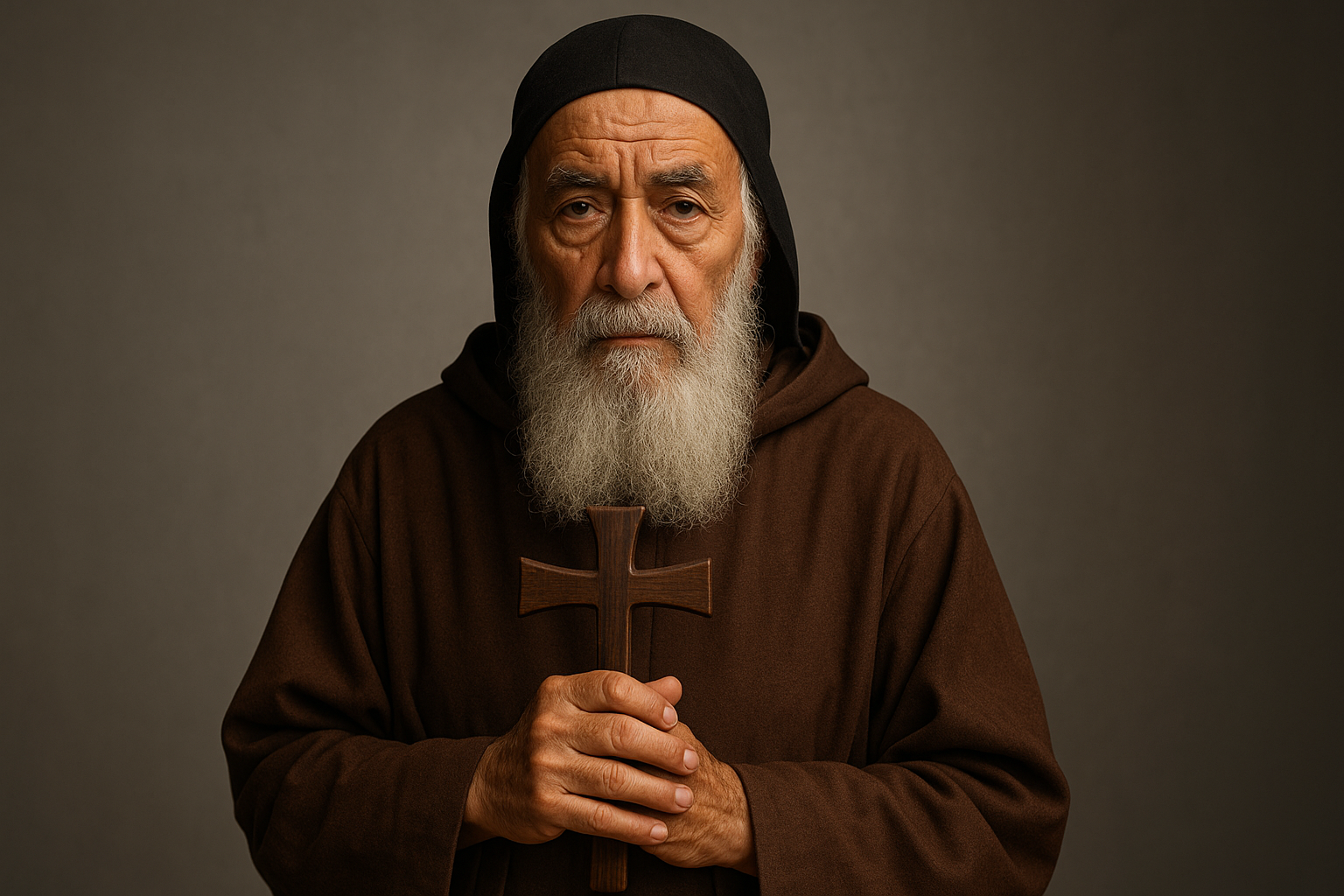
In the vast, sun-baked landscapes of ancient Egypt, a figure emerged whose life would forever alter the course of Christian spirituality: Saint Anthony the Great. Born in the heart of the 3rd century, his journey from a prosperous village youth to the revered “Father of Monasticism” is a testament to radical faith, spiritual fortitude, and an unwavering pursuit of God. Anthony’s story isn’t just one of solitude and asceticism; it’s a vibrant narrative of profound personal conversion, intense spiritual warfare, and an unexpected leadership that drew countless seekers to the desert’s quiet wisdom. This article will delve into his early life, his pivotal calling to the wilderness, the significant milestones that shaped his legacy, and the enduring spiritual themes he championed. We will explore how his exemplary life continues to inspire devotion today, offering modern readers timeless reflections on faith, discipline, and the search for inner peace, ultimately making him a beacon for all who strive for a deeper relationship with the divine.
Quick Facts
| Category | Detail |
|---|---|
| Birth | Circa 251 AD, Coma (modern-day Qiman al-Arus), Egypt |
| Death | January 17, 356 AD, Outer Desert, Egypt |
| Feast Day | January 17 (Western Christianity), January 30 (Eastern Christianity) |
| Patronage | Monks, hermits, skin diseases, temptations, livestock, basket weavers, butchers, gravediggers |
| Canonized | Pre-Congregation (Venerated since his death) |
Historical Context & Early Life
To truly understand St. Anthony the Great, we must first glimpse the world into which he was born. The year was approximately 251 AD, and Egypt was a vital province of the vast Roman Empire. While Rome’s power was undeniable, its grip on Egyptian culture was less absolute, allowing ancient traditions to mingle with new influences. The dominant religion of the empire was paganism, characterized by a pantheon of gods and emperor worship, but Christianity was rapidly growing, especially in the East. Persecutions against Christians were not uncommon, though by Anthony’s time, the most intense waves were yet to come, notably under Emperor Diocletian. The Church itself was still relatively young, dynamic, and grappling with foundational theological questions, striving to define its identity and practices amidst a pagan world.
Anthony’s family resided in Coma (modern-day Qiman al-Arus), a village in Middle Egypt. They were Coptic Christians, an early branch of Christianity native to Egypt, and were considerably wealthy, owning extensive land and resources. This affluence meant Anthony grew up in relative comfort, free from the daily struggles many faced. However, his early life was marked by a distinct simplicity. Unlike many of his peers, he showed little interest in formal education or worldly pleasures. Instead, he preferred to attend church services, listening intently to the Scripture readings and sermons. He was known to be a quiet, thoughtful young man, deeply religious even in his youth, absorbing the lessons of faith and piety from his parents.
The cultural backdrop of Roman Egypt also played a subtle role. Egyptian society, with its ancient spiritual heritage, often valued contemplation and a connection to the divine. The desert itself, vast and imposing, held a mystical allure for many, seen as a place of purification and encounter. While Anthony’s initial call was deeply personal, the cultural currents of seeking deeper meaning beyond material wealth would have been subtly present in the air he breathed. His parents, devout Christians, provided a strong moral and spiritual foundation. Their example, coupled with Anthony’s innate piety, set the stage for the profound transformation that awaited him, a transformation that would shake off worldly attachments and lead him into the spiritual depths of the Egyptian wilderness.
Calling & Key Milestones
The Call to the Desert
The pivotal moment in Anthony’s life occurred when he was around eighteen or twenty years old. Tragedy struck early: his devout Christian parents died, leaving him responsible for his younger sister and their considerable family estate. While attending a divine liturgy, a church service, he heard the Gospel reading from Matthew 19:21, where Jesus tells the rich young man, “If you want to be perfect, go, sell your possessions and give to the poor, and you will have treasure in heaven. Then come, follow Me.” These words struck Anthony with the force of a personal command directly from God. He felt an undeniable conviction that this was his calling, not merely for the rich young man in the scripture, but for him, Anthony.
Without hesitation, he acted. He immediately sold off his vast inheritance, giving a substantial portion to the poor and retaining only enough to provide for his sister. Soon after, he entrusted his sister to a community of consecrated virgins, an early form of women’s religious life. With his worldly ties severed, Anthony sought out an aged hermit living nearby and began to live a life of asceticism, intense self-discipline, and prayer, staying close to his village but withdrawing from its daily hustle. This initial step marked his entry into what would become a lifelong pursuit of God in solitude.
Life as an Anchorite
Anthony’s spiritual journey deepened rapidly. Not content with merely living near other ascetics, he craved greater solitude. He moved to an abandoned tomb near his village, embracing a life of extreme self-denial. This period marked the beginning of his legendary battles with demonic temptations, which Saint Athanasius, his biographer, would later detail. These were not mere psychological struggles but vivid, intense spiritual assaults where the devil appeared in various forms – as women, wild beasts, or even as cunning illusions – trying to lure him back to the world, to despair, or to pride. Anthony met these challenges with unwavering prayer, fasting, and trust in God’s protection, emerging stronger and more resolute.
Seeking even greater isolation, around 285 AD, he crossed the Nile and ventured into the vast wilderness of the “Outer Desert,” settling in an abandoned Roman fort on Mount Qolzum, near the Red Sea. Here, he lived in complete solitude for twenty years, rarely seeing anyone, sustaining himself on minimal food brought by local villagers. This period of intense interior struggle and profound union with God forged him into the spiritual giant he would become. His reputation for holiness and spiritual wisdom, despite his isolation, began to spread far and wide, drawing the attention of many.
Founding the Monastic Movement (Indirectly)
Although Anthony never intended to found a movement, his example became a magnet. Around 305 AD, after two decades in the desert fort, he emerged, looking surprisingly healthy and vibrant, confounding those who expected to see a withered old man. His presence was so powerful that many disciples flocked to him, eager to learn his way of life. Anthony, despite his love for solitude, could not ignore their spiritual hunger. He organized them not into a strict cenobitic (communal) monastery, but rather into loose communities of hermits, each living in their own cell but gathering periodically for instruction and prayer. This informal structure, often called “anchoritic monasticism,” where individuals pursued solitude but recognized a common spiritual father, became the blueprint for countless monastic settlements.
He taught them about discernment, perseverance, fighting temptations, and the importance of humility. He emphasized practical spirituality, teaching his followers how to cultivate virtues through daily discipline and constant prayer. Through his wisdom and personal example, Anthony effectively became the spiritual father to a new generation of “Desert Fathers” and “Desert Mothers,” whose sayings and lives would form the bedrock of early Christian monasticism and spirituality.
Visits to Alexandria
Despite his love for the desert, Anthony twice left his hermitage to serve the broader Church. His first visit to Alexandria occurred during the persecution under Maximinus Daia (around 311 AD). He went not to escape persecution, but to offer comfort and encouragement to Christians facing martyrdom. He bravely ministered to the imprisoned and those condemned to death, yearning for martyrdom himself, though it was not God’s will for him. When the persecution subsided, he returned to his desert dwelling, proving that his asceticism did not detach him from Christian charity.
His second, more famous visit, took place around 338 AD, at the request of his friend and biographer, Saint Athanasius, the courageous Bishop of Alexandria. At this time, the Church was deeply divided by the Arian heresy, which denied the full divinity of Christ. Anthony, by then an elderly and revered figure, publicly supported Athanasius and eloquently defended orthodox Christian teaching, affirming Christ’s divinity to the people of Alexandria. His presence, a living embodiment of holiness, carried immense moral authority and helped to strengthen the faith of many ordinary Christians against the spreading heresy. These visits demonstrated that true holiness, even in solitude, is ultimately for the good of the entire Church and humanity.
His Spiritual Counsel and Wisdom
Throughout his long life, Anthony became a sought-after spiritual guide. People from all walks of life—scholars, bishops, emperors, and common folk—traveled to the desert to seek his advice. His wisdom was not derived from books or academic study, but from deep prayer, profound experience, and a direct relationship with God. He taught that true knowledge of God comes through purifying the heart and that the battle against evil forces is primarily an internal one. His famous “Letters” and the “Sayings of the Desert Fathers” (though not all directly from him, many inspired by him) capture his practical and profound spiritual teachings. He emphasized the importance of humility, constant vigilance against temptations, perseverance in prayer, and finding true peace through renouncing worldly attachments and focusing entirely on God. His life and teachings laid the essential groundwork for Christian mysticism and spiritual formation for centuries to come.
Spiritual Legacy & Theological Themes
St. Anthony the Great’s impact on Christian spirituality is monumental. He is rightly considered the “Father of Monasticism,” not because he invented the concept of solitude or asceticism, but because his radical commitment and profound spiritual experience crystallized these practices into a coherent, sustainable, and influential way of life for Christians. His legacy is deeply intertwined with several core virtues and theological themes.
One primary virtue Anthony exemplified was **Asceticism**, the practice of severe self-discipline and abstinence from all forms of indulgence, typically for religious reasons. For Anthony, this was not an end in itself but a means to purify the soul, to detach from worldly desires, and to foster a deeper union with God. He believed that by denying the body its comforts, the spirit could become more attuned to divine realities. This aligns powerfully with scriptural calls to self-denial, such as Jesus’ words in Mark 8:34: “Whoever wants to be my disciple must deny themselves and take up their cross and follow me.” Anthony’s asceticism was a radical interpretation of this call, pushing the boundaries of what was thought humanly possible for spiritual gain.
Another profound theme in Anthony’s life was **Perseverance in Spiritual Warfare**. His struggles with demons, as vividly recounted by Athanasius, are more than mere anecdotes; they are theological lessons. They teach that the Christian life is a constant battle against spiritual forces of evil and internal temptations. Anthony’s victory over these temptations through prayer, fasting, and unwavering faith demonstrates the power of divine grace. This resonates with passages like Ephesians 6:12: “For our struggle is not against flesh and blood, but against the rulers, against the authorities, against the powers of this dark world and against the spiritual forces of evil in the heavenly realms.” Anthony showed that with God, victory is possible even against the most formidable spiritual adversaries.
His life also championed **Humility and Detachment**. Despite his growing fame, Anthony consistently shunned praise and sought deeper solitude. He taught that true spiritual progress is impossible without humility, recognizing one’s complete dependence on God. His detachment from wealth and earthly possessions, initiated by his response to the Gospel, became a cornerstone of monastic life. This echoes Jesus’ consistent warnings against the dangers of wealth and attachment to material things, and His blessings on the poor in spirit (Matthew 5:3).
Anthony’s lasting influence on **liturgy and devotion** is primarily seen through the monastic tradition itself. While he didn’t compose liturgical texts, the rhythm of prayer and work (ora et labora) that became central to monastic communities worldwide has its roots in the lives of the Desert Fathers he inspired. His example fostered a profound respect for personal prayer, contemplation, and the reading of Scripture as daily practices for all believers, not just monks. His teachings are preserved in the “Sayings of the Desert Fathers” (Apophthegmata Patrum), a collection of short, pithy wisdom from early monastics that continues to be a source of spiritual guidance for Christians of all denominations.
In **art and iconography**, St. Anthony is a frequently depicted figure, often battling fantastic demons, symbolizing the internal struggles of the soul. His image serves as a powerful reminder of the unseen spiritual battles that Christians face and the ultimate triumph through faith. His life also spurred an interest in the desert as a sacred space, fostering pilgrimages to remote areas for spiritual encounters, a practice that continues to this day in various forms.
Theologically, Anthony reinforced the belief in the **reality of evil and the necessity of personal responsibility** in spiritual growth. He taught that while God provides grace, the individual must actively engage in the spiritual struggle. His life affirmed that holiness is attainable through radical commitment and that even in withdrawal from the world, a deep connection to God can lead to profound wisdom applicable to all aspects of life.
Devotion Today
Centuries after his passing, St. Anthony the Great continues to be a revered figure in the Christian world, inspiring devotion across various traditions, particularly within the Coptic Orthodox Church, where he is a national saint, and the Catholic Church. His impact is especially visible in Egypt, the land of his birth and spiritual battles.
The **Monastery of Saint Anthony** in the Eastern Desert of Egypt, nestled at the foot of Mount Qolzum, is considered the oldest active Christian monastery in the world. Founded by his disciples shortly after his death, it serves as the spiritual heart of Coptic monasticism. Pilgrims from all over the globe, both Coptic and non-Coptic, travel to this sacred site to experience the profound spiritual atmosphere, visit the cave where St. Anthony lived for many years, and pray in the ancient churches. The monastery is a living testament to his legacy, with monks continuing to follow a way of life rooted in his teachings, preserving ancient traditions of prayer, fasting, and solitude.
Outside of Egypt, devotion to St. Anthony the Great is widespread. Many churches are dedicated to him, particularly in regions with historical monastic ties. While not as universally known as some other saints, his feast day on January 17th (or January 30th in Eastern Christianity) is observed with special reverence. In many parts of Europe, particularly agricultural communities, he is honored as a patron saint of domestic animals and livestock. This patronage often leads to annual blessings of animals on or around his feast day, a practice that reflects a popular belief in his intercession for protection against disease and harm.
His story and sayings continue to be a profound source of spiritual wisdom for contemporary seekers. Books like “The Sayings of the Desert Fathers” and St. Athanasius’s “Life of Anthony” are still widely read and studied by those seeking guidance on spiritual discipline, discernment, and combating temptation. Retreat centers and monastic communities around the world draw inspiration from his anchoritic ideal, adapting his principles of solitude and prayer for modern spiritual formation.
Ultimately, devotion to St. Anthony the Great today is less about grand pilgrimages for the majority, and more about finding inspiration in his radical commitment to God. His life encourages believers to seek deeper spiritual realities beyond the clamor of the world, to confront their inner demons with courage and faith, and to find profound peace through union with the Divine, whether in a bustling city or in the quiet of their own hearts.
Reflections for Modern Readers
St. Anthony the Great, though he lived sixteen centuries ago in a remote desert, offers surprisingly relevant and actionable takeaways for anyone navigating the complexities of the 21st century. His life provides a powerful blueprint for spiritual resilience and genuine self-discovery.
-
Embrace Intentional Solitude (Even Briefly): Anthony’s radical retreat into the desert might seem extreme, but the core lesson is about the power of intentional solitude. In our always-connected world, finding moments of quiet can feel impossible. Yet, withdrawing from constant noise—social media, news cycles, busy schedules—allows us to hear our own thoughts and, more importantly, to listen for God’s voice. This doesn’t mean moving to a cave; it could be a daily digital detox, a quiet walk, or even just fifteen minutes of uninterrupted silence and prayer in your home. For example, setting aside the first 30 minutes of your day before checking any screens for prayer and reflection can profoundly change your outlook.
-
Confront Your Inner Demons: Anthony’s battles with temptations were legendary. While we might not face literal demons, we all struggle with internal “demons”—anxiety, addiction, resentment, fear, pride, or persistent negative thoughts. Anthony teaches us not to run from these struggles but to confront them head-on, recognizing their source and fighting them with prayer, spiritual discipline, and the grace of God. If you find yourself constantly scrolling through social media out of envy or boredom, that’s an inner demon. Anthony would urge you to identify it, pray for strength, and consciously choose a healthier activity, cultivating virtue instead.
-
Prioritize What Truly Matters: When Anthony heard the Gospel call, he immediately divested himself of his wealth and worldly possessions. This wasn’t about being poor for poverty’s sake, but about removing obstacles to his relationship with God. In our consumer-driven society, it’s easy to get caught up in accumulating possessions or chasing fleeting successes. Anthony challenges us to regularly evaluate our priorities. Is our focus on material gain, or on spiritual growth and loving service? Perhaps it’s choosing to spend more quality time with family over working extra hours for a luxury you don’t truly need, or investing in a spiritual retreat rather than a new gadget.
-
Seek Wise Counsel: Despite his solitude, Anthony became a spiritual father to many, and he himself sought guidance from older ascetics in his youth. He understood the importance of accountability and learning from those with more experience. For us, this means finding mentors – spiritual directors, trusted friends, or community leaders – who can offer guidance, challenge us, and support our faith journey. When facing a difficult decision, seeking advice from a wise, faith-filled individual can prevent missteps and illuminate the path forward, just as Anthony’s disciples sought his counsel.
-
Persevere Through Spiritual Dryness: The spiritual life is not always filled with consolation; periods of “dryness” or doubt are common. Anthony’s long years in the desert were not without struggle and periods of intense trial. His unwavering perseverance teaches us to hold fast to our faith even when we don’t feel God’s presence, when prayers seem unanswered, or when spiritual practices feel empty. Continuing to show up, to pray, and to trust in God’s faithfulness during these times builds profound spiritual strength. For instance, continuing your daily prayer routine even when you feel distracted or uninspired is an act of perseverance, trusting that God is present even when you don’t perceive Him.
Common Symbols and Representations:
-
The T-shaped Cross (Tau Cross): This cross, resembling the Greek letter Tau or the letter “T,” is often associated with St. Anthony the Great and his religious order, the Antonines. It is sometimes seen as a symbol of humility and a reminder of the cross of Christ. The Antonine monks used it as their habit’s emblem, and it’s said to represent the staff Anthony carried.
-
The Pig: A seemingly unusual symbol, the pig often accompanies St. Anthony in art. Its presence has several interpretations. One tradition holds that Antonine monks, who cared for the sick, were allowed to let their pigs roam freely, marked with a Tau cross, to collect food. Another view is that the pig symbolizes the temptations of gluttony and lust, which Anthony famously battled and overcame, thus representing victory over sin. Sometimes, the pig is shown with a bell around its neck, signaling its dedicated status.
-
The Bell: Often seen hanging from the Tau cross or around the neck of the pig, the bell served practical and symbolic purposes. For the Antonine monks, bells were used to announce their presence when collecting alms or to warn of those suffering from ergotism (St. Anthony’s Fire), a disease they specialized in treating. Spiritually, the bell can symbolize the call to prayer, the proclamation of the Gospel, or the ringing out of evil spirits.
-
The Book: St. Anthony is sometimes depicted holding a book, representing the Holy Scriptures, particularly the Gospel passage (Matthew 19:21) that inspired his conversion. It symbolizes his profound reliance on God’s Word as his guide and source of wisdom throughout his life.
Timeline Summary
- Circa 251 AD: Born in Coma (Qiman al-Arus), Middle Egypt, to wealthy Christian parents.
- Circa 269–271 AD: Parents die. Hears Matthew 19:21 in church, sells possessions, entrusts sister to a community of virgins, and begins a life of asceticism near his village.
- Circa 285 AD: Crosses the Nile and moves to an abandoned Roman fort on Mount Qolzum in the Outer Desert, living in complete solitude for 20 years.
- Circa 305 AD: Emerges from the fort, appearing vigorous and inspiring many to join him in the desert, becoming the spiritual father of nascent monastic communities (anchoritic monasticism).
- Circa 311 AD: Briefly leaves the desert to minister to Christians suffering persecution in Alexandria under Maximinus Daia.
- Circa 338 AD: Makes a second visit to Alexandria at the request of St. Athanasius, publicly defending the orthodox faith against the Arian heresy.
- Throughout his life: Receives countless visitors seeking spiritual counsel, his wisdom contributing to the “Sayings of the Desert Fathers.”
- January 17, 356 AD: Dies peacefully in his cell in the Outer Desert, aged 105, instructing his disciples to bury his body in an unmarked grave to avoid veneration of his relics.
Scripture for Reflection
St. Anthony’s life profoundly illustrates several core scriptural themes, offering powerful lessons for Christian discipleship.
Matthew 19:21 (NIV): “Jesus answered, ‘If you want to be perfect, go, sell your possessions and give to the poor, and you will have treasure in heaven. Then come, follow me.'”
This verse is the direct catalyst for St. Anthony’s radical conversion. It speaks to the transformative power of God’s Word when truly heard and acted upon. For Anthony, it was a literal command, prompting him to divest himself of all worldly goods and dedicate his life entirely to Christ. This passage challenges us to consider what “possessions” in our lives – whether material, emotional, or intellectual – might be hindering our pursuit of God and a more perfect love.
Ephesians 6:10-12 (NIV): “Finally, be strong in the Lord and in his mighty power. Put on the full armor of God, so that you can take your stand against the devil’s schemes. For our struggle is not against flesh and blood, but against the rulers, against the authorities, against the powers of this dark world and against the spiritual forces of evil in the heavenly realms.”
This passage perfectly captures St. Anthony’s lifelong spiritual battles. His encounters with demons were not mere legends but a visceral demonstration of the ongoing spiritual warfare that Christians face. Anthony, through intense prayer, fasting, and unwavering faith, embodied what it meant to “put on the full armor of God.” This scripture reminds us that our true adversaries are often unseen spiritual forces and that our strength comes from the Lord, equipping us to stand firm against temptation and evil.
James 4:7-8 (NIV): “Submit yourselves, then, to God. Resist the devil, and he will flee from you. Come near to God and he will come near to you. Wash your hands, you sinners, and purify your hearts, you double-minded.”
This exhortation from James beautifully summarizes the essence of Anthony’s spiritual practice. His submission to God was absolute, evidenced by his obedience to the Gospel call and his sustained life of prayer. His resistance to the devil was fierce and unwavering, and indeed, the scriptures and his biography attest that the devil ultimately fled from him. The call to “come near to God” through purified hearts and singular devotion was the very core of his anchoritic life, a pursuit rewarded by profound intimacy with the Divine. It’s a timeless call to purity of intention and unwavering commitment to God.
Prayers to St. Anthony the Great
Here is a traditional prayer invoking the intercession of St. Anthony the Great:
Prayer to Saint Anthony the Great
O glorious St. Anthony, who in your youth heard the call of Christ to abandon all and follow Him into the desert, becoming a beacon of holiness and a spiritual father to countless souls, we humbly turn to you for your powerful intercession.
You who bravely fought against the temptations of the devil, enduring intense spiritual warfare with unwavering faith and the grace of God, pray for us that we may also be strengthened in our struggles against sin and evil. Help us to resist the allure of the world, to overcome our weaknesses, and to always fix our gaze on Christ, our true treasure.
You, who chose solitude and austerity for the love of God, teach us the value of quiet contemplation and detachment from earthly desires. Inspire us to seek moments of silence in our busy lives, to listen for God’s voice, and to purify our hearts, so that we may draw ever closer to Him.
St. Anthony, guide of hermits and father of monks, intercede for all who strive for a deeper spiritual life. Protect the Church from error, and bless those who dedicate their lives to God in solitude and community. Through your prayers, may we persevere in faith, grow in humility, and ultimately attain the eternal joy of heaven. Amen.





