
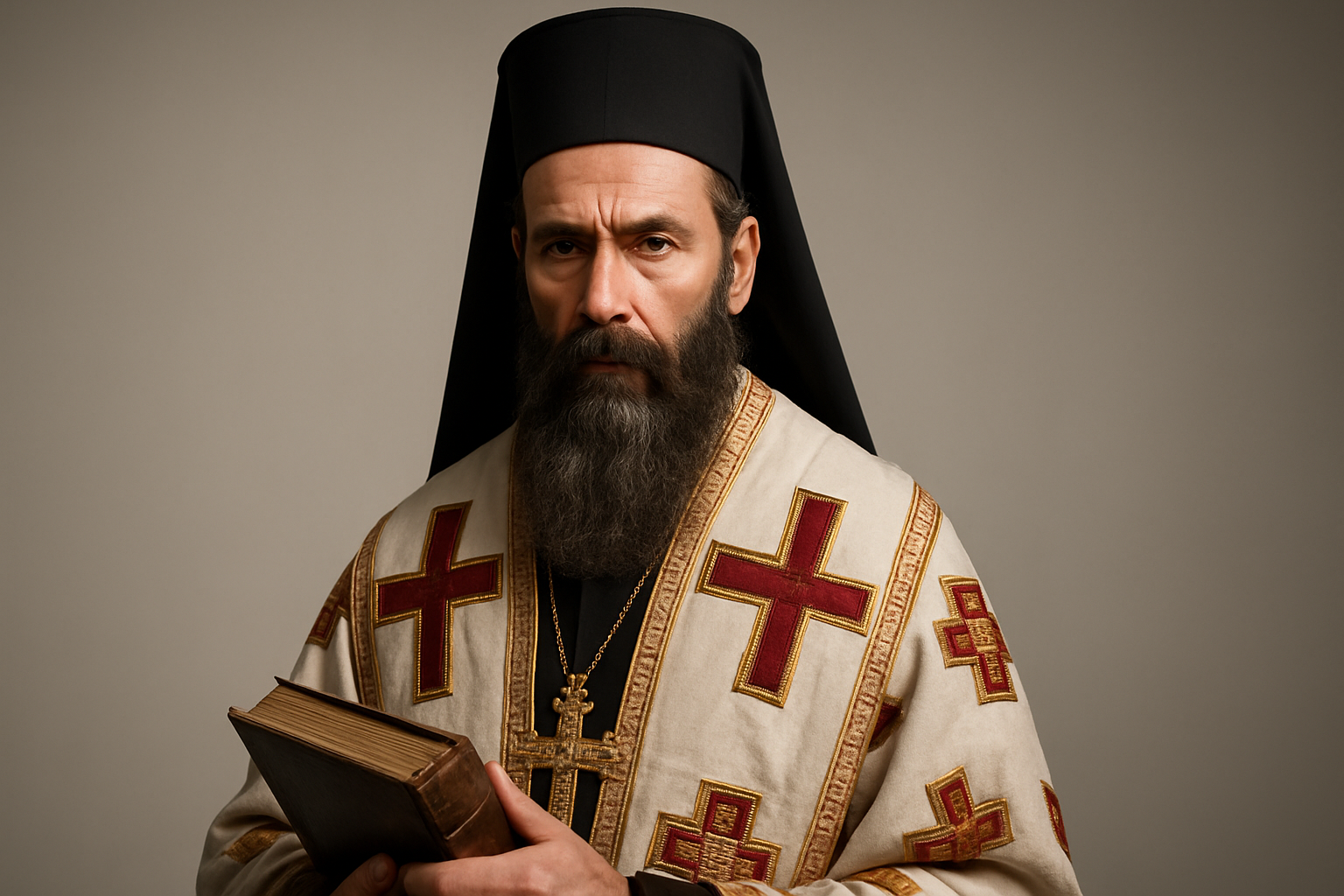
In the vast tapestry of Catholic saints, some figures stand out as giants whose intellect, courage, and charity shaped the very foundations of Christian thought and practice. Among these luminous stars is Saint Basil the Great, a brilliant scholar, a passionate monk, a fearless bishop, and a compassionate advocate for the poor. Living in a tumultuous 4th-century world grappling with profound theological questions and societal upheaval, Basil rose as a beacon of orthodoxy and practical Christian living. This article will explore his remarkable journey, from his privileged upbringing and intellectual pursuits to his pivotal role in defining the Holy Trinity, reforming monasticism, and establishing groundbreaking social welfare institutions, ultimately revealing why his legacy continues to inspire believers today.
Quick Facts
| Category | Detail |
|---|---|
| Birth | Circa 330 AD, Caesarea Mazaca, Cappadocia (modern-day Turkey) |
| Death | January 1, 379 AD, Caesarea Mazaca |
| Feast Day | January 2 (Roman Catholic Church), January 1 (Eastern Orthodox Church) |
| Patronage | Monastics, hospital administrators, reformers, ecumenists, Cappadocia, Greece | Canonized | Pre-Congregation (universally recognized as a saint from early Church history) |
Historical Context & Early Life
To truly appreciate Saint Basil the Great, we must first understand the world he inhabited. The 4th century AD was a period of immense change and challenge for the Roman Empire and the nascent Christian Church. Emperor Constantine’s Edict of Milan in 313 AD had legalized Christianity, shifting it from a persecuted minority religion to one enjoying imperial favor. This freedom, however, brought new internal struggles. The most significant theological battle was Arianism, a heresy that denied the full divinity of Jesus Christ, claiming he was a created being subordinate to God the Father. This controversy threatened to tear the Church apart, creating deep divisions within communities and even among bishops.
Beyond theological disputes, the empire faced political instability, economic hardship, and the constant threat of barbarian incursions. Society was highly stratified, with widespread poverty and social injustice. It was a world desperately in need of strong leadership, both spiritual and temporal, and clear moral guidance.
Basil was born around 330 AD into a remarkably devout and influential Christian family in Caesarea Mazaca, Cappadocia, in what is now modern-day Turkey. His family was not just Christian but deeply committed to the faith, producing an extraordinary number of saints. His grandmother, Saint Macrina the Elder, survived the persecutions of Emperor Galerius. His parents, Basil the Elder and Emmelia, were also revered as saints. Among his siblings were Saint Macrina the Younger (his older sister, a powerful influence on his spiritual journey), Saint Gregory of Nyssa, and Saint Peter of Sebaste, both prominent bishops and theologians in their own right. This incredible household provided an environment rich in faith, learning, and charitable living.
Basil received an exceptional education, a testament to his family’s wealth and status. He studied in the leading academic centers of the ancient world: Caesarea, Constantinople, and most notably, Athens. In Athens, he befriended two other brilliant young men who would become lifelong companions and fellow “Cappadocian Fathers”: Saint Gregory Nazianzen and his own brother, Saint Gregory of Nyssa. Together, they delved into philosophy, rhetoric, and all aspects of classical learning, mastering the intellectual tools that would later serve them so well in defending and articulating Christian truth. Basil’s early life was one of intellectual brilliance and worldly success, seemingly destined for a career in public office or academia.
Calling & Key Milestones
Despite his worldly success and promising career, a profound spiritual awakening led Basil to embrace a radically different path, setting the stage for his extraordinary contributions to the Church.
Conversion and Monastic Beginnings
After his studies, Basil returned to Caesarea, where he began a distinguished career as a rhetorician, much admired for his eloquence. However, his sister Macrina the Younger, who had already embraced a life of asceticism and prayer, challenged him to consider a deeper commitment to Christ. Her influence, combined with his own growing spiritual restlessness, led him to recognize the emptiness of worldly ambition. Around 357 AD, Basil underwent a profound conversion, renouncing his promising secular career. He received baptism and embarked on a journey to visit hermits and monks throughout Egypt, Palestine, Syria, and Mesopotamia to learn from their ascetic practices. Inspired by what he saw, he returned to Cappadocia and established his own monastic community on his family estate near the river Iris. Here, he lived a simple life of prayer, study, and manual labor, joined by his brother Peter and eventually by Gregory Nazianzen. It was during this period that Basil developed his influential “Rules” for monastic life, emphasizing community (cenobitic life) over solitary hermitage, combining contemplation with practical service to others.
Bishop of Caesarea
Basil’s gifts were too great to remain hidden in the quiet of a monastery. The Church in Cappadocia was struggling, particularly against the pervasive influence of Arianism. In 364 AD, he was ordained a priest, and in 370 AD, against his own preference for monastic solitude, he was consecrated Bishop of Caesarea, making him the Metropolitan (chief bishop) of Cappadocia. This was a position of immense responsibility, overseeing numerous other bishops and a large, diverse flock. As bishop, Basil was a tireless pastor. He preached frequently, often multiple times a day, providing spiritual nourishment and clear theological instruction to his people. He organized charitable works on an unprecedented scale, establishing hospitals, hospices, and poorhouses, which became known collectively as the “Basiliad.” These institutions provided medical care, shelter, and vocational training, demonstrating Christianity’s practical love for the vulnerable.
Defender of Orthodoxy
One of Basil’s most significant contributions was his relentless defense of orthodox Christian doctrine, particularly regarding the Holy Trinity. The Arian controversy was still raging, and Emperor Valens, who favored Arianism, actively persecuted orthodox bishops. Basil stood firm, boldly confronting imperial officials and Arian theologians. He brilliantly articulated the doctrine of the Trinity, explaining the co-equality and co-eternity of the Father, Son, and Holy Spirit, using the Greek terms “one ousia” (essence or being) and “three hypostases” (persons). His magnum opus, On the Holy Spirit, definitively clarified the divinity of the Holy Spirit, which had not been as explicitly defined as the divinity of Christ. This work, alongside his other theological treatises and extensive correspondence, played a crucial role in the triumph of Nicene Orthodoxy at the Council of Constantinople in 381 AD, two years after his death. He is therefore recognized as one of the key architects of Trinitarian theology.
Liturgical Reforms and Social Justice
Beyond his theological work, Basil also left a profound mark on Christian worship. He composed the Divine Liturgy of Saint Basil the Great, which is still celebrated today in Eastern Orthodox and Byzantine Catholic churches, especially during Great Lent. This liturgy is known for its profound theological depth and reverent beauty. Furthermore, Basil’s commitment to social justice was revolutionary. The Basiliad, his comprehensive social welfare system, was a truly groundbreaking initiative, anticipating many modern forms of organized charity. He taught that caring for the poor was not merely an act of kindness but a fundamental requirement of Christian discipleship, an obligation to Christ himself. He challenged the wealthy to share their resources, reminding them that they were stewards, not absolute owners, of their possessions.
Spiritual Legacy & Theological Themes
Saint Basil the Great’s spiritual legacy is vast and multifaceted, touching upon nearly every aspect of Christian life and thought. He exemplified numerous core virtues that continue to inspire believers.
Humility and Self-Renunciation: Despite his immense intellect and aristocratic background, Basil embraced a life of asceticism and service, continually striving for humility. His move from a celebrated rhetorician to a humble monk and then to a burdened bishop demonstrates his willingness to put God’s will and the needs of the Church above personal comfort or ambition. This aligns deeply with Scripture, particularly Jesus’s teaching, “Whoever wants to become great among you must be your servant” (Matthew 20:26).
Charity and Social Justice: Basil’s practical love for the poor and sick was legendary. He saw Christ in every suffering person and mobilized the Church’s resources to meet their needs. His Basiliad was a concrete expression of the Gospel mandate to love one’s neighbor as oneself. This radical commitment to charity echoes the teachings in Matthew 25:35-40, where Jesus identifies with the hungry, thirsty, naked, sick, and imprisoned.
Courage and Steadfastness in Faith: Basil fearlessly defended the truth of the Trinity against powerful adversaries, including emperors. He stood firm against Arianism, even when it meant facing imperial wrath and potential exile. His unwavering commitment to orthodox teaching demonstrates profound courage and fidelity to the Apostolic Tradition, reflecting the call to “contend earnestly for the faith that was once for all entrusted to the saints” (Jude 1:3).
His lasting influence on the Church is profound. He is one of the three “Cappadocian Fathers,” alongside Gregory Nazianzen and Gregory of Nyssa, whose collective efforts were instrumental in formulating Trinitarian theology and defining the nature of Christ. His “Ascetical Works,” including his “Longer” and “Shorter Rules,” became foundational texts for Eastern monasticism and significantly influenced Western monasticism through figures like Saint Benedict. He effectively balanced the contemplative ideal with the need for community and active charity, ensuring that monastic life was not just about individual salvation but also about serving the wider Church and world.
Basil’s liturgical reforms continue to shape worship in the Eastern Church, and his theological writings remain essential for understanding the doctrine of the Holy Spirit. In art, he is often depicted with his fellow Cappadocian Fathers, or alone with a book or scroll, symbolizing his profound learning and writings. Sometimes he is shown with a dove, representing the Holy Spirit whose divinity he so eloquently defended. Occasionally, a loaf of bread or other symbols of charity will accompany him, signifying his devotion to the poor.
Devotion Today
Saint Basil the Great remains a revered figure in both the Eastern and Western Churches. In the Eastern Orthodox and Byzantine Catholic traditions, he is one of the “Three Holy Hierarchs” (alongside Saint Gregory Nazianzen and Saint John Chrysostom), considered universal teachers of the faith. His feast day on January 1st (or January 2nd in the Roman Catholic calendar) is an important celebration, often marked by the Divine Liturgy of Saint Basil. Many churches and monasteries, particularly in Greece, Russia, and the Middle East, bear his name.
Pilgrimages to sites associated with Saint Basil are less common in the Western sense, but his spiritual presence is deeply felt in the monastic communities that follow his Rules and in the churches that celebrate his liturgy. Icons of Saint Basil are widely venerated, depicting him typically as an older man with a long beard, often holding a Gospel book or a scroll, signifying his role as a teacher and bishop. His legacy inspires countless individuals who work in social justice, healthcare, and education, seeking to emulate his fusion of spiritual wisdom with practical charity.
Reflections for Modern Readers
Saint Basil the Great’s life, though lived centuries ago, offers timeless wisdom and actionable lessons for us in the 21st century. His example reminds us that true faith is not just about belief, but about action.
1. Integrate Faith and Reason: Basil was a brilliant scholar who used his classical education to deepen his understanding and defense of Christian truth. In an age where faith and science are often seen as conflicting, Basil shows us the power of using intellect and reason to explore the mysteries of God. For modern readers, this means engaging thoughtfully with our faith, seeking knowledge, and using our God-given intelligence to understand the world and our place within it, rather than separating our intellectual life from our spiritual life.
2. Embrace Generosity and Service: Basil didn’t just talk about helping the poor; he built institutions to do it. His Basiliad was a monumental undertaking of practical charity. For us, this translates into actively seeking opportunities to serve those in need in our communities. Whether volunteering at a soup kitchen, supporting a local charity, or simply offering a helping hand to a neighbor, Basil’s example reminds us that our faith calls us to concrete acts of love, echoing Jesus’s call to feed the hungry and clothe the naked. Even small acts, consistently performed, can make a significant difference.
3. Stand Firm for Truth with Charity: Basil faced immense pressure to compromise his theological convictions, but he steadfastly defended the full divinity of Christ and the Holy Spirit. He did so with intellectual rigor and courage, but also with pastoral care for his flock. In today’s world, where truth can feel relative and societal pressures can challenge Christian values, Basil encourages us to hold fast to the teachings of the Church, but always to do so with love and respect for others, as Saint Peter advises: “Always be prepared to make a defense to anyone who asks you for a reason for the hope that is in you; yet do it with gentleness and respect” (1 Peter 3:15).
4. Prioritize Community and Spiritual Discipline: Basil’s monastic Rules emphasized communal living and structured prayer. He understood that spiritual growth flourishes in community and through regular discipline. For modern Christians, this means recognizing the importance of active participation in a faith community, whether through parish life, small groups, or spiritual friendships. It also encourages us to establish personal disciplines—like daily prayer, Scripture reading, or periods of quiet reflection—to nurture our relationship with God, even amidst busy schedules.
Symbols and Representations: In art, Saint Basil is often depicted as a dignified bishop, wearing traditional Eastern vestments. He is commonly shown with a long, dark beard and a high forehead, reflecting his intellectual prowess. Key symbols include:
- A Book or Scroll: Signifies his vast learning, his role as a prolific writer and theologian, particularly his treatises on the Holy Spirit and his monastic Rules. It represents the Word of God he preached and defended.
- A Pen or Quill: Further emphasizes his literary contributions and scholarly work.
- A Dove: Symbolizes the Holy Spirit, whose divinity Basil so vigorously defended and clearly articulated. It also represents divine inspiration.
- A Loaf of Bread or Basket of Food: Represents his immense charity and his establishment of the Basiliad, his institutions for the poor and sick. It signifies his practical application of the Gospel.
- A Church Building: Sometimes appears in the background or in miniature in his hand, illustrating his role as a bishop and builder of the Church, both physically and spiritually.
These symbols collectively tell the story of a saint who was a brilliant mind, a compassionate heart, and an unwavering defender of the faith.
Timeline Summary
- c. 330 AD: Born in Caesarea Mazaca, Cappadocia.
- c. 347-355 AD: Pursues higher education in Constantinople and Athens, befriending Gregory Nazianzen.
- c. 356 AD: Returns to Caesarea, beginning a career as a rhetorician.
- c. 357 AD: Undergoes a profound conversion, receives baptism, and embarks on a journey to visit monastic communities in the East.
- c. 358 AD: Establishes his own monastic community near the River Iris, drafting his “Rules” for communal monasticism.
- 364 AD: Ordained a priest in Caesarea.
- 370 AD: Consecrated Bishop of Caesarea, becoming Metropolitan of Cappadocia.
- 370-379 AD: Fights against Arianism, articulates Trinitarian doctrine, establishes the Basiliad (charitable institutions), and composes the Divine Liturgy of Saint Basil.
- 375 AD: Writes his masterpiece, On the Holy Spirit.
- January 1, 379 AD: Dies in Caesarea after a life of tireless service, weakened by asceticism and episcopal labors.
Scripture for Reflection
Saint Basil’s life beautifully illustrates several core Scriptural themes:
Matthew 25:35-40 (The Judgment of the Nations): “For I was hungry and you gave me food, I was thirsty and you gave me drink, a stranger and you welcomed me, naked and you clothed me, ill and you cared for me, in prison and you visited me… Amen, I say to you, whatever you did for one of these least brothers of mine, you did for me.”
Basil lived out this Gospel passage through his extensive charitable works and the founding of the Basiliad, seeing Christ in the poor and suffering.
1 Corinthians 2:1-5 (Paul’s Proclamation of Christ Crucified): “When I came to you, brothers and sisters, I did not come proclaiming the mystery of God to you in lofty words or wisdom… My speech and my proclamation were not with persuasive words of wisdom, but with a demonstration of Spirit and power, so that your faith might rest not on human wisdom but on God’s power.”
While Basil was a master of rhetoric and wisdom, he ultimately surrendered these worldly gifts to the power of the Holy Spirit, demonstrating that true faith rests on God’s power, not human intellect alone, and using his wisdom to serve God.
Ephesians 4:4-6 (One Body, One Spirit, One Hope): “One body and one Spirit, just as you were called to the one hope of your calling, one Lord, one faith, one baptism, one God and Father of all, who is over all and through all and in all.”
Basil’s tireless defense of the unified nature of God as Father, Son, and Holy Spirit, against those who would divide it, aligns perfectly with this passage emphasizing the oneness of God and the Church.
Prayers to St. Basil the Great
A Prayer to St. Basil the Great (Common Western Prayer):
O glorious Saint Basil,
You were a light to the Church,
a pillar of orthodoxy,
and a tireless worker for God’s poor.
By your fervent prayers and profound wisdom,
you taught us the truth of the Holy Trinity
and guided souls to deeper faith.
Look upon us now with kindness,
and intercede for us before the throne of God.
Help us to imitate your unwavering courage
in defending the faith,
your boundless charity towards those in need,
and your humble dedication to Christ.
May your example inspire us
to use our intellects for God’s glory,
to open our hearts to the suffering,
and to live lives of faithful devotion
within the Holy Catholic Church.
Grant us, through your powerful intercession,
the graces we need for our salvation,
and lead us ever closer to our Lord Jesus Christ,
who lives and reigns with the Father and the Holy Spirit,
one God, forever and ever. Amen.
Troparion of Saint Basil the Great (Eastern Orthodox/Byzantine Catholic):
In all the earth did your message spread,
because it taught the world the splendor of God,
illuminating the nature of creatures,
and enlightening the customs of mankind.
Therefore, O holy Father,
intercede with Christ God
that He may save our souls.





