
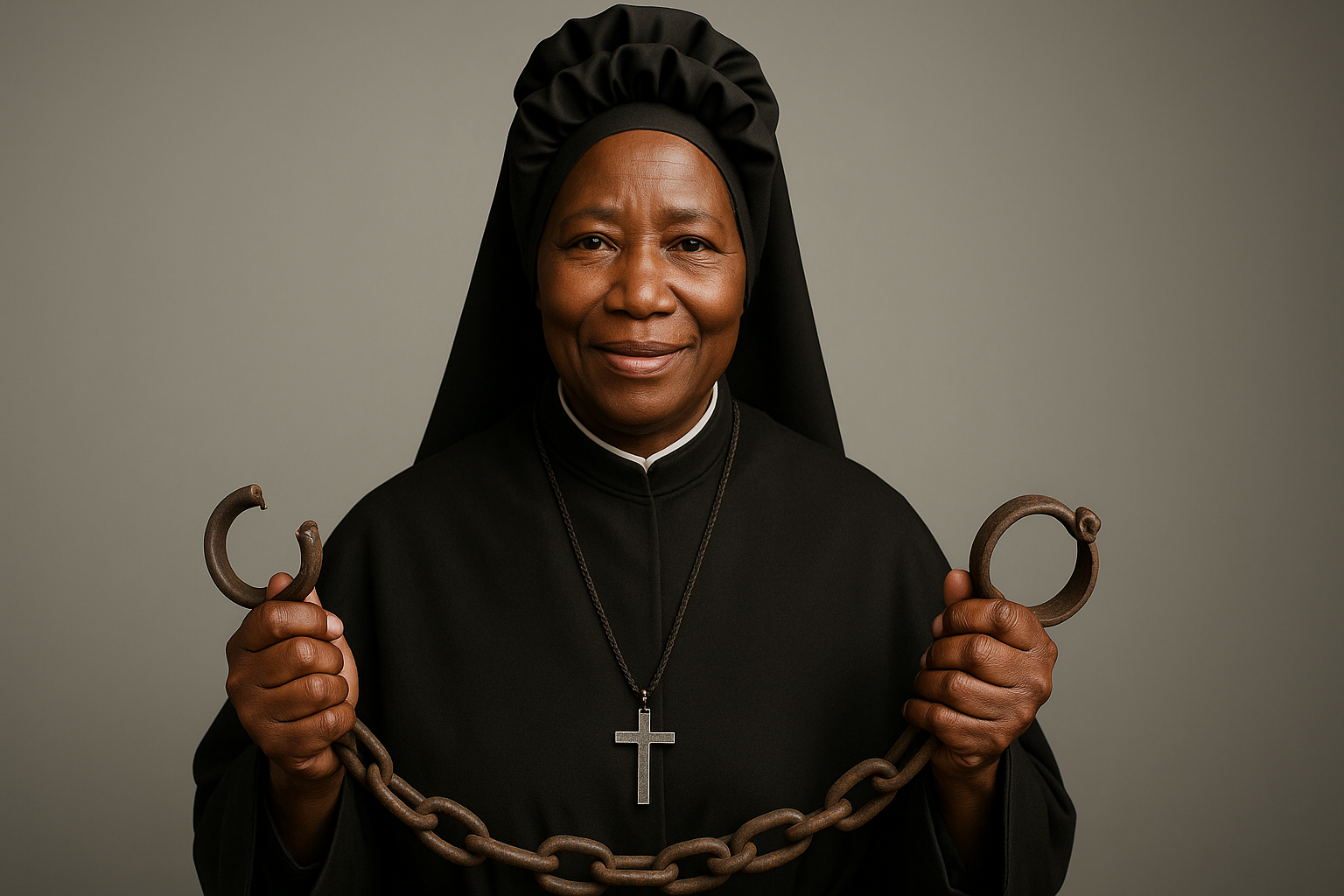
The story of St. Josephine Bakhita is a profound testament to the resilience of the human spirit, the transformative power of faith, and the triumph of grace over unimaginable suffering. Born in a small village in Darfur, Sudan, in the mid-19th century, Bakhita’s early life was cruelly interrupted by the brutal reality of the slave trade. Yet, through a journey fraught with hardship and injustice, she found not only her physical freedom but, more importantly, a spiritual liberation that illuminated her path to holiness. Her life’s narrative—from kidnapped child to beloved saint—serves as a beacon of hope, reminding us of the inherent dignity of every person and the boundless mercy of God. This article will explore her captivating journey, from her origins and enslavement to her remarkable embrace of the Catholic faith, her quiet life of service as a Canossian Sister, and her enduring legacy as a patroness of human dignity and a powerful intercessor for victims of modern slavery.
Quick Facts
| Category | Detail |
|---|---|
| Birth | Circa 1869, Olgossa, Darfur, Sudan |
| Death | February 8, 1947, Schio, Italy |
| Feast Day | February 8 |
| Patronage | Sudan, victims of human trafficking, survivors of slavery, people living in difficult circumstances |
| Canonized | October 1, 2000, by Pope John Paul II |
Historical Context & Early Life
Josephine Bakhita’s life unfolded against a backdrop of significant geopolitical upheaval and deeply entrenched social injustices in both Africa and Europe. In the Sudan of the late 19th century, the slave trade was a pervasive and brutal reality. Driven by economic motives and long-standing cultural practices, slave raids were common, tearing individuals, especially children, from their families and communities. The Ottoman Egyptian regime, which controlled Sudan at the time, had a complex relationship with the slave trade, sometimes attempting to suppress it while often benefiting from it through taxation and conscription. This created a chaotic and dangerous environment for vulnerable populations.
Bakhita, whose birth name is lost to history, was born around 1869 in the village of Olgossa, in the Darfur region of Sudan. She was a member of the Daju people, a peaceful community. Her early childhood was idyllic, spent surrounded by her loving family—her parents, three brothers, and three sisters. She recalled memories of playing in the fields, helping her family, and experiencing the warmth of community life. However, at the tender age of seven or eight, her life was shattered. While gathering herbs with a friend, she was ambushed and kidnapped by Arab slave traders. The trauma of the abduction was so profound that she completely forgot her name and the names of her family members. Her captors cruelly named her “Bakhita,” which means “fortunate” in Arabic—a bitterly ironic name for a child thrust into unimaginable suffering.
Over the next twelve years, Bakhita endured the harrowing experience of being bought and sold five times in the slave markets of El Obeid and Khartoum. Each change of ownership brought new forms of abuse and degradation. She was subjected to horrific beatings, psychological torment, and the physical scars of forced tattooing. She learned that resistance was futile, and survival meant submission. She experienced the full spectrum of human cruelty, witnessing firsthand the dehumanization inherent in the institution of slavery. Despite the constant terror and indignity, a flicker of hope and resilience, though often dormant, persisted within her. She longed for peace, kindness, and freedom, a longing that would eventually find its fulfillment in a way she could never have imagined.
Calling & Key Milestones
Finding Freedom in Italy
Bakhita’s journey took a pivotal turn in 1883 when she was purchased for the fifth and final time by an Italian consul named Callisto Legnani. He was a kinder master than any she had known, and for the first time in years, she experienced a modicum of stability and respect. When Legnani was recalled to Italy two years later, Bakhita accompanied him, entering a world vastly different from the one she had known. In Italy, slavery had been abolished for centuries, and her legal status was ambiguous, though she was effectively still in servitude. Legnani then gave Bakhita as a maid to his friend, Augusto Michieli, and his wife, Alice. She worked for them for several years, traveling between their home in Zianigo and their villa in Mirano. In Mirano, while the Michielis were away on business, Bakhita was entrusted to the care of the Canossian Sisters, a Catholic religious order, at their Institute of the Catechumens.
This period with the Canossian Sisters was transformative. For the first time, Bakhita encountered consistent kindness, love, and the profound message of the Gospel. She experienced a community where she was treated with dignity, not as property, but as a beloved child of God. The sisters introduced her to Christianity, explaining the love of God, the sacrifice of Jesus, and the promise of eternal life. Bakhita was deeply moved by these teachings, finding in them the answers to the unspoken longings of her heart. When Mrs. Michieli returned and demanded Bakhita’s return to service, Bakhita, now filled with a newfound sense of self-worth and a burgeoning faith, refused to go. Supported by the Canossian Sisters and the intervention of the Patriarch of Venice, Cardinal Agostino Richelmy, a legal battle ensued. The Italian courts ultimately ruled that Bakhita was a free woman, as slavery was not recognized under Italian law. This landmark decision, made on November 29, 1889, officially liberated Josephine Bakhita, marking the true beginning of her free life.
A Call to Religious Life
With her freedom secured, Bakhita chose to remain with the Canossian Sisters. Her experience of Christ’s unconditional love and the freedom it brought resonated deeply with her own liberation. She felt a profound call to dedicate her life to God. On January 9, 1890, at the age of 21, she was baptized, confirmed, and received her First Holy Communion, all at once. She was given the name Josephine Margaret Fortunata, though she preferred Josephine, honoring St. Joseph. These sacraments were moments of immense spiritual joy, confirming her identity as a beloved child of God.
Her desire for religious life grew stronger, and after a period of discernment, she entered the novitiate of the Canossian Daughters of Charity in Venice on December 7, 1893. On December 8, 1896, she made her first religious vows, dedicating herself fully to Christ and the service of others. This was a monumental step, transforming a former slave into a consecrated woman of God. Her past sufferings did not define her future; instead, they became the crucible in which her faith was refined and strengthened.
Life as a Canossian Sister
For the next 50 years, Sister Josephine Bakhita lived a quiet life of humble service as a Canossian Sister in Schio, Italy. Her primary duties involved cooking, sewing, embroidery, and serving as the portress (doorkeeper) of the convent. While seemingly ordinary tasks, Bakhita performed them with extraordinary love and joy. She was known for her gentle demeanor, her radiant smile, and her deep spiritual wisdom. Children especially loved her, drawn by her warmth and the calm strength she exuded. When asked about her past, she would recount her story not with bitterness, but with a profound sense of gratitude to God for leading her to freedom and faith. She often said, “If I were to meet those who kidnapped me and even those who tortured me, I would kneel and kiss their hands, because, if these things had not happened, I would not be a Christian and a religious today.”
Speaking Her Story
As she grew older, Sister Bakhita’s story became more widely known, particularly after the publication of her biography, “Storia Meravigliosa” (Wonderful Story), in 1931 by Ida Zanolini. She was often asked to speak to novices, children, and groups, sharing her testimony of faith and forgiveness. Despite her physical ailments in later life, including painful arthritis and bronchitis, she never lost her joyful spirit. Her quiet witness became a powerful tool for promoting missionary awareness and inspiring countless individuals. She became affectionately known as “Madre Moretta” (Our Black Mother) by the local community, a testament to the love and respect she had garnered. Her life demonstrated that true freedom comes from spiritual liberation, and that joy can be found even after the deepest suffering.
Spiritual Legacy & Theological Themes
St. Josephine Bakhita’s life exemplifies several core virtues that align deeply with Scripture and Catholic teaching. At the heart of her spiritual legacy is her profound demonstration of dignity. Despite being stripped of her name, her freedom, and her basic human rights, Bakhita never lost her intrinsic worth in God’s eyes. The Church teaches that every human person is created in the image and likeness of God (Genesis 1:26-27), possessing an inherent dignity that can never be lost, regardless of circumstance or treatment. Bakhita’s resilience in the face of dehumanization stands as a powerful testament to this truth, reminding us that true dignity is not conferred by society but by God.
Her remarkable capacity for forgiveness is another cornerstone of her spirituality. To forgive those who inflicted such unimaginable suffering upon her speaks to a divine grace at work within her. This virtue aligns with Christ’s teachings to “love your enemies and pray for those who persecute you” (Matthew 5:44) and to forgive “seventy times seven” (Matthew 18:22). Bakhita understood that forgiveness was not about excusing the evil committed but about liberating her own heart from bitterness and hate, allowing God’s love to heal her wounds. Her ability to see God’s providence even in her darkest hours is a profound lesson in radical trust and hope.
Furthermore, Bakhita embodied an extraordinary spirit of joy. Despite a past filled with pain, she was known for her radiant smile and cheerful disposition. This joy was not a superficial happiness but a deep, abiding contentment rooted in her faith in God. It was a joy that echoed the words of St. Paul, “Rejoice in the Lord always; again I will say, rejoice!” (Philippians 4:4). Her life teaches us that true joy is not dependent on external circumstances but is an interior gift of the Holy Spirit, found in communion with God.
Her lasting influence is multi-faceted. St. Josephine Bakhita has become a powerful symbol and intercessor in the modern fight against human trafficking and all forms of modern slavery. Her story has brought global attention to the enduring evil of exploitation, calling the Church and the world to action. She serves as a patroness not only for Sudan but for all victims of trafficking, inspiring organizations and individuals to work for justice and liberation. Her life also profoundly impacts our understanding of the missionary spirit, demonstrating that conversion is a deeply personal encounter with Christ’s love, leading to true freedom. She stands as a bridge between cultures, a testament to the universality of the Catholic faith and the power of God’s grace to transcend any barrier. In art and devotion, her gentle face and story serve as a constant reminder of God’s preferential love for the poor and oppressed, and the transformative power of divine mercy.
Devotion Today
Devotion to St. Josephine Bakhita has grown significantly, especially since her canonization in 2000, becoming a global inspiration for those combating injustice and seeking spiritual fortitude. Her primary shrine is located at the Canossian convent in Schio, Italy, where she spent the majority of her religious life and where her tomb is venerated. Pilgrims from all over the world visit this site to pray, reflect on her life, and seek her intercession. The small room where she worked as the portress, along with other personal effects, are preserved there, offering a tangible connection to her humble life of service.
Her feast day is celebrated annually on February 8th. This date has become particularly significant as it coincides with the International Day of Prayer and Awareness Against Human Trafficking, also known as “Bakhita Day.” This observance, initiated by the Pontifical Council for Justice and Peace and the International Union of Superiors General (UISG) and Union of Superiors General (USG), encourages reflection, prayer, and action to end human trafficking. On this day, Catholics worldwide participate in prayer vigils, educational events, and awareness campaigns, invoking St. Bakhita’s intercession for victims and survivors, and for an end to this heinous crime.
St. Josephine Bakhita is widely recognized as the patron saint of Sudan, victims of human trafficking, and survivors of slavery. Her powerful intercession is sought by individuals and organizations dedicated to these causes. Numerous organizations, religious orders, and charitable initiatives around the globe have taken her name or draw inspiration from her story in their efforts to rescue, rehabilitate, and empower those affected by modern slavery. Her life continues to inspire courage, resilience, and hope in those facing extreme hardship, reminding them of God’s unwavering love and the promise of ultimate freedom.
Reflections for Modern Readers
St. Josephine Bakhita’s incredible life offers profound lessons that resonate deeply with modern readers in the 21st century, even in a world vastly different from her own. Her story is a timeless call to embrace human dignity, practice radical forgiveness, and find joy in faith.
-
Embrace Your Inherent Dignity, Despite Circumstances: Bakhita was stripped of everything—her name, her family, her freedom. Yet, her story powerfully affirms that no external circumstance, no amount of suffering or injustice, can ever diminish the inherent dignity that God has bestowed upon every person.
Real-world example: In a world that often values people based on their achievements, wealth, or appearance, Bakhita reminds us that our worth comes from being created in God’s image. This is a crucial message for someone struggling with self-worth due to bullying, job loss, or societal pressures. Remembering Bakhita can help them reclaim their intrinsic value.
-
The Liberating Power of Forgiveness: Bakhita’s ability to forgive her captors and abusers is perhaps one of her most astonishing virtues. She recognized that holding onto bitterness would only keep her enslaved, even after her physical chains were broken. Forgiveness, for her, was not condoning evil but choosing freedom for her own soul.
Real-world example: Many people today carry emotional wounds from past hurts, betrayals, or injustices. Bakhita’s example challenges us to consider forgiveness not as an act for the offender, but as a path to personal healing and peace. It’s relevant for someone dealing with a difficult family member, a former friend who betrayed them, or even a public figure whose actions have caused pain.
-
Find Joy Rooted in Faith, Not Circumstances: Despite her horrific past, Bakhita was known for her radiant joy and gentle smile. This was not a superficial happiness but a deep, spiritual joy found in her relationship with Christ. She understood that true joy comes from within, through faith, regardless of external trials.
Real-world example: In an age of anxiety and stress, where many seek happiness in fleeting pleasures or material possessions, Bakhita points to a deeper source of contentment. Her joy can inspire someone facing chronic illness, financial struggles, or emotional burdens to find strength and peace in their faith, rather than being overwhelmed by their difficulties.
-
Be an Advocate Against Injustice: While Bakhita’s life was one of quiet service, her story has become a powerful catalyst for change. She reminds us that silence in the face of injustice allows evil to fester. Her legacy calls us to be vigilant and active in combating modern forms of slavery and exploitation.
Real-world example: Modern slavery, including human trafficking, still affects millions globally. Bakhita’s story encourages us to educate ourselves, support anti-trafficking organizations, and speak out against exploitation, whether it’s through ethical consumer choices or advocating for stronger protections for vulnerable populations.
-
God’s Providence in All Things: Bakhita saw God’s hand guiding her even through the darkest periods of her life. She believed that even her enslavement, while evil, ultimately led her to Christ and her true freedom. This perspective invites us to trust in God’s plan, even when we cannot understand the path.
Real-world example: When faced with unexpected setbacks, disappointments, or tragedies, it’s natural to question “why?” Bakhita’s life offers a hopeful lens, encouraging us to look for how God might be working, even in painful situations, to bring about good or draw us closer to Him.
Symbols and Representations
In art and devotional items, St. Josephine Bakhita is typically depicted as an African woman, often with a gentle smile, reflecting her known joy and serenity. Common symbols associated with her include:
- A Cross or Crucifix: This symbolizes her deep Christian faith, which became the source of her ultimate freedom and joy, and her identification with Christ’s suffering.
- A Rosary: Representing her devotion to prayer, especially to the Blessed Mother, which sustained her throughout her life.
- Broken Shackles or Chains: These powerfully symbolize her triumph over physical slavery and her liberation through faith. They also remind us of the ongoing fight against modern slavery.
- A Canossian Habit: She is often shown wearing the simple habit of the Canossian Daughters of Charity, signifying her chosen religious life and her commitment to serving God and others.
- A Palm Branch: A traditional symbol of martyrdom or triumph, in her case, representing her spiritual victory over immense suffering and her entry into heavenly glory.
Timeline Summary
- Circa 1869: Born in Olgossa, Darfur, Sudan.
- Circa 1876-1877: Kidnapped by Arab slave traders at age 7 or 8, given the name “Bakhita.”
- 1877-1883: Endures multiple sales and brutal treatment as a slave in Sudan.
- 1883: Purchased by Italian consul Callisto Legnani, who treats her more kindly.
- 1885: Travels to Italy with Legnani, then entrusted to Augusto Michieli and his wife Alice.
- 1888: Placed in the care of the Canossian Sisters in Venice while the Michielis are away.
- November 29, 1889: Declared a free woman by an Italian court, ending her enslavement.
- January 9, 1890: Baptized, confirmed, and receives First Holy Communion, choosing the name Josephine.
- December 7, 1893: Enters the novitiate of the Canossian Daughters of Charity in Venice.
- December 8, 1896: Makes her first religious vows, becoming Sister Josephine Bakhita.
- 1896-1947: Serves as a Canossian Sister in Schio, Italy, primarily as a cook and doorkeeper.
- 1931: Her biography, “Storia Meravigliosa” (Wonderful Story), is published, popularizing her story.
- February 8, 1947: Dies in Schio, Italy, at the age of 78.
- May 17, 1992: Beatified by Pope John Paul II.
- October 1, 2000: Canonized by Pope John Paul II, becoming Saint Josephine Bakhita.
Scripture for Reflection
St. Josephine Bakhita’s life beautifully illuminates several scriptural passages, particularly those concerning suffering, forgiveness, and divine love.
- Romans 8:28 (NABRE): “We know that in everything God works for good with those who love him, who are called according to his purpose.”
This verse encapsulates Bakhita’s profound trust in God’s providence. Despite the immense evil she endured, she eventually came to see how God, in His mysterious ways, used her suffering to lead her to Him and to become a powerful witness of His love and mercy. She believed that her suffering, though tragic, ultimately led to her greatest good: finding Christ and religious life.
- Colossians 3:13 (NABRE): “Bear with one another and forgive whatever grievances you may have against one another. Forgive as the Lord has forgiven you.”
Bakhita’s astonishing capacity for forgiveness is a direct embodiment of this biblical injunction. Her ability to release bitterness and even express gratitude that her suffering led her to Christ is a radical example of forgiving “as the Lord has forgiven you,” allowing her heart to be free from hatred and open to divine love.
- John 8:36 (NABRE): “So if the Son makes you free, you will be free indeed.”
This passage perfectly reflects Bakhita’s ultimate liberation. While she gained physical freedom through the Italian courts, her true and lasting freedom came from her embrace of Christ. It was her faith that liberated her from the internal chains of fear, bitterness, and despair, allowing her to experience a spiritual freedom that no human captor could ever take away.
Prayers to St. Josephine Bakhita
Prayer for Intercession of St. Josephine Bakhita
O Saint Josephine Bakhita, from the darkness of slavery you found true liberation and joy in Christ. We pray for your intercession for all those who suffer from human trafficking and modern slavery today. Comfort them in their pain, protect them from their oppressors, and guide them to freedom and dignity. Inspire us to be agents of change, working tirelessly to eradicate this evil from our world. Help us to forgive those who have wronged us, and to find the same radiant joy in God’s love that illuminated your life. May your powerful example of resilience, faith, and forgiveness inspire us all to live lives dedicated to justice, charity, and hope. Amen.
Prayer for Victims of Human Trafficking (Invoking St. Josephine Bakhita)
God of freedom and compassion, we lift up all those trapped in the chains of modern slavery and human trafficking. Through the intercession of Saint Josephine Bakhita, who knew the horrors of captivity and the triumph of your liberating love, we pray:
- For courage for those who are exploited, that they may find a path to freedom.
- For strength for those who advocate for justice, that their voices may be heard.
- For repentance for those who perpetrate these crimes, that their hearts may be converted.
- For healing and hope for survivors, that they may rebuild their lives in dignity and peace.
May we, like Saint Bakhita, be instruments of your love, shining light into the darkness and working to ensure that all your children can live in the freedom you intend. We ask this through Christ our Lord. Amen.





