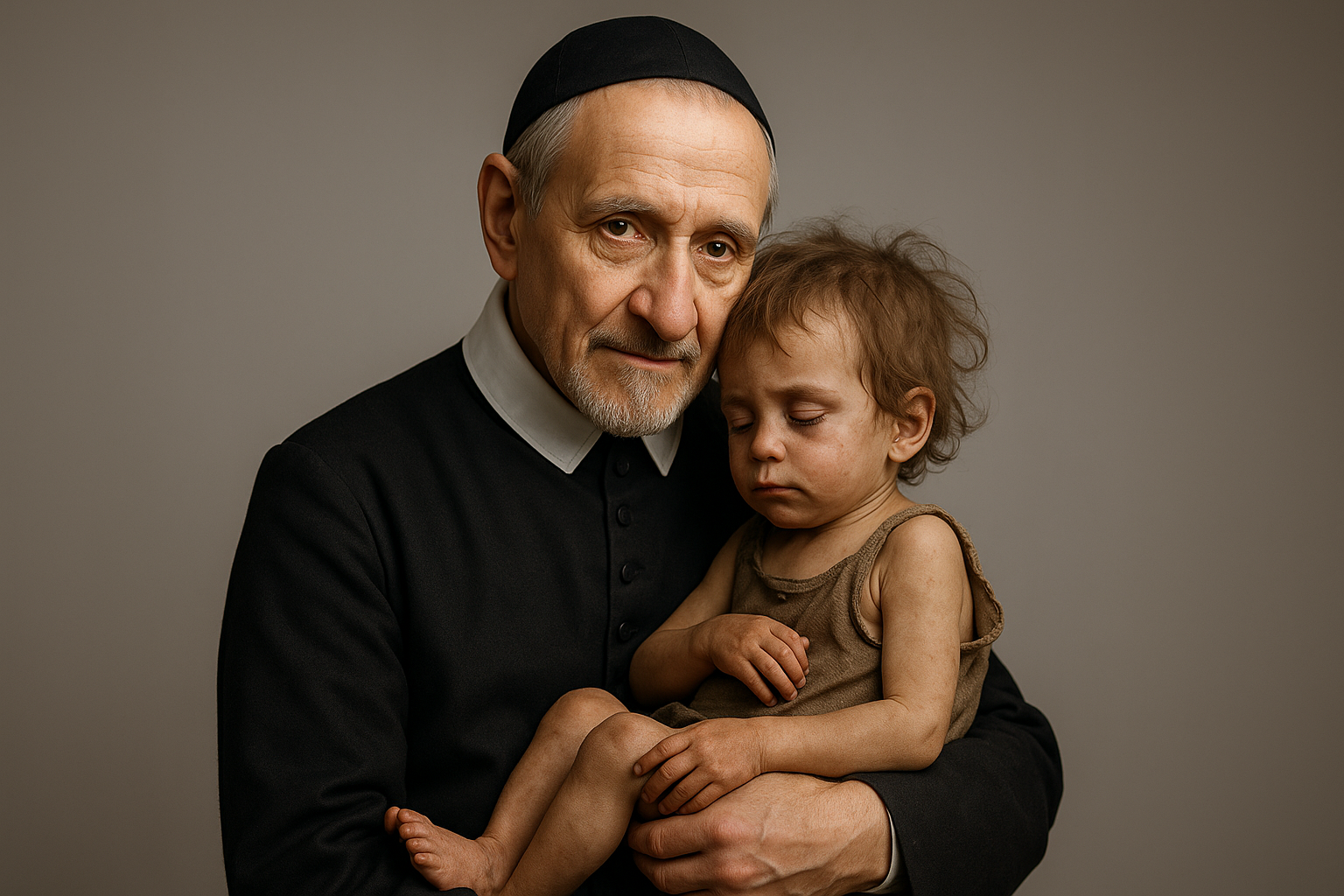
In a world often marked by stark divisions between the rich and the poor, and where social inequalities can feel overwhelming, the life of Saint Vincent de Paul shines as a powerful beacon of active, organized charity. Born into humble beginnings in 16th-century France, Vincent’s journey took him from personal ambition to profound dedication, becoming a tireless advocate for the marginalized, a reformer of the clergy, and the founder of influential charitable organizations. His story reminds us that true faith is always accompanied by concrete action, transforming both individuals and society through compassionate service.
Quick Facts
| Category | Detail |
|---|---|
| Birth | April 24, 1581, Pouy (now Saint-Vincent-de-Paul), Gascony, France |
| Death | September 27, 1660, Paris, France |
| Feast Day | September 27 |
| Patronage | Charitable societies, volunteers, hospitals, prisoners, Madagascar, leprosy, social workers, spiritual directors, lost articles (unofficial, due to his focus on finding the “lost” poor). |
| Canonized | June 16, 1737, by Pope Clement XII |
Historical Context & Early Life
The 17th century in France was a period of dramatic contrasts. While the Sun King, Louis XIV, was consolidating royal power and building magnificent palaces, the vast majority of the population, especially in rural areas, lived in abject poverty. The country had recently emerged from decades of religious wars, leaving a legacy of social disruption, widespread ignorance, and spiritual neglect. The Church itself, though powerful, faced challenges, including a poorly educated clergy and a lack of organized charity to address the immense needs of the populace.
It was into this challenging environment that Vincent de Paul was born in 1581, in the small village of Pouy in Gascony, southwestern France. His family were simple peasants, and from an early age, Vincent was known for his intelligence and piety. Recognizing his potential, his parents made sacrifices to send him to school, hoping that an education and a career in the Church would lift him out of poverty. Vincent, too, initially saw the priesthood as a means of social advancement and a comfortable living, a common aspiration among bright young men of his era.
He pursued his theological studies diligently, receiving his ordination as a priest at the remarkably young age of 19, in 1600. For several years, his early ministry seemed to be guided by personal ambition. He sought appointments, engaged in legal disputes to secure inheritances, and even endured a period of captivity by Barbary pirates (though this episode’s exact details are debated by historians, it certainly shaped his understanding of suffering and captivity). Yet, beneath these worldly pursuits, a spiritual transformation was slowly taking root, leading him towards a profound encounter with God’s call to serve the poor.
Calling & Key Milestones
A Transformative Encounter in Gannes
A pivotal moment in Vincent’s life occurred in 1617 while he was serving as chaplain to the wealthy Gondi family. During a mission in the village of Gannes, he heard the confession of a dying peasant who revealed the profound spiritual ignorance and neglect prevalent among the rural poor. This experience deeply moved Vincent. He delivered a sermon that day which had a dramatic impact, leading many to seek confession and a deeper understanding of their faith. This encounter marked a turning point: Vincent realized that the greatest poverty was often spiritual, and that the poor needed not just material aid, but also evangelization and spiritual formation. From that moment, his life became singularly dedicated to serving Christ in the poor, transforming his ambition into boundless charity.
Founding the Confraternities of Charity (Ladies of Charity)
Inspired by the needs he witnessed, Vincent soon founded the first “Confraternity of Charity” in Chatillon-les-Dombes later in 1617. He observed that many generous people, particularly women, wanted to help the poor, but their efforts were often unorganized and unsustainable. Vincent envisioned a structured approach: groups of pious laywomen who would systematically visit the sick and needy in their homes, provide food, medicine, and spiritual comfort. This innovative idea quickly spread throughout France, empowering laywomen to play an active, vital role in organized charity, which was revolutionary for its time.
The Congregation of the Mission (Vincentians)
In 1625, with the support of the Gondi family, Vincent established the Congregation of the Mission, commonly known as the Vincentians or Lazarists (after the Priory of Saint-Lazare in Paris, which became their motherhouse). This new community of priests and brothers was dedicated to a dual mission: evangelizing the rural poor through missions and preaching, and forming a better-educated and more spiritually attuned clergy. Vincent recognized that improving the quality of the priesthood was crucial for the spiritual health of the entire Church. The Vincentians traveled extensively, bringing the sacraments, catechism, and renewed faith to forgotten villages, laying the groundwork for a revitalized Church in France.
Co-founding the Daughters of Charity with Saint Louise de Marillac
Perhaps Vincent’s most enduring and innovative creation was the Daughters of Charity, co-founded in 1633 with the remarkable Saint Louise de Marillac. At a time when religious women were typically cloistered (confined to monasteries), Vincent and Louise envisioned a new form of religious life. The Daughters of Charity would live “in the world” – in hospitals, homes, and on battlefields – serving the sick, the poor, and the abandoned directly. They wore simple grey habits, not a nun’s veil, and became known as “sisters” rather than “nuns,” reflecting their direct engagement with the world’s suffering. This groundbreaking approach allowed women to serve actively and professionally, embodying Christ’s love in the midst of the suffering. Their order quickly grew and spread, revolutionizing the concept of active religious life for women.
Ministry to Galley Slaves and Prisoners
Vincent’s compassion extended to the most forgotten members of society. As royal almoner, he became deeply concerned for the plight of galley slaves, men condemned to row ships in horrific conditions. He visited them, ministered to their spiritual and physical needs, and even served for a time as a galley chaplain. His efforts led to significant improvements in their living conditions and spiritual care. He also worked tirelessly to reform prisons and provide aid to prisoners, demonstrating a radical commitment to human dignity in an era when such concerns were rare.
Spiritual Legacy & Theological Themes
Saint Vincent de Paul’s spiritual legacy is characterized by a profound blend of practical action and deep interior spirituality. His life exemplifies several core virtues and theological themes that continue to inspire:
Charity in Action: Vincent understood that love for God must manifest as love for neighbor, especially the poorest. He moved beyond mere sentimentality to establish systematic, organized forms of charity that could sustain long-term efforts. His famous motto, “Love is inventive to infinity,” encapsulates his belief that compassion should always seek new and effective ways to meet needs. This aligns directly with Catholic teaching that faith without works is dead, as found in the Letter of James (James 2:14-26).
Dignity of the Poor: For Vincent, serving the poor was not just a social obligation but a spiritual encounter. He saw Christ’s presence in every suffering person, famously stating, “The poor are our masters.” This perspective elevates the act of charity from mere philanthropy to a direct act of worship, reminding us that Christ identifies with the least among us (Matthew 25:40).
Humility and Simplicity: Despite his immense influence and administrative skills, Vincent remained deeply humble and simple in his personal life. He despised ostentation and constantly sought to minimize attention to himself, focusing solely on God’s work. His humility allowed him to collaborate effectively with people from all social strata, from queens to beggars, always prioritizing the needs of those he served.
Evangelization and Formation: While renowned for his social work, Vincent was fundamentally a missionary. He understood that true charity encompassed both material and spiritual needs. His work in forming better clergy and evangelizing the rural poor ensured that people not only received food and medicine but also had access to the Sacraments, sound doctrine, and a deeper relationship with God. He saw these two aspects—charity and evangelization—as inseparable, flowing from the same divine love.
Collaboration and Innovation: Vincent was a master of collaboration, bringing together clergy, religious, and laypersons in novel ways. His creation of the Daughters of Charity, an uncloistered order of women, was a groundbreaking innovation that profoundly influenced later forms of active religious life. He empowered women and lay people to take active roles in the Church’s charitable mission, demonstrating a flexible and adaptable spirit in response to pressing social needs.
Devotion Today
The legacy of Saint Vincent de Paul continues to thrive globally, influencing countless individuals and organizations dedicated to charity and social justice. The most prominent example is the **Society of Saint Vincent de Paul**, a vast international lay organization founded in Paris in 1833 by Blessed Frédéric Ozanam and his companions. Operating in over 150 countries, “Vincentians” visit and assist the poor in their homes, providing material aid, spiritual support, and advocacy, always with an emphasis on personal encounter and respect for human dignity.
The **Congregation of the Mission (Vincentians)** continues its work of evangelization, priestly formation, and service to the poor in parishes and missions worldwide. The **Daughters of Charity of Saint Vincent de Paul** remain one of the largest communities of religious women globally, continuing their active service in hospitals, schools, orphanages, and disaster relief efforts, truly living “in the world” for the sake of the Gospel.
Numerous other religious orders and lay associations form what is known as the “Vincentian Family,” all drawing inspiration from his life and charism. Churches, hospitals, and charitable institutions around the world bear his name. His feast day on September 27 is celebrated by those committed to alleviating poverty and suffering, serving as a reminder of his boundless love for God expressed through radical charity for neighbor.
Reflections for Modern Readers
Saint Vincent de Paul’s life offers timeless lessons for us in the 21st century:
1. See Christ in the Needy: Vincent challenged the superficiality of charity by insisting on seeing the dignity of Christ in every poor person. In a world where poverty can be depersonalized, his example calls us to personal encounter. Instead of simply donating money, consider volunteering directly at a food bank, shelter, or visiting the homebound. Look beyond statistics to the individual faces of those in need, remembering Jesus’ words, “Whatever you did for one of the least of these brothers and sisters of mine, you did for me.”
2. Organized Compassion: Vincent understood that good intentions aren’t enough; effective charity requires structure and sustainability. For modern readers, this means supporting well-run charitable organizations, advocating for systemic change, and perhaps even starting or joining initiatives in your own community to address specific needs, rather than just isolated acts of kindness.
3. Humility in Service: Vincent never sought glory for himself, always deflecting praise to God. In an age of social media and self-promotion, his humility reminds us that true service is about the recipient, not the giver. When you offer help, do so without expectation of recognition, and always remember that you are serving Christ himself.
4. Action Over Words: Saint Vincent de Paul embodied the principle that faith without works is dead. He didn’t just preach about charity; he organized it. For us, this means translating our spiritual beliefs into tangible actions for justice and mercy, whether it’s through volunteering, advocating for fair policies, or simply being a compassionate presence to someone struggling.
5. Innovation for Good: His willingness to break with tradition (e.g., the Daughters of Charity) to meet real needs is inspiring. We are called to be creative in addressing modern challenges. If an old method isn’t working, what new ways can we find to serve the poor, evangelize the marginalized, or address social injustices in our communities?
In art and jewelry, Saint Vincent de Paul is often depicted in the black cassock of a priest, sometimes with a white clerical collar. He may hold a crucifix, a Bible, or a small child, symbolizing his priestly ministry, his devotion to Christ’s teachings, and his profound care for the poor and vulnerable. Sometimes, he is shown helping a poor person, or with a chain, referencing his work with galley slaves, signifying his commitment to those imprisoned by poverty and circumstance. These symbols serve as reminders of his compassionate heart and his tireless dedication to living out the Gospel message.
Timeline Summary
- 1581: Born in Pouy, Gascony, France.
- 1600: Ordained a priest at the age of 19.
- 1605-1607: (Debated) Possibly captured by pirates and enslaved in Tunis for a period.
- 1617: Experience in Gannes leads to a deeper commitment to the poor; founds the first Confraternity of Charity in Chatillon-les-Dombes.
- 1625: Founds the Congregation of the Mission (Vincentians/Lazarists) to evangelize the rural poor and train clergy.
- 1633: Co-founds the Daughters of Charity with Saint Louise de Marillac, creating a revolutionary uncloistered order for women.
- 1630s-1650s: Engages in extensive charitable work, including ministry to galley slaves, relief for war victims, and founding hospitals.
- 1660: Dies in Paris, France, on September 27.
- 1737: Canonized a saint by Pope Clement XII.
Scripture for Reflection
The life of Saint Vincent de Paul beautifully illustrates several passages from Sacred Scripture, especially those emphasizing active charity and identification with the poor:
Matthew 25:34-40: “Come, you who are blessed by my Father, inherit the kingdom prepared for you from the foundation of the world. For I was hungry and you gave me food, I was thirsty and you gave me drink, a stranger and you welcomed me, naked and you clothed me, ill and you cared for me, in prison and you visited me… Amen, I say to you, whatever you did for one of these least brothers of mine, you did for me.”
This passage is central to understanding Vincent’s spirituality. He truly saw Christ in the faces of the poor, the sick, and the imprisoned, and believed that serving them was serving God directly. It was the driving force behind all his charitable endeavors, transforming mundane acts of service into profound acts of worship.
James 2:14-17: “What good is it, my brothers, if someone says he has faith but does not have works? Can that faith save him? If a brother or sister has nothing to wear and has no food for the day, and one of you says to them, ‘Go in peace, keep warm, and eat well,’ but you do not give them the necessities of the body, what good is it? So also faith of itself, if it does not have works, is dead.”
Saint Vincent de Paul’s life was a powerful living commentary on this passage. He understood that faith was not merely a set of beliefs but a call to active, practical love. He didn’t just offer prayers for the poor; he organized systems to feed, clothe, and care for them, demonstrating that genuine faith expresses itself through tangible acts of charity.
Prayers to Saint Vincent de Paul
O glorious Saint Vincent de Paul, heavenly patron of all charitable associations and societies, you who were inflamed with a burning zeal for the salvation of souls and for the relief of the suffering humanity, look down with compassion upon us and upon all who are engaged in works of charity. Obtain for us, we pray, the spirit of humility, compassion, and tireless dedication that characterized your life. Inspire us to see Christ in the poor, to serve them with love and respect, and to strive always for justice and mercy in our world. Amen.
Another prayer often prayed in the Vincentian tradition:
Saint Vincent de Paul, you brought good news to the poor and served the needs of the suffering with a heart full of God’s love. Help us to share your vision to see Christ in the poor, and the poor in Christ. Grant us the courage to respond with practical and organized charity, to listen with compassion, and to act with a generous and humble spirit. May your example lead us to build a more just and loving world. Amen.