
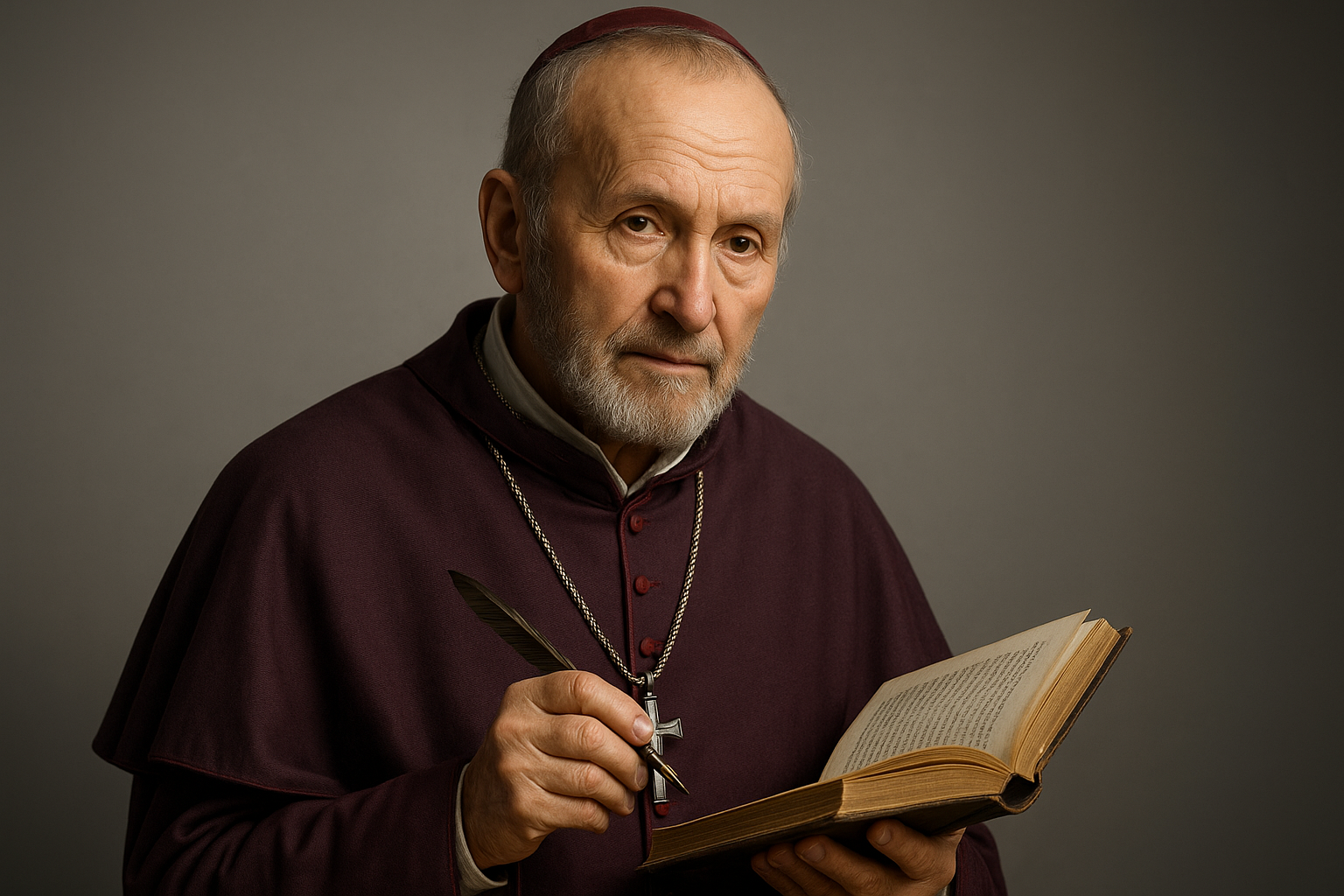
In the bustling, intellectually vibrant, yet often spiritually challenging world of 18th-century Italy, a brilliant lawyer named Alphonsus Liguori walked away from a glittering career to dedicate his life entirely to God. This decision wasn’t just a personal pivot; it marked the beginning of a profound spiritual legacy that continues to touch millions. St. Alphonsus Liguori, a Doctor of the Church, became renowned for his compassionate moral theology, his passionate devotion to the Blessed Mother, and his tireless work in founding the Redemptorist order. This article will explore the fascinating journey of this extraordinary saint, delving into his early life, the pivotal moments of his vocation, his enduring spiritual contributions, and how his wisdom still resonates with believers in the modern world.
Quick Facts
| Category | Detail |
|---|---|
| Birth | September 27, 1696, Marianella (near Naples), Kingdom of Naples |
| Death | August 1, 1787, Pagani, Kingdom of Naples |
| Feast Day | August 1 |
| Patronage | Confessors, moral theologians, vocations, arthritis |
| Canonized | May 26, 1839, by Pope Gregory XVI |
Historical Context & Early Life
St. Alphonsus Liguori was born into a world undergoing significant shifts, both politically and culturally. The Kingdom of Naples, where he grew up, was a vibrant center of intellectual activity, but it was also a territory frequently contested by European powers, often experiencing changes in rule. The 18th century was the era of the Enlightenment, a philosophical movement that emphasized reason and individualism, often leading to a questioning of traditional religious authority. Within the Church, there was a growing concern over the spiritual state of the common people, many of whom were poorly catechized and lacked access to good spiritual guidance, especially in rural areas.
Alphonsus’s family was part of the Neapolitan nobility, enjoying considerable wealth and social standing. His father, Don Giuseppe Liguori, was a highly respected naval officer and a man of strict discipline, who had high aspirations for his eldest son. His mother, Donna Caterina Cavalieri, was a devout and gentle woman who instilled in Alphonsus a deep love for God and the Blessed Virgin Mary from a very young age. Growing up in this environment, Alphonsus received an exceptional education, tutored privately in classical languages, philosophy, and music. He showed remarkable intellectual gifts from childhood, excelling in every subject he pursued.
His father pushed him towards a career in law, a path that was prestigious and promised great influence. Alphonsus entered the University of Naples at just 12 years old, graduating with doctorates in civil and canon law by the astonishing age of 16. He quickly became a brilliant and successful lawyer, known for his sharp intellect, persuasive arguments, and unwavering integrity. For eight years, he practiced law, never losing a case. His reputation grew, and he seemed destined for a prominent legal and political future.
However, Alphonsus harbored a growing unease within his soul. Despite his outward success, he felt an emptiness, a longing for something more profound. His legal work, while challenging, exposed him to the often-corrupt practices of the time, and he became disillusioned with the pursuit of worldly gain. A pivotal moment occurred in 1723 when, during a particularly important case, he discovered a crucial document had been deliberately misrepresented, leading him to unknowingly argue a falsehood. The realization that he had been tricked into compromising his integrity deeply shook him. He famously declared, “World, I know you now. Courts are but dens of thieves!” This event, combined with an increasing pull towards a spiritual life, catalyzed his decision to abandon his legal career and dedicate himself wholly to God.
Calling & Key Milestones
From Lawyer to Priest
Alphonsus’s decision to leave the law and pursue priesthood was met with strong opposition from his father, who struggled to understand why his brilliant son would abandon such a promising future. Nevertheless, Alphonsus remained steadfast. He began studying theology and, in 1726, was ordained a priest. During his early years as a priest in Naples, he dedicated himself to serving the most marginalized and neglected people. He joined the Apostolic Missions, a group of priests who preached to the poor in the Neapolitan slums, and ministered to the “lazzaroni,” the homeless and destitute. His experiences among these forgotten souls deeply shaped his understanding of God’s boundless mercy and the urgent need for accessible spiritual guidance.
Founding the Redemptorists
It was through his work with the poor and abandoned that St. Alphonsus recognized a critical need for a stable community of missionaries who would exclusively serve these forgotten populations. In 1732, while on retreat in Scala, he founded the Congregation of the Most Holy Redeemer, commonly known as the Redemptorists. His vision was for an order of priests and brothers who would imitate Christ, the Redeemer, by preaching the Gospel and providing spiritual assistance, especially to the most neglected souls in rural areas, who often had little access to sound Catholic teaching or the sacraments. The Redemptorists were to be tireless in their missionary efforts, living simply and focusing on practical, understandable instruction rather than complex theological debates.
Missionary Zeal and Moral Theology
St. Alphonsus himself was an extraordinarily active missionary. He traveled extensively throughout the Kingdom of Naples, preaching missions and retreats. His sermons were known for their clarity, warmth, and emphasis on God’s immense love and mercy, rather than fire-and-brimstone condemnations. He had a remarkable ability to connect with ordinary people, using simple language and vivid imagery to convey profound truths. This pastoral approach was central to his groundbreaking work in moral theology. At a time when many moral theologians were perceived as overly strict or complex, Alphonsus developed a moral theology that prioritized the salvation of souls, advocating a balanced approach between rigorism and laxity. He emphasized that God’s grace is always available and that sincere repentance is always met with divine mercy. His magnum opus, Theologia Moralis (Moral Theology), became a standard text, guiding confessors to be both compassionate and truthful, helping penitents understand God’s forgiveness and encouraging them to strive for holiness.
Bishop of Sant’Agata dei Goti
In 1762, against his strong personal wishes and despite his declining health due to severe arthritis and scoliosis, Pope Clement XIII appointed Alphonsus Bishop of Sant’Agata dei Goti. He reluctantly accepted the position, believing it to be God’s will. As bishop, he continued his pastoral zeal, reforming the diocese, establishing a seminary, and ensuring that his priests were well-formed and attentive to the spiritual needs of their flocks. He famously fought against corrupt practices and abuses, demonstrating unwavering courage and integrity, even when it meant facing opposition from powerful figures. For 13 years, he served as bishop, always prioritizing the spiritual welfare of his people, until poor health forced him to resign in 1775, returning to the Redemptorist community in Pagani.
Challenges and Perseverance
St. Alphonsus faced numerous trials throughout his life. Beyond his debilitating health issues, which included constant pain, paralysis of his neck, and eventual blindness, he endured significant suffering within his own congregation. A painful division arose over changes to the Redemptorist rule, leading to a schism and, for a time, Alphonsus being unjustly removed as superior general by the Pope. This period of misunderstanding and betrayal caused him immense anguish. Yet, through it all, he maintained his faith and trust in God’s providence, exemplifying heroic patience and humility. He spent his final years in prayer, writing, and spiritual direction, eventually dying peacefully in 1787 at the age of 90.
Spiritual Legacy & Theological Themes
St. Alphonsus Liguori’s spiritual legacy is immense and multifaceted. He is justly celebrated as one of the Catholic Church’s greatest saints and a Doctor of the Church, a title recognizing his profound theological contributions. At the heart of his spirituality was an unwavering belief in God’s boundless mercy and love for humanity. He consistently emphasized that God desires the salvation of all and that the path to holiness is accessible to everyone, not just a select few.
The core virtues he exemplified were love of God, humility, compassion, and perseverance. He taught that true love of God is demonstrated by striving to follow His will and by serving others, especially the poor and abandoned. His emphasis on mercy aligned perfectly with Scripture, particularly passages like Matthew 9:13, where Jesus declares, “I desire mercy, not sacrifice.” He understood that the Church’s role was to be a beacon of hope and forgiveness, guiding souls towards salvation rather than burdening them with impossible demands.
His lasting influence on Catholic teaching is profound, particularly in two key areas: moral theology and Mariology (the study of Mary). His moral theology, outlined in Theologia Moralis, revolutionized pastoral practice by providing confessors with a compassionate yet balanced approach to sin and penance. He taught that confessors should seek to discern the individual circumstances of each penitent, offering guidance that leads to conversion and healing, rather than harsh judgment. This approach profoundly impacted the formation of priests and the sacrament of Confession.
Alphonsus was also a prolific and passionate writer of devotional works, making complex theological concepts accessible to ordinary believers. His most famous devotional work, The Glories of Mary, is a masterpiece of Marian devotion, highlighting Mary’s role as mediatrix of grace and a loving mother to all humanity. This book, along with others like Preparation for Death and Visits to the Blessed Sacrament and to the Blessed Virgin Mary, continues to inspire Catholics worldwide, fostering deep prayer lives and a tender love for Jesus and His mother. His writings also influenced art, often depicting him with a pen or book, symbolizing his literary contributions, and with the Virgin Mary or the crucifix, representing his profound devotions.
Devotion Today
St. Alphonsus Liguori remains a beloved and influential saint in the Catholic Church today. His spiritual legacy continues primarily through the Redemptorist Congregation, which he founded. Redemptorists, now active in over 70 countries worldwide, continue his mission of evangelizing the most abandoned, particularly through parish missions, retreats, and social justice ministries. Their work reflects St. Alphonsus’s enduring commitment to bringing the Good News to those who need it most.
The principal shrine to St. Alphonsus is located at the Redemptorist monastery in Pagani, Italy, where he lived his final years and where his tomb is venerated. Pilgrims from across the globe visit Pagani to pray at his tomb, seeking his intercession and drawing inspiration from his life. Additionally, many churches, especially Redemptorist-run parishes, bear his name and host special celebrations on his feast day, August 1st.
His devotional writings, particularly The Glories of Mary, are still widely read and cherished. Many individuals and communities continue to find spiritual enrichment in his accessible approach to prayer and his emphasis on the virtues of humility, patience, and trust in God’s mercy. He is a patron saint for confessors, moral theologians, and those discerning a vocation, and his intercession is often sought by those suffering from arthritis, a condition he endured throughout much of his life.
Reflections for Modern Readers
St. Alphonsus Liguori’s life offers timeless wisdom and practical lessons that are remarkably relevant for 21st-century Christians facing a complex and often challenging world.
- Embrace God’s Mercy: In a world that often emphasizes performance and perfection, St. Alphonsus reminds us of God’s limitless mercy. He taught that God is always ready to forgive and embrace us, no matter our past mistakes. For a modern reader struggling with guilt, shame, or the feeling of not being “good enough,” Alphonsus’s message is a comforting balm: God’s love is unconditional, and His forgiveness is always available through sincere repentance and the Sacrament of Reconciliation. Think of someone online, constantly comparing themselves to others’ curated lives; Alphonsus gently reminds them that their inherent worth comes from God’s love, not external validation.
- Persevere Through Difficulties: St. Alphonsus endured debilitating physical pain, internal struggles within his order, and periods of misunderstanding and rejection. Yet, he persevered with unwavering faith. His life teaches us the importance of patience, resilience, and trusting in God’s plan even when circumstances are bleak. For someone facing a long-term illness, a difficult family situation, or a crisis of faith, Alphonsus’s example encourages them to hold fast, remembering that spiritual growth often comes through trials.
- Balance Justice with Love and Compassion: As a lawyer, Alphonsus sought justice, but as a priest, he learned to temper justice with profound love and mercy. His moral theology championed a compassionate approach, reminding us that true righteousness involves understanding, empathy, and a desire for the well-being of others. In today’s often polarized society, where quick judgments are common, Alphonsus calls us to approach others, and ourselves, with understanding and a desire for reconciliation, reflecting God’s own merciful heart.
- The Power of Accessible Faith: Alphonsus dedicated his life to making faith understandable and accessible to the poor and uneducated. He spoke in simple terms, wrote devotional books for the common person, and founded an order to reach those on the margins. This inspires us today to find ways to share our faith simply, clearly, and engagingly, breaking down barriers and jargon to make the Gospel message approachable and relevant to everyone, regardless of their background or education.
In art and jewelry, St. Alphonsus Liguori is commonly depicted with several significant symbols:
- A Pen or Book: This represents his prolific literary output, especially his influential works on moral theology and Marian devotion, such as Theologia Moralis and The Glories of Mary. It signifies his role as a Doctor of the Church and a writer who made complex truths accessible.
- A Crucifix: This symbolizes his deep devotion to Jesus Christ, the Redeemer, and his focus on the Passion and death of Christ as the source of salvation and mercy. It also reflects his order’s name, the Congregation of the Most Holy Redeemer.
- The Blessed Virgin Mary: Often, Mary is present in artwork depicting St. Alphonsus, sometimes as a statue he is revering or a vision. This highlights his profound and tender devotion to the Mother of God, especially his belief in her role as a mediatrix of grace and his popularizing of Marian piety.
- A Bishop’s Miter and Crozier: These signify his reluctant but dedicated service as Bishop of Sant’Agata dei Goti, representing his episcopal office and pastoral care for his diocese.
Timeline Summary
- 1696: Born Alphonsus Maria de’ Liguori in Marianella, near Naples, Italy.
- 1713: Earns doctorates in civil and canon law at 16 years old.
- 1713-1723: Practices as a successful lawyer in Naples.
- 1723: Experiences a spiritual crisis after a legal defeat, leading him to abandon his law career.
- 1726: Ordained a priest in Naples.
- 1732: Founds the Congregation of the Most Holy Redeemer (Redemptorists) in Scala, Italy, dedicated to preaching to the most abandoned.
- 1748: Publishes his definitive edition of Theologia Moralis (Moral Theology).
- 1750: Publishes The Glories of Mary.
- 1762: Appointed Bishop of Sant’Agata dei Goti by Pope Clement XIII.
- 1775: Resigns as bishop due to severe ill health and returns to the Redemptorist community in Pagani.
- 1787: Dies in Pagani at the age of 90.
- 1816: Beatified by Pope Pius VII.
- 1839: Canonized a saint by Pope Gregory XVI.
- 1871: Declared a Doctor of the Church by Pope Pius IX.
- 1950: Declared patron of confessors and moral theologians by Pope Pius XII.
Scripture for Reflection
St. Alphonsus Liguori’s life and teachings profoundly echo several key themes found in Scripture, especially regarding God’s mercy and the call to evangelize the poor.
Matthew 9:12-13: “When Jesus heard this, he said, ‘Those who are well have no need of a physician, but those who are sick. Go and learn what this means: “I desire mercy, not sacrifice.” For I have come to call not the righteous but sinners.'”
Alphonsus perfectly embodied this passage. He left a comfortable life to minister to the “sick”—the spiritually neglected, the poor, and the abandoned. His moral theology was built on the foundation of God’s mercy, emphasizing that the Church’s role is to heal and guide sinners back to God, not to condemn them with excessive rigor.
Luke 4:18-19: “The Spirit of the Lord is upon me, because he has anointed me to bring good news to the poor. He has sent me to proclaim release to the captives and recovery of sight to the blind, to let the oppressed go free, to proclaim the year of the Lord’s favor.”
This mission statement of Jesus was also Alphonsus’s own. He specifically founded the Redemptorists to bring the “good news” of salvation and God’s abundant grace to the poor and marginalized, who were often neglected by other clergy. His life was a testament to serving the spiritual and often temporal needs of those most in need of liberation and comfort.
Prayers to St. Alphonsus Liguori
Prayer for the Love of Jesus
My Lord Jesus Christ, Who, out of Your love for us, remained day and night in the Blessed Sacrament, full of compassion and mercy, waiting for all who come to visit You; I believe that You are present in the Sacrament of the Altar. I adore You from the abyss of my nothingness, and I thank You for all the graces You have granted me, especially for having given me Yourself in this Sacrament, for having given me Your Most Holy Mother Mary as my advocate, and for having called me to visit You in this church.
I salute Your Most Loving Heart, and I desire to salute It for three ends: first, in thanksgiving for this great gift; second, to make amends to You for all the insults You receive in this Sacrament from all Your enemies; third, by this visit, I intend to adore You in all places on earth where You are least adored and most abandoned.
My Jesus, I love You with all my heart. I am sorry for having offended Your infinite goodness so many times. I resolve, with the help of Your grace, never to offend You again. And at this moment, poor and miserable as I am, I consecrate my entire self to You. I give You my whole will, my affections, my desires, and everything I possess. From this day forward, do whatever You wish with me and with my possessions.
I ask You for and desire nothing but Your holy love, final perseverance, and the perfect fulfillment of Your will. I recommend to You the souls in Purgatory, especially those most devoted to the Blessed Sacrament and to the Blessed Virgin Mary. I also commend to You all poor sinners. Finally, my beloved Savior, I unite all my affections with the affections of Your most loving Heart, and thus united, I offer them to Your Eternal Father and beg Him, for Your sake, to accept them and grant my requests. Amen.
Prayer for a Happy Death
O most holy and Immaculate Virgin, my Mother Mary, you who are the Mother of my Lord, the Queen of the world, the advocate, hope, and refuge of sinners, I, a most wretched sinner, now come to you. I venerate you, O great Queen, and I thank you for the many graces you have bestowed upon me even until this present moment; in particular, for having delivered me from hell, which I have so often deserved. I love you, O most amiable Lady, and because of the love I bear you, I promise to serve you always and to do all in my power to make others love you also.
I place all my hopes in you and I entrust my salvation to your care. Accept me as your servant and cover me with the mantle of your protection, O Mother of Mercy. And since you are so powerful with God, deliver me from all temptations, or at least obtain for me the strength to overcome them until death. From you I ask for a perfect love of Jesus Christ, and I also implore of you the grace of a good death. Through your intercession, make me one of your chosen children, O Mother of God, and admit me to paradise to bless you and to sing the mercies of your Son for all eternity. Amen.





