
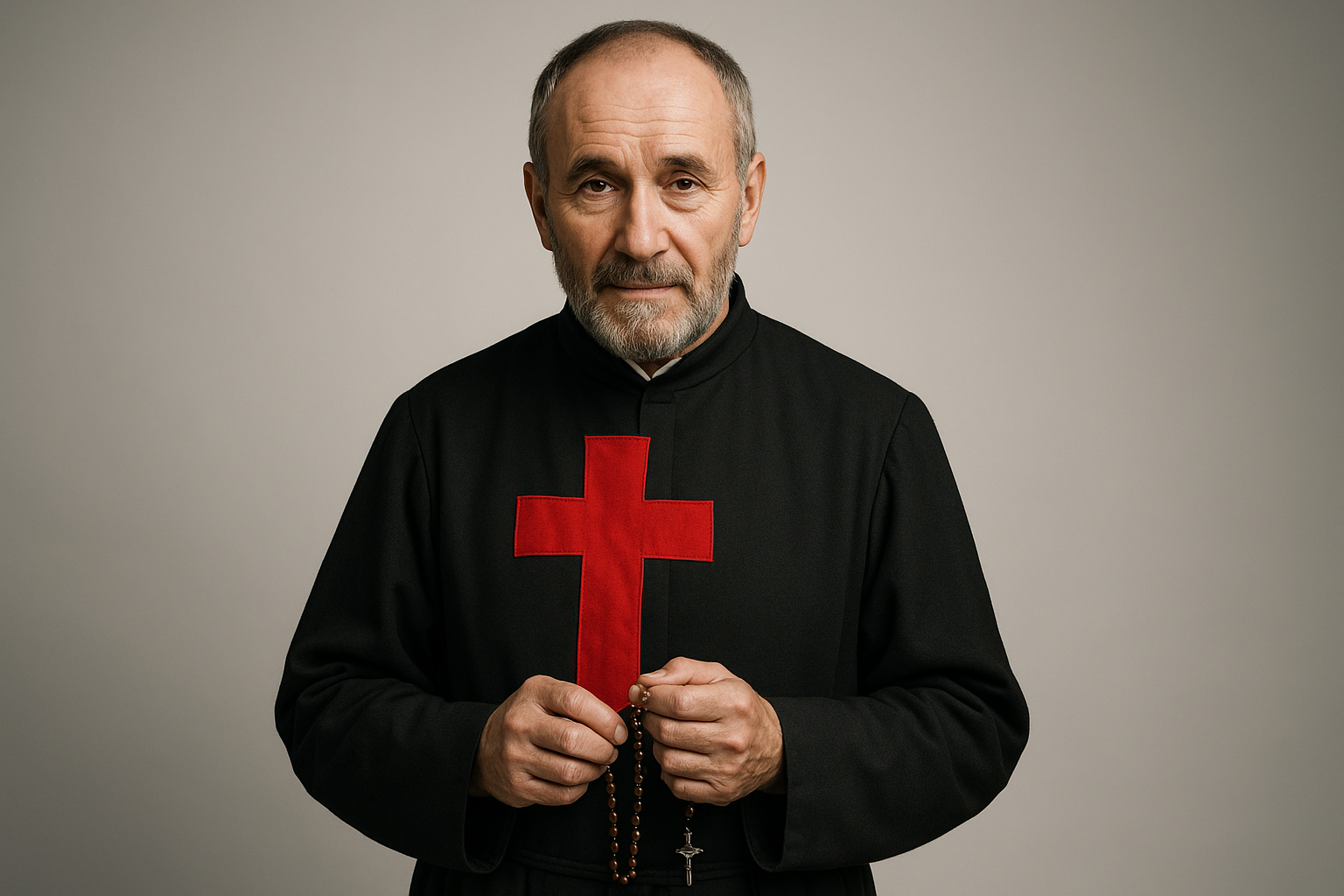
In a world often challenged by illness and suffering, stories of profound charity and selfless service shine as beacons of hope. St. Camillus de Lellis, a figure from 16th-century Italy, stands out as one such light. His life, a dramatic journey from a gambling soldier to a compassionate founder of an order dedicated entirely to the sick, offers not just historical insight but also enduring lessons on empathy, perseverance, and the dignity of human life. This article will explore his adventurous early years, the pivotal conversion that reshaped his destiny, his groundbreaking contributions to healthcare, and the rich spiritual legacy he left behind, which continues to inspire acts of kindness and professional care for the ailing in our modern world.
Quick Facts
| Category | Detail |
|---|---|
| Birth | May 25, 1550, Bucchianico, Kingdom of Naples (modern Italy) |
| Death | July 14, 1614, Rome, Papal States (modern Italy) |
| Feast Day | July 14 |
| Patronage | Sick, hospitals, nurses, healthcare workers, those suffering from chronic illness, gamblers |
| Canonized | 1746 by Pope Benedict XIV |
Historical Context & Early Life
The 16th century in Italy was a time of immense change and contradiction. Politically, the Italian peninsula was a patchwork of warring city-states, foreign occupations, and the powerful Papal States, often embroiled in conflicts that scarred the land and its people. Culturally, it was the late Renaissance, a period marked by artistic genius and intellectual ferment, yet shadowed by widespread poverty, frequent epidemics, and the harsh realities of war. The Catholic Church, while undergoing its own period of reform known as the Counter-Reformation (following the Council of Trent), faced internal challenges and external threats. Healthcare, as we understand it today, was rudimentary; hospitals were often places of last resort, primarily charitable institutions rather than centers of medical science, staffed by volunteers or those with minimal training, and often lacking basic hygiene.
It was into this tumultuous world that Camillus de Lellis was born in 1550 in Bucchianico, a town in what was then the Kingdom of Naples. His father, Giovanni de Lellis, was a seasoned soldier, and his mother, Camilla Compelli de Lellis, was nearly 60 years old when he was born. This late birth perhaps contributed to Camillus’s somewhat unruly youth, as his mother passed away when he was just a child, leaving him with an often-absent military father. He grew up largely unsupervised, developing a passionate, volatile temperament. Following in his father’s footsteps, Camillus joined the Venetian army at 17, fighting against the Ottoman Turks. Later, he served in various military campaigns, including for the Spanish in North Africa. Life as a soldier was rough, characterized by danger, camaraderie, and often, vice. Camillus was no stranger to gambling, a habit that consumed much of his time and money, leaving him frequently in debt and despair. His imposing physical stature—he was remarkably tall for his era—and fiery spirit made him a formidable presence, but his internal life was restless and unfulfilled.
Calling & Key Milestones
A Gambler’s Path to Conversion
Camillus’s life took a dramatic turn not on a battlefield, but on a journey. After losing all his possessions in a gambling spree, he found himself destitute. He sought work at the Capuchin friary in Manfredonia as a laborer. The friars, known for their simple lifestyle and deep piety, offered him a chance for honest work and spiritual reflection. It was during a journey to this friary in 1575, while reflecting on the words of a Capuchin superior, that Camillus experienced a profound spiritual awakening. The realization of his sinful past and the boundless mercy of God struck him deeply. He later described it as a moment of divine grace, a turning point where he felt called to dedicate his life to God. He resolved to abandon his old ways and seek a path of penance and service. This conversion was not a fleeting emotion but a fundamental reorientation of his entire being.
The Hospital of San Giacomo and a Persistent Wound
Following his conversion, Camillus initially sought to join the Capuchin order, drawn by their asceticism. However, a chronic leg wound he had sustained during his military days—a persistent ulcer—proved to be an obstacle. His wound frequently flared up, making the rigorous life of a mendicant friar difficult. This led him to the Hospital of San Giacomo degli Incurabili (St. James of the Incurables) in Rome, first as a patient, and then as a servant, caring for other patients. It was here, in the midst of the suffering and neglect he witnessed daily, that Camillus found his true calling. He saw how patients were often treated with indifference, their spiritual and physical needs frequently unmet. The poor care, insufficient hygiene, and lack of genuine compassion stirred his heart. He felt a deep, personal connection to the sick, recognizing Christ in their suffering faces. He rose through the ranks at San Giacomo, eventually becoming superintendent, bringing a new level of order and heartfelt care to the institution.
Founding the Ministers of the Sick (Camillians)
While serving at San Giacomo, Camillus gathered around him a group of like-minded men who shared his passion for dedicated service to the sick. He believed that caring for the sick required not just physical assistance but also profound spiritual commitment and professional excellence. He envisioned an order specifically dedicated to ministering to the sick, even at the risk of their own lives, seeing it as a service directly rendered to Christ. This was a radical idea for the time. In 1582, with the encouragement of his confessor, St. Philip Neri, Camillus, along with his first companions, took a private vow to serve the sick “even with danger to our own lives.” This vow became the foundational charism (a specific gift or grace of the Holy Spirit for the good of the Church) of his new community. Despite initial resistance from ecclesiastical authorities, who questioned the need for a new order when existing ones already served the poor and sick, Camillus persisted. He was ordained a priest in 1584, and the community was formally established as the Congregation of the Ministers of the Sick, or Camillians, in 1586 by Pope Sixtus V.
Innovations in Healthcare
St. Camillus de Lellis was far ahead of his time in his approach to patient care. He introduced practices that laid the groundwork for modern nursing and hospital management. He insisted on cleanliness in hospitals, improved nutrition for patients, and meticulous record-keeping. His most significant innovation was his insistence that those caring for the sick should do so out of profound love and respect, treating each patient as if they were Christ himself. He taught his brothers to focus not just on physical ailments but on the holistic well-being of the person, addressing their spiritual, emotional, and psychological needs. He emphasized the importance of gentle touch, compassionate listening, and constant vigilance, especially for the dying. He also sent his brothers out to care for the sick in their homes and even on battlefields, extending their ministry beyond the confines of the hospital walls.
Battling Plagues and Persecution
The Camillians quickly became renowned for their fearless dedication. During the frequent outbreaks of plague and other epidemics that ravaged Italy, the Camillians were often the only ones willing to venture into contagion-ridden areas, tending to the sick and burying the dead when others fled. Many of his brothers, and Camillus himself, contracted diseases, demonstrating the sincerity of their fourth vow. This courage in the face of death earned them immense respect and admiration, but it was not without personal cost. Camillus himself suffered from numerous ailments throughout his life, including his persistent leg wound, stomach problems, and arthritis, yet he continued his tireless work, often crawling from bed to bed to attend to his patients when he could no longer stand.
Spiritual Legacy & Theological Themes
The spiritual legacy of St. Camillus de Lellis is profoundly rooted in the Gospel’s call to charity and compassion. He exemplified the core virtues of unconditional love, selfless service, and radical empathy. For Camillus, caring for the sick was not merely a humanitarian act but a direct encounter with Christ. He frequently reminded his brothers, “The poor sick are the very pupils of God’s eyes. Oh, how pleasing to God is the service of the sick!” This belief aligns perfectly with the teachings of Jesus in Matthew 25:36, “I was sick and you visited me.”
His approach to suffering was also deeply theological. He didn’t see sickness as merely a physical affliction but as an opportunity for spiritual growth and a means of drawing closer to God. He taught that by patiently enduring suffering and by serving those who suffer, one could participate in Christ’s own redemptive passion. This perspective elevates the act of nursing and medical care to a sacred ministry, transforming mundane tasks into acts of profound spiritual significance. The distinctive red cross on the habit of the Camillians symbolized not only the blood shed by Christ but also the willingness of the brothers to shed their own blood, if necessary, in service to the sick.
St. Camillus’s lasting influence is primarily seen in the continued work of his order, the Camillians (formally the Order of the Ministers of the Sick), who continue to serve in hospitals, hospices, and care facilities worldwide. They have maintained his charism of holistic care, emphasizing both the physical and spiritual needs of patients. Beyond his specific order, Camillus inspired a broader recognition of the dignity of the sick and the spiritual importance of nursing, contributing to a more compassionate and professional approach to healthcare within the Catholic tradition and beyond. His life also stands as a testament to the transformative power of conversion, demonstrating that even a life seemingly lost to vice can be dramatically redirected for God’s greater glory and the service of humanity.
Devotion Today
Devotion to St. Camillus de Lellis continues to flourish, particularly among healthcare professionals and those who suffer from illness. He is widely invoked as the patron saint of the sick, hospitals, nurses, and all who work in healthcare. His feast day on July 14th is celebrated globally, often with special Masses and prayer services in hospitals and healthcare institutions. The Camillian Order, true to its founder’s charism, operates numerous hospitals, clinics, and hospices across five continents, providing medical care, spiritual support, and humanitarian aid. Many hospitals and healthcare facilities around the world bear his name, serving as living memorials to his vision of compassionate care. Pilgrimages are made to his tomb in the Church of St. Mary Magdalene in Rome, where his preserved body rests, and where many seek his intercession for healing and strength in times of illness. His spirit of service is also reflected in countless volunteer programs and charitable organizations that adopt his principles of holistic and loving care for the most vulnerable.
Reflections for Modern Readers
St. Camillus de Lellis, though living centuries ago, offers timeless lessons for our contemporary world:
- Empathy in Action: Camillus taught us to see Christ in the suffering person. In today’s fast-paced world, it’s easy to view illness or disability through a lens of inconvenience or clinical detachment. His life calls us to cultivate genuine empathy, whether we are healthcare workers, family caregivers, or simply neighbors. Even a simple act of listening attentively to someone who is hurting, without judgment, reflects his spirit.
- Transforming Personal Struggles into Purpose: Camillus battled a chronic leg wound and a gambling addiction. Instead of letting his personal pains define him negatively, he transformed them into a wellspring of compassion and purpose. For modern readers facing chronic illness, addiction, or personal hardship, his story is a powerful reminder that our struggles can become catalysts for profound personal growth and service to others. A person who has overcome an addiction, for example, might become a powerful advocate or mentor for others in recovery.
- The Dignity of Holistic Care: Camillus emphasized caring for the whole person—body, mind, and spirit. In an era of highly specialized medicine, his vision reminds us of the importance of integrated care. This can translate into advocating for mental health services, ensuring spiritual support for patients, or simply making sure that a loved one in a hospital feels heard and respected, not just treated for their symptoms.
- Radical Self-Gift: His fourth vow to serve the sick “even with danger to our own lives” challenges us to consider where we are called to make sacrifices for the good of others. While most of us won’t face the plague, there are daily opportunities for self-sacrifice: choosing to volunteer, foregoing personal comfort to care for an aging parent, or dedicating a career to a demanding but essential field like social work or medicine.
In art and jewelry, St. Camillus de Lellis is often depicted with specific symbols that represent his life and mission. Most prominently, he is shown wearing the black habit of his order, adorned with a large red cross. This red cross is the enduring symbol of the Camillians, representing the boundless charity of Christ and their willingness to lay down their lives in service to the sick. He is also frequently depicted with a rosary, signifying his deep personal piety and reliance on prayer, and sometimes with an angel assisting him in tending to the sick, symbolizing divine aid in his arduous ministry. Another common representation shows him at the bedside of a sick or dying person, illustrating his life’s dedication to compassionate care. These images serve as powerful reminders of his radical commitment to Christ’s love lived out in service to the most vulnerable.
Timeline Summary
- 1550: Born on May 25 in Bucchianico, Kingdom of Naples.
- 1567: Joins his father in the Venetian army, beginning his military career.
- 1575: Experiences a profound conversion on his way to a Capuchin friary in Manfredonia.
- 1575-1579: Serves at the Hospital of San Giacomo degli Incurabili in Rome, initially as a patient, then as a servant to the sick.
- 1582: With companions, takes a private vow to serve the sick “even with danger to our own lives,” marking the unofficial beginning of his religious community.
- 1584: Ordained a priest.
- 1586: Pope Sixtus V formally establishes the Congregation of the Ministers of the Sick (Camillians).
- 1588: Establishes the first Camillian hospital outside Rome, in Naples.
- Early 1600s: The Camillians are active in various cities across Italy, battling plague and providing healthcare.
- 1607: Resigns as Superior General of the Order due to declining health.
- 1614: Dies on July 14 in Rome.
- 1746: Canonized by Pope Benedict XIV.
Scripture for Reflection
The life and ministry of St. Camillus de Lellis resonate deeply with several passages of Sacred Scripture, particularly those emphasizing charity, service, and compassion for the suffering.
Matthew 25:35-36, 40 (New American Bible Revised Edition – NABRE):
“For I was hungry and you gave me food, I was thirsty and you gave me drink, a stranger and you welcomed me, naked and you clothed me, sick and you visited me, in prison and you came to me… Amen, I say to you, whatever you did for one of these least brothers of mine, you did for me.”
This passage is perhaps the most direct scriptural anchor for St. Camillus’s work. His entire life was a living embodiment of visiting the sick, recognizing Christ’s presence in every patient he served. He understood that ministering to the ailing was not just a humanitarian task but a profound act of worship and love directed towards God Himself.
Philippians 2:3-4 (NABRE):
“Do nothing out of selfishness or out of vainglory; rather, humbly regard others as more important than yourselves, each looking out not for his own interests, but also for those of others.”
This verse beautifully captures the spirit of self-sacrificing service that Camillus instilled in his order. He taught his brothers to put the needs of the sick before their own, humbly and without seeking personal gain. His own life, plagued by illness, was a testament to looking out for the interests of others, even to his own detriment.
Prayers to St. Camillus de Lellis
Here are a couple of prayers often recited in honor of St. Camillus de Lellis:
Prayer to St. Camillus de Lellis for the Sick
O glorious St. Camillus, special patron of the sick, who for forty years, with truly heroic charity, dedicated yourself to the service of all those who suffer, grant me, I implore you, that special protection which you show towards your clients in their sickness. Obtain for me from God, if it be His holy will, the healing of my infirmity, or at least the grace to suffer it with Christian patience, and to offer it to God in reparation for my sins, so that through Christ with you I may be able to praise God in heaven for all eternity. Amen.
Short Invocation to St. Camillus
Saint Camillus, you who found God in the sick, help us to be merciful to the infirm, and through your intercession, bring us health of body and soul. Amen.





