
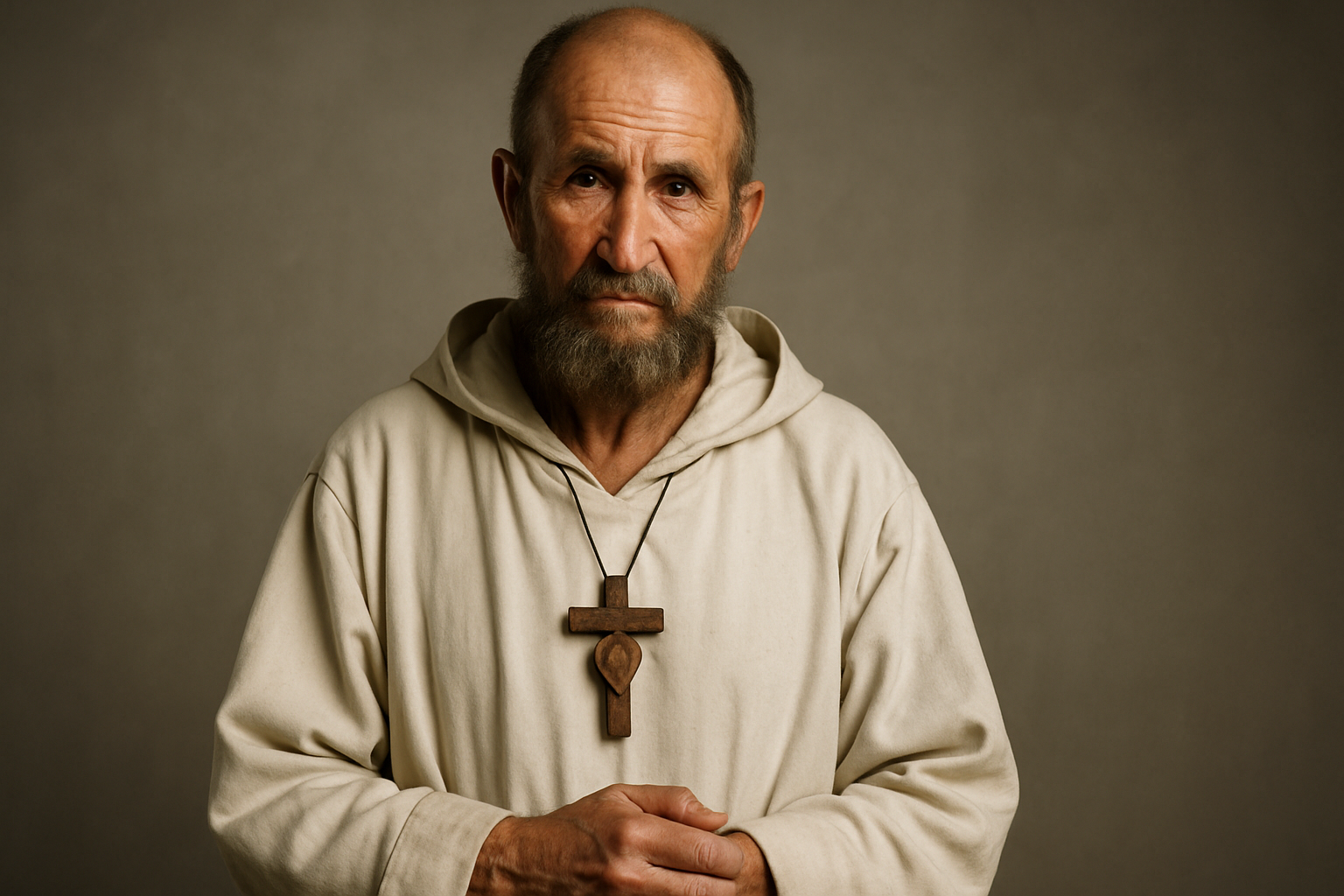
In a world often captivated by grand gestures and public acclaim, the life of St. Charles de Foucauld stands as a profound testament to the power of humility, hiddenness, and universal brotherhood. Born into French aristocracy, Charles embarked on a tumultuous journey through atheism, military adventure, and profound spiritual conversion, ultimately embracing a radical path that led him to the scorching deserts of North Africa. There, he sought to live the “hidden life of Nazareth,” witnessing to Christ not through preaching, but through silent presence, loving service, and deep contemplation among the Tuareg people. This article delves into his extraordinary transformation, his spiritual legacy of radical simplicity and universal fraternity, and how his witness continues to inspire countless souls to find God in the ordinary and to build bridges of love across cultures and creeds, even in our own time.
Quick Facts
| Attribute | Detail |
|---|---|
| Birth | September 15, 1858, Strasbourg, France |
| Death | December 1, 1916, Tamanrasset, Algeria |
| Feast Day | December 1 |
| Patronage | Desert dwellers, evangelists, converts, reconciliation, explorers, French Foreign Legion |
| Canonized | May 15, 2022, by Pope Francis |
Historical Context & Early Life
Charles de Foucauld was born into a France undergoing significant transformation. The Second French Empire had recently fallen, giving way to the Third Republic, a period marked by political instability, the rise of scientific rationalism, and a strong anti-clerical sentiment among many intellectuals. Yet, it was also a time of fervent Catholic revival and burgeoning missionary zeal, particularly in France’s expanding colonial empire. The Church, while facing internal challenges, was also deeply engaged in social questions, navigating its role in a rapidly modernizing world.
Charles’s own family background was one of privilege and tragedy. Born into an aristocratic family with deep roots in Strasbourg, he was orphaned at the tender age of six when both his parents died within months of each other. He and his younger sister, Marie, were subsequently raised by their maternal grandfather, a retired colonel who instilled in Charles a love for adventure and intellectual pursuits. Despite his grandfather’s care, the early loss of his parents left a deep void in Charles, contributing to a sense of rootlessness and a searching spirit.
He received a Jesuit education, but by his teenage years, the prevailing intellectual currents of skepticism and materialism had taken hold. Charles declared himself an atheist, abandoning his faith. His youth was marked by a period of dissipation and indulgence, inheriting a significant fortune that he spent lavishly. He entered the military academy of Saint-Cyr and later Saumur, becoming an officer in the cavalry. Though he displayed moments of brilliance and courage, his military career was often troubled by insubordination and a general lack of discipline, reflecting his restless and unmoored spirit.
In 1881, during his military service in Algeria, Charles resigned his commission to undertake a perilous and unauthorized exploration of Morocco, then largely closed off to Europeans. Disguised as a Jewish rabbi, he meticulously mapped the country and gathered invaluable scientific data, publishing his findings in 1888 as “Reconnaissance au Maroc.” This adventure showcased his remarkable intelligence, courage, and resilience, earning him the gold medal of the French Geographical Society. However, it did not fill the spiritual void within him. During this period, though still an unbeliever, Charles began to encounter the profound faith of Muslim people, observing their deep devotion and constant prayer, which subtly planted seeds of doubt about his own atheism.
Calling & Key Milestones
A Profound Conversion in Paris
Upon his return to France in 1886, Charles, still searching for meaning, was deeply touched by the unwavering faith of his cousin, Marie de Bondy. Her quiet, persistent witness eventually led him to seek out a priest, Father Henri Huvelin, at the Church of Saint-Augustin in Paris. Charles went seeking instruction, but Father Huvelin, with profound spiritual insight, immediately urged him to confess his sins. “Go to confession!” he commanded. Charles, surprised, complied, and in that moment, grace broke through. This confession marked a radical turning point, a profound and immediate conversion that Charles later described as finding “God, and not just God, but God Himself.” He felt an overwhelming call to imitate Jesus, to live a life of total surrender and humility.
The Hidden Life of Nazareth in the Trappist Order and Holy Land
Driven by an intense desire for penance and an imitation of Christ’s poor and humble life, Charles entered the Trappist monastery of Notre-Dame-des-Neiges in 1890. He took the name Brother Marie-Albéric. Yet, his yearning for an even more radical poverty and hiddenness led him to seek permission to transfer to a stricter Trappist community in Akbès, Syria. Here, he continued to be drawn to the “last place,” the most humble existence. He felt an undeniable pull to the Holy Land, to live precisely where Jesus had lived, not as a priest or a missionary, but as a simple laborer, hidden and forgotten.
In 1897, with permission from his superiors, he left the Trappist order to become a hermit in Nazareth, working as a gardener and carpenter for the Poor Clares. This period was crucial for the development of his unique spirituality. He spent hours in adoration before the Blessed Sacrament, meditating deeply on the hidden life of Jesus in Nazareth, seeing it as the ultimate model of humility, obedience, and ordinary work. He saw Nazareth not as a place of grand miracles or public ministry, but as a place of quiet, everyday holiness, where God chose to live anonymously for thirty years.
Return to France and Ordination to the Priesthood
While in Nazareth, Charles came to understand that his call was not just for personal sanctity in isolation, but also to bring Christ’s love to those who had never known Him, particularly the forgotten and marginalized. He felt a strong pull towards North Africa, the place of his earlier adventures, realizing that his knowledge of Arabic and his understanding of the culture could serve a greater purpose. To fulfill this mission of “universal brotherhood,” he recognized the need for the sacraments, especially the Eucharist, and thus, felt called to the priesthood. He returned to France and, after studying in Paris, was ordained a priest in 1901.
Life Among the Tuareg in Tamanrasset
Upon his ordination, Father Charles de Foucauld immediately set out for the Algerian Sahara, first settling in Beni Abbès, an oasis town on the Moroccan border. He built a small hermitage and dedicated himself to a life of prayer, manual labor, and hospitality, opening his doors to all, particularly the poor and the sick. He called his hermitage his “fraternity,” intending it to be a place where he would embody the presence of Christ, serving as a “universal brother” to everyone, regardless of their faith. He adorned his hermitage with a simple cross and an image of the Sacred Heart, often accompanied by the motto “Jesus Caritas” (Jesus is Love).
In 1905, he moved deeper into the Sahara, to Tamanrasset in the Hoggar Mountains, among the semi-nomadic Tuareg people. Here, he chose to live in extreme poverty, sharing the meager existence of the locals. His “mission” was not one of active proselytization in the traditional sense, but of presence, silent witness, and friendship. He sought to understand the Tuareg language and culture, dedicating years to compiling a comprehensive Tuareg-French dictionary and translating their poetry. He believed that before one could speak of Christ, one must first show Christ’s love through actions, presence, and genuine respect. He became known by the locals as “Marabout Charles” (Holy Man Charles), admired for his piety, kindness, and dedication.
Martyrdom and Enduring Witness
As World War I erupted, the remote regions of the Sahara became increasingly unstable. On December 1, 1916, his hermitage in Tamanrasset was attacked by a band of raiders. Charles de Foucauld was killed, caught in the crossfire during a struggle between his guard and the attackers. He died just outside his hermitage, a martyr for the faith he lived so profoundly, a “grain of wheat” falling to the ground in the vast desert, to bear much fruit. His death came at a time when he had attracted no followers, seemingly a failure in the eyes of the world, yet his sacrifice planted the seeds of a spiritual family that would spread globally.
Spiritual Legacy & Theological Themes
St. Charles de Foucauld’s spiritual legacy is exceptionally rich and deeply resonant with core Catholic teaching. His life exemplifies several profound virtues and theological themes:
The Hidden Life of Nazareth
This is arguably the cornerstone of his spirituality. Charles sought to imitate Jesus’s thirty years of hidden life in Nazareth, a period largely unrecorded in Scripture. He believed that this long period of ordinary, humble existence was just as salvific as Christ’s public ministry and passion. For Charles, Nazareth represented quiet work, daily prayer, and the love of neighbor in the most unassuming circumstances. This theme aligns with scriptural passages emphasizing humility (Philippians 2:5-8) and finding God in the ordinary (Matthew 6:3-4). His life calls believers to value the unseen sacrifices, the unnoticed acts of kindness, and the sanctity of everyday routines, reminding us that God is found not only in grand gestures but in the quiet faithfulness of daily life.
Universal Brotherhood (Fraternity)
Charles harbored a profound desire to be a “universal brother” (frère universel) to all, especially the most marginalized and forgotten. He wanted to radiate the love of Christ by his very presence, building bridges of friendship and respect across religious and cultural divides. This commitment to fraternity flows directly from the Gospel message of loving one’s neighbor as oneself (Mark 12:31) and seeing Christ in the least of our brothers and sisters (Matthew 25:40). He lived this by immersing himself in the Tuareg culture, learning their language, and sharing their hardships, seeking to understand and respect them without demanding conversion, trusting that his silent witness of love would speak volumes.
Eucharistic Adoration
Central to Charles’s life was his intense devotion to the Blessed Sacrament. He spent hours, often through the night, in adoration before the Eucharist, seeing it as the true presence of Jesus, the “Brother and Friend” who chose to remain hidden yet accessible. For him, the Eucharist was the source of all his strength, love, and mission. This devotion is a profound expression of Catholic belief in the real presence of Christ in the Eucharist, emphasizing prayer and intimate communion with God. It was in adoration that he found the grace to live his radical life of poverty and self-giving.
Poverty and Simplicity
Charles embraced a radical form of poverty, far beyond what was typically expected even in religious life. He shed all comforts and possessions, living a life of extreme destitution, identifying with the poorest of the poor. He believed that to truly follow Jesus, one must “go to the last place,” emptying oneself completely (kenosis). This mirrors Christ’s own self-emptying (Philippians 2:7) and his teaching on detachment from worldly goods (Matthew 6:19-21). His simplicity was not merely material but extended to his spiritual approach, seeking direct, unadorned intimacy with God and neighbor.
Lasting Influence
Though Charles died seemingly without disciples, his spirituality deeply inspired others. After his death, his writings and example led to the foundation of numerous religious congregations, most notably the Little Brothers of Jesus and the Little Sisters of Jesus, as well as several lay fraternities. These communities seek to live his charism of presence, contemplation, and universal brotherhood, often among the poorest and most marginalized people in the world. His influence has extended far beyond these specific groups, shaping a “spirituality of the desert” that emphasizes simplicity, silent prayer, and encountering God in the stark beauty of creation and the heart of humanity. His life continues to encourage new forms of evangelization based on friendship, respect, and mutual understanding rather than overt proselytization.
Devotion Today
Devotion to St. Charles de Foucauld has blossomed, particularly since the mid-20th century and especially after his beatification in 2005 and his canonization in 2022. While he doesn’t have grand pilgrimage sites in the traditional sense like Lourdes or Fatima, his spiritual legacy is vibrantly alive through the numerous religious communities and lay fraternities that follow his Rule of Life and his spirit.
The **Little Brothers of Jesus** and the **Little Sisters of Jesus** are the most prominent and direct heirs of his charism. These communities live lives of contemplation and presence, often in small, humble fraternities among the poor, working ordinary jobs, and striving to be “universal brothers and sisters” in various cultures and religious contexts worldwide. There are also numerous other groups, including the Little Sisters of the Gospel, the Little Brothers of the Gospel, and secular institutes, all inspired by different facets of his spirituality. Their widespread presence across the globe — from urban ghettos to remote villages — serves as a living shrine to his ideals.
Annual celebrations and reflections on his feast day, December 1st, are observed by these communities and by many individuals drawn to his unique path. While Tamanrasset, his final hermitage, is not a formal pilgrimage site, it remains a place of profound significance, attracting those who seek to connect with the very ground where he lived and died for Christ. His canonization by Pope Francis brought renewed global attention to his powerful message of humility, brotherhood, and radical trust in God. His spirituality continues to attract those who seek to bridge divides, live simply, and witness to Christ’s love through their very lives, rather than just their words.
Reflections for Modern Readers
St. Charles de Foucauld’s life offers profound and actionable lessons for us in the 21st century, a time often characterized by noise, division, and a search for meaning.
- Embrace the Ordinary with Extraordinary Love: Charles reminds us that holiness isn’t just for grand saints performing miracles. It’s found in the mundane tasks, the daily duties, and the quiet moments of our lives. Just as Jesus spent thirty years in hidden Nazareth, we too can find God’s presence in our work, our families, and our routine. For example, a student meticulously completing their homework with integrity, a parent patiently caring for their children, or a worker performing their job with diligence and kindness – these are all ways to live the “Nazareth life” today, transforming the ordinary into a path to holiness.
- Build Bridges, Not Walls: His concept of “universal brotherhood” is more crucial than ever in our polarized world. St. Charles teaches us to approach others, especially those different from us in culture, religion, or background, with profound respect, a listening heart, and a desire for friendship. Instead of immediately seeking to convert, he sought to understand and love. In our own lives, this could mean actively seeking out friendships with people from diverse backgrounds, engaging in respectful dialogue on difficult topics, or simply offering a genuine smile and kindness to a stranger, consciously breaking down barriers of prejudice and fear.
- The Power of Silent Presence: In an age of constant communication and loud opinions, Charles’s emphasis on silent witness is revolutionary. He showed that love and truth can be communicated not just through words, but through one’s very being – a life lived authentically, humbly, and devotedly. When we find ourselves frustrated by inability to change big situations, we can remember his example. Simply being a calm, kind, and prayerful presence in our workplaces, neighborhoods, or online communities, modeling Christian virtues without demanding attention, can be a powerful form of evangelization and peacemaking.
- Center Your Life on Christ in the Eucharist: Charles’s profound Eucharistic adoration offers a vital anchor for our busy lives. He found strength, direction, and profound intimacy with Jesus by spending hours before the Blessed Sacrament. For modern readers, this translates to prioritizing time for prayer and contemplation, particularly before the Eucharist if possible, or even just setting aside dedicated quiet time to be with God. This practice grounds us, refocuses our priorities, and reminds us that true life comes from Him.
- Radical Trust and Detachment: His willingness to abandon wealth, comfort, and even a conventional religious life to follow what he believed was God’s specific call for him teaches us about radical trust. He embraced destitution out of love for Christ. While most of us are not called to such extreme material poverty, we can cultivate detachment from consumerism, social status, and excessive comforts, trusting that God will provide and that true riches are found in Him. This could mean simplifying our possessions, being generous with our time and resources, or willingly stepping out of our comfort zones for a greater purpose.
In art and jewelry, St. Charles de Foucauld is most commonly represented by a few key symbols:
- The Cross with a Heart and “Jesus Caritas”: This is perhaps the most iconic symbol associated with him. It depicts a simple cross, often with a small heart at its base or center, and the Latin words “Jesus Caritas” (Jesus is Love) inscribed. This symbolizes his entire spirituality: the centrality of the cross and Christ’s sacrifice, the burning love of Jesus’s Sacred Heart, and the universal love (caritas) that should define a Christian’s life.
- A Desert Landscape or Tuareg People: Given his missionary life among the Tuareg, he is often depicted in simple white robes, a plain cross around his neck, standing in a desert landscape, sometimes with members of the Tuareg community nearby. This signifies his radical immersion in their culture and his chosen path of silent presence in the Sahara.
- A Hermit’s Robe and a Book: Sometimes he is shown in simple, worn clothes, representing his poverty, and holding a book or scroll. This points to his intellectual side and his dedication to studying the Tuareg language and culture, culminating in his dictionary and translations, which he saw as part of his loving service.
- The Eucharist or Adoration: Given his deep Eucharistic spirituality, he might also be depicted in adoration before a monstrance, reflecting the central role of the Blessed Sacrament in his daily life and mission.
Timeline Summary
- 1858: Born Charles de Foucauld in Strasbourg, France.
- 1864: Orphaned at age six.
- 1876: Enters Saint-Cyr military academy.
- 1881: Resigns from military to explore Morocco, disguised as a rabbi.
- 1886: Experiences a profound conversion in Paris with Fr. Henri Huvelin.
- 1888: Publishes “Reconnaissance au Maroc,” earning scientific acclaim.
- 1890: Enters the Trappist monastery of Notre-Dame-des-Neiges.
- 1897: Leaves the Trappists, becomes a hermit in Nazareth, working as a gardener.
- 1901: Returns to France, is ordained a priest, and departs for Beni Abbès, Algeria.
- 1905: Moves to Tamanrasset in the Hoggar Mountains to live among the Tuareg.
- 1916: Martyred on December 1, at his hermitage in Tamanrasset.
- 2005: Beatified by Pope Benedict XVI.
- 2022: Canonized by Pope Francis, becoming Saint Charles de Foucauld.
Scripture for Reflection
The life and spirituality of St. Charles de Foucauld beautifully echo several passages from Scripture, offering rich material for reflection:
Philippians 2:5-8 (NRSVCE): “Let the same mind be in you that was in Christ Jesus, who, though he was in the form of God, did not regard equality with God as something to be exploited, but emptied himself, taking the form of a slave, being born in human likeness. And being found in human form, he humbled himself and became obedient to the point of death—even death on a cross.”
Reflection: This passage on Christ’s “kenosis” or self-emptying perfectly captures Charles de Foucauld’s radical embrace of humility and poverty. He deliberately sought “the last place,” emptying himself of wealth, status, and worldly ambition to imitate Jesus who became a servant. His journey from aristocratic officer to desert hermit is a living embodiment of this divine self-abasement for love of others.
Matthew 25:40 (NRSVCE): “And the king will answer them, ‘Truly I tell you, just as you did it to one of the least of these who are members of my family, you did it to me.’”
Reflection: Charles de Foucauld’s mission was to be a “universal brother” to the marginalized, particularly the Tuareg people whom he served not by proselytizing but by living among them, learning their language, and sharing their hardships. This verse perfectly encapsulates his belief that in serving and loving “the least,” he was serving and loving Christ himself. His life calls us to see the face of Jesus in every person we encounter, especially those most overlooked by society.
John 13:34-35 (NRSVCE): “I give you a new commandment, that you love one another. Just as I have loved you, you also should love one another. By this everyone will know that you are my disciples, if you have love for one another.”
Reflection: This foundational commandment of Christ’s new covenant was at the heart of Charles’s desire for universal fraternity. He believed that the most powerful witness to the Gospel was not through words alone, but through unconditional love shown to all. His life in the desert was a testament to building relationships of genuine love and respect, allowing his actions to speak louder than any sermon, thereby fulfilling Jesus’ command that love would be the hallmark of his followers.
Prayers to St. Charles de Foucauld
The Prayer of Abandonment
My Father, I abandon myself to You. Do with me what You will.
Whatever You may do, I thank You.
I am ready for anything, I accept everything.
Let only Your will be done in me, and in all Your creatures.
I ask for nothing more, my Lord.
Into Your hands I commend my spirit.
I offer it to You with all the love of my heart,
for I love You, Lord, and so need to give myself,
to surrender myself into Your hands, without reserve,
and with boundless confidence,
for You are my Father.





