
In the vast tapestry of Christian history, some figures shine with a particular brilliance, not just for their holiness, but for the profound circumstances of their sacrifice. Among these courageous souls is St. Felicity, a North African martyr whose unwavering faith alongside her companion St. Perpetua continues to inspire believers across centuries. Her story, preserved in the remarkably vivid Passion of Saints Perpetua and Felicity, offers a window into the challenges and triumphs of early Christianity. This article will explore the life, spiritual legacy, and enduring relevance of St. Felicity, from her humble beginnings and heroic martyrdom in ancient Carthage to her continued devotion in the modern world, offering powerful lessons for all who seek to live a life of profound faith.
Quick Facts
| Category | Detail |
|---|---|
| Birth | Likely early 3rd century in Carthage, North Africa (modern-day Tunisia) |
| Death | March 7, 203 AD, in Carthage |
| Feast Day | March 7 (Western Church), March 6 (Eastern Church) |
| Patronage | Mothers, expectant mothers, martyrs, Carthage |
| Canonized | Pre-Congregation (Venerated as a saint from the early Church) |
Historical Context & Early Life
St. Felicity’s story unfolds during a turbulent period for the nascent Christian Church, at the dawn of the 3rd century AD. The Roman Empire, then under the rule of Emperor Septimius Severus, was a vast and complex dominion, struggling to maintain its traditional order and polytheistic religions in the face of the rapidly spreading monotheistic faith of Christianity. Carthage, a bustling port city in North Africa (modern-day Tunisia), was a significant Roman province and a vibrant center of early Christian intellectual and spiritual life, boasting prominent figures like Tertullian.
Emperor Severus, though initially tolerant, grew increasingly wary of the Christians. In 202 AD, he issued an edict forbidding conversions to Christianity and Judaism under penalty of severe punishment, including death. This edict ignited a new wave of persecution, particularly targeting catechumens (those preparing for baptism) and new converts. For Christians, refusal to participate in the imperial cult – which involved offering sacrifices and prayers to the Roman gods and the deified emperor – was seen as treason, punishable by torture and execution. This was the dangerous backdrop against which Felicity and her companions found themselves.
Little is known about St. Felicity’s exact family background beyond what is gleaned from the Passion. She was a slave, a fact that highlights the universal appeal of Christianity, which transcended social barriers in a society rigidly stratified by class and status. Unlike Perpetua, a noblewoman, Felicity’s societal standing offered her even fewer protections or privileges. This detail makes her unwavering faith and courage all the more remarkable. At the time of her arrest, Felicity was heavily pregnant, a condition that would add a unique and agonizing dimension to her ordeal. Her life prior to her arrest was likely one of servitude, but her commitment to her Christian faith had clearly become the defining aspect of her identity, elevating her spirit far above her earthly station.
Calling & Key Milestones
St. Felicity’s “calling” was a direct, inescapable confrontation with her faith in the face of brutal persecution. She, along with Perpetua and their companions Saturninus, Secundulus, and Revocatus, chose martyrdom rather than renounce Christ. Her narrative is most famously intertwined with that of St. Perpetua, whose personal prison diary forms the core of their shared Passion, one of the most authentic and moving accounts of early Christian martyrdom.
The Arrest and Imprisonment
The group was arrested in Carthage, likely in late 202 AD or early 203 AD, for the “crime” of being Christian. They were taken into custody and imprisoned, subjected to harsh conditions typical of Roman jails. For Felicity, this meant confinement while heavily pregnant, a circumstance that brought immense physical discomfort and emotional anguish, particularly concerning the fate of her unborn child and the children she already had. The Passion describes the stifling heat, the lack of light, and the general misery of their confinement. Yet, even in these dire conditions, the companions found strength and solace in their shared faith and prayer.
Felicity’s Unique Challenge: Pregnancy
Felicity’s situation was particularly poignant. Roman law prohibited the execution of pregnant women. This meant that if she were to be martyred, her execution would have to be delayed until after she gave birth. This delay, while seemingly a reprieve, was a profound spiritual and emotional trial. She feared that she would not be able to join her companions in martyrdom, and that her unique circumstance would separate her from their shared glory. Moreover, the prospect of prolonged imprisonment and potential death after childbirth presented its own set of fears and anxieties.
According to the Passion, Felicity prayed fervently that she might deliver her baby early, before the date set for their public execution. Her prayer was answered. Just two days before the scheduled games, while in prison, she went into labor. The agony of childbirth, exacerbated by her weakened state, caused her to cry out in pain. A prison guard, overhearing her, mockingly asked, “If you cry out like that now, what will you do when you are thrown to the beasts?” Felicity’s legendary response encapsulated her profound faith: “Now it is I who suffer what I suffer; but then another will be in me, who will suffer for me, because I too am to suffer for Him.” This powerful statement highlights her deep understanding of Christ’s presence and strength within her, particularly relevant for Christians experiencing suffering. She gave birth to a healthy daughter, who was then adopted and cared for by one of the Christian sisters from their community, allowing Felicity to face her final ordeal unhindered by the delay and with the knowledge her child would be cared for.
The Martyrdom in the Arena
On March 7, 203 AD, Felicity, Perpetua, and their fellow Christians were led into the amphitheater in Carthage. The Roman games were a spectacle designed to entertain the masses and demonstrate the power of the Empire, often ending in the brutal execution of condemned criminals and, increasingly, Christians. As they walked to their deaths, they refused to wear the pagan robes prescribed for those about to be sacrificed, instead maintaining their Christian dignity.
The Passion describes their resolute demeanor. They faced wild animals – a wild heifer for the women, a leopard, bear, and boar for the men. Felicity and Perpetua were stripped and exposed to a wild heifer, but the crowd, perhaps moved by their fortitude or the sight of their female forms, demanded they be clothed. Despite being gored by the animal, they rose and faced their ultimate fate. Finally, they were put to the sword by gladiators. The account states that Perpetua herself guided the trembling hand of the young gladiator to her throat, an act of ultimate courage and acceptance. Felicity, having just endured childbirth and the animal attack, faced her death with the same steadfast spirit, embracing her martyrdom as a true victory for Christ. Their bodies were later interred in Carthage, and their memory became immediately sacred to the Church.
Spiritual Legacy & Theological Themes
St. Felicity’s life and martyrdom offer a rich tapestry of spiritual lessons and theological insights that have resonated throughout Christian history. She exemplified core virtues that align profoundly with both Scripture and Catholic teaching.
One of the most striking virtues displayed by Felicity is her **unwavering faith and trust in God**. Faced with torture, imprisonment, and death, she never wavered. Her prayer to give birth early, driven by a desire to share in her companions’ martyrdom, demonstrates a profound belief that God hears and answers prayers, even those that seem to defy natural processes. This radical trust echoes biblical figures who placed their entire lives in God’s hands, such as Abraham (Genesis 22) or Mary (Luke 1:38).
Her story is a powerful testament to **fortitude and courage**. As a slave woman, she had no earthly power or influence, yet she stood firm against the might of the Roman Empire. Her physical pain in childbirth was dwarfed by her spiritual resolve, famously stating, “Then another will be in me, who will suffer for me.” This highlights the Catholic teaching on the indwelling of the Holy Spirit and the power of Christ to sustain believers through suffering, reminding us of Saint Paul’s words: “I can do all things through Christ who strengthens me” (Philippians 4:13).
St. Felicity also embodies profound **maternal love and sacrifice**. Her agony over leaving her newborn child is palpable in the Passion, yet her ultimate choice was to prioritize her faith and eternal salvation. This does not diminish her love for her child but rather elevates her sacrifice, showing that for some, the call to Christ requires even the deepest earthly bonds to be offered up. This speaks to the radical demands of discipleship found in passages like Matthew 10:37: “Whoever loves father or mother more than me is not worthy of me, and whoever loves son or daughter more than me is not worthy of me.” She entrusted her child to the care of the Christian community, demonstrating faith in the family of the Church.
Finally, Felicity’s martyrdom alongside Perpetua, a noblewoman, powerfully illustrates the **equality of all souls in Christ**. In a society rigidly divided by status, Christianity offered a radical vision where a slave and a patrician could be united as sisters in faith, sharing the same dignity and destiny in martyrdom. This truth resonates with Galatians 3:28: “There is neither Jew nor Gentile, neither slave nor free, nor is there male and female, for you are all one in Christ Jesus.” Her legacy reminds us that God’s grace and salvation are available to everyone, regardless of social standing, gender, or race.
St. Felicity’s lasting influence on liturgy and devotion is profound. Her name, along with that of St. Perpetua, is included in the Roman Canon (Eucharistic Prayer I) of the Mass, a singular honor reserved for the most venerated saints and martyrs of the early Church. This inclusion ensures that her memory is invoked daily across the globe in the central act of Catholic worship. Her story has inspired countless works of art, literature, and theological reflection, cementing her place as an enduring model of Christian courage and faithfulness.
Devotion Today
Though nearly two millennia have passed since her martyrdom, St. Felicity continues to be a revered figure in the Catholic Church and among other Christian traditions. Her inclusion in the Roman Canon ensures that her name is spoken and honored in virtually every Mass celebrated using that Eucharistic Prayer, cementing her place in the universal liturgy. This liturgical remembrance is perhaps the most widespread and enduring form of devotion to her.
While specific grand shrines or major pilgrimage sites dedicated solely to St. Felicity might be less common than for some other prominent saints, her veneration is deeply felt, especially by certain groups. She is particularly honored as a patron of mothers and expectant mothers, a natural connection given her harrowing experience of childbirth in prison just days before her martyrdom. Many mothers facing difficult pregnancies or challenging deliveries seek her intercession, drawing comfort from her strength and trust in God during her own time of immense vulnerability.
Churches and chapels around the world bear her name, often shared with St. Perpetua, serving as local centers of devotion. In North Africa, particularly in the regions corresponding to ancient Carthage, archaeological sites and historical markers acknowledge the place of her martyrdom, allowing for a historical pilgrimage of sorts. Her feast day on March 7th is a day for Catholics globally to remember her sacrifice, reflect on her virtues, and pray for her intercession. Devotional prayers, novenas (a nine-day prayer), and private meditations on her life story are common ways believers connect with her spiritual legacy, asking for courage, faith, and strength in their own trials.
Reflections for Modern Readers
St. Felicity’s ancient story holds remarkably potent lessons for us in the 21st century, offering actionable takeaways for navigating our own complex lives.
-
Strength in Vulnerability: Felicity reminds us that true strength is not found in worldly power or protection, but in radical reliance on God, especially in moments of great vulnerability. She was a slave, pregnant, and imprisoned – yet she faced her tormentors with an inner resolve that came from Christ.
Modern Example: When we feel overwhelmed or weak by life’s challenges – perhaps a health crisis, job loss, or emotional struggle – Felicity’s story encourages us to lean into our faith rather than despair. Her prayer for an early delivery was a vulnerable act of trust, showing that even in pain, God’s grace can empower us beyond our natural limits. -
Faith in Crisis: Her unwavering commitment to Christ, even at the cost of her life, is a powerful call to examine our own priorities. She chose eternal life over earthly comfort and safety.
Modern Example: In a world often driven by convenience and immediate gratification, Felicity challenges us to stand firm in our beliefs, even when it’s unpopular or difficult. This could mean defending moral truths, advocating for justice, or simply choosing faith-filled actions when secular pressures pull us in other directions. -
The Power of Prayer: Felicity’s prayer for an early delivery was answered, allowing her to join her companions in martyrdom. This specific detail highlights the efficacy and importance of persistent prayer, even for seemingly impossible requests.
Modern Example: When facing a daunting personal challenge, a difficult decision, or even a deep desire, Felicity prompts us to turn to God in earnest prayer, trusting in His providence and timing, just as she did in her most desperate hour. -
Maternal Love & Selflessness: While her choice was extreme, her example underscores the depth of maternal love and the sacrificial nature of faith. She entrusted her child to the community, showing a profound faith in the extended family of the Church.
Modern Example: Parents today face immense pressures. Felicity’s story can inspire mothers and fathers to make sacrifices for their children’s spiritual well-being, to entrust them to God’s care, and to model unwavering faith, knowing that true love sometimes requires difficult choices for eternal good. -
Dignity of All Persons: As a slave martyred alongside a noblewoman, Felicity’s story is a powerful testament to the Christian truth that all human beings are created in God’s image and possess inherent dignity, regardless of social status, race, or gender.
Modern Example: In our often-divided world, Felicity’s legacy calls us to recognize and champion the dignity of every person, especially those marginalized or overlooked. It challenges us to actively work for justice and equality, remembering that in Christ, “there is neither slave nor free” (Galatians 3:28).
Symbols and Representations
In art and jewelry, St. Felicity is often depicted with several symbolic elements that speak to her story and virtues:
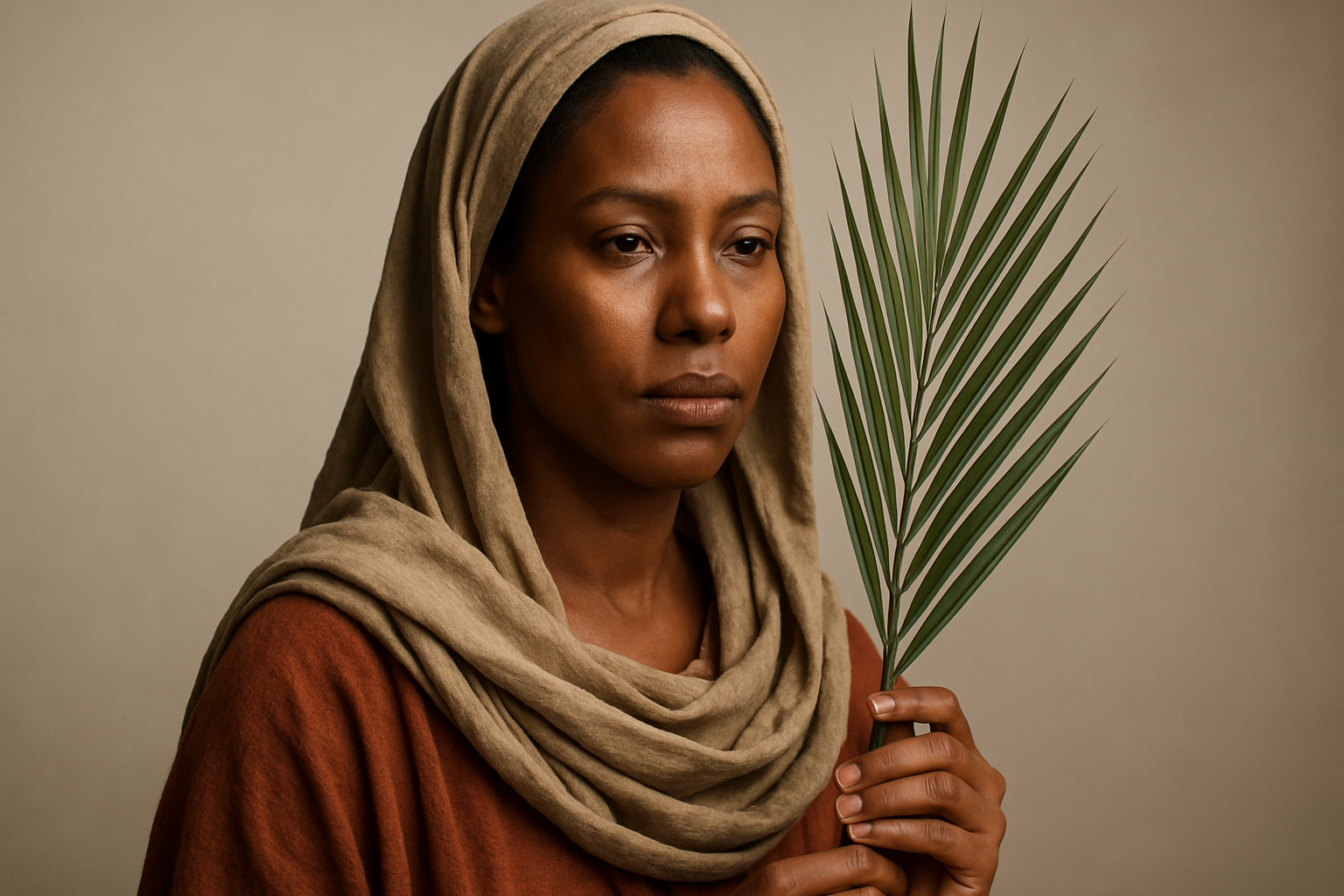
- Palm Branch: This is the universal symbol of martyrdom, representing the triumph of faith over death and the spiritual victory won by those who die for Christ.
- Crown: Similar to the palm, a crown symbolizes the heavenly reward and eternal glory promised to martyrs.
- Sword: As she was executed by the sword, this often appears in her depictions, signifying the instrument of her death.
- Infant/Children: Given her unique ordeal of giving birth in prison and being a mother, she is sometimes shown with an infant or small children, highlighting her patronage of mothers and her maternal sacrifice.
- With St. Perpetua: Most frequently, St. Felicity is depicted alongside St. Perpetua, emphasizing their unbreakable bond in faith and their shared martyrdom. They might be shown standing together, facing beasts, or awaiting the sword.
These symbols remind us of her incredible courage, her profound faith, and her unique role as a mother who gave her life for Christ.
Timeline Summary
- Early 3rd Century AD: Born in Carthage, North Africa (specific year unknown). She was a slave.
- 202 AD: Emperor Septimius Severus issues an edict forbidding conversions to Christianity, triggering a new wave of persecution.
- Late 202/Early 203 AD: Arrested in Carthage with St. Perpetua and other catechumens for being Christian. She is heavily pregnant at the time.
- Imprisonment: Endures harsh conditions in prison, praying to deliver her baby before the date of execution.
- March 6, 203 AD: Gives birth to a daughter in prison, two days before her scheduled martyrdom, fulfilling her prayer.
- March 7, 203 AD: Led to the amphitheater in Carthage, where she and her companions face wild beasts (a wild heifer for the women) and are eventually killed by gladiators’ swords.
- Post-Martyrdom: Her body is buried in Carthage. She is immediately venerated as a saint by the early Church.
- Later Centuries: Her name is included in the Roman Canon (Eucharistic Prayer I), a testament to her enduring significance.
Scripture for Reflection
The life of St. Felicity brilliantly illuminates several passages of Scripture, offering profound reflections for our own spiritual journeys:
Matthew 5:10-12 (NABRE): “Blessed are those who are persecuted for righteousness’ sake, for theirs is the kingdom of heaven. Blessed are you when people insult you, persecute you and falsely say all kinds of evil against you because of me. Rejoice and be glad, because great is your reward in heaven, for in the same way they persecuted the prophets who were before you.”
Reflection: St. Felicity’s unwavering joy and steadfastness in the face of brutal persecution perfectly embody this Beatitude. Despite suffering, she embraced her martyrdom as a path to heavenly reward, finding gladness in her sacrifice for Christ.
John 15:13 (NABRE): “No one has greater love than this, to lay down one’s life for one’s friends.”
Reflection: While literally laying down her life for Christ, Felicity’s act of martyrdom is the ultimate expression of love. She chose loyalty to her divine Friend over her own life and even the immediate care of her earthly child, demonstrating a profound love that transcends all earthly bonds.
Romans 8:37-39 (NABRE): “No, in all these things we conquer overwhelmingly through him who loved us. For I am convinced that neither death, nor life, nor angels, nor principalities, nor present things, nor future things, nor powers, nor height, nor depth, nor any other creature will be able to separate us from the love of God in Christ Jesus our Lord.”
Reflection: This passage perfectly captures St. Felicity’s triumphant spirit. Despite every conceivable earthly trial – imprisonment, childbirth, wild beasts, the sword – nothing could separate her from the love of Christ. Her life is a powerful witness to the invincible love of God in those who trust in Him.
Prayers to St. Felicity
O glorious St. Felicity, who with St. Perpetua, endured unimaginable suffering and courageously gave your life for Christ, we humbly implore your intercession. You, who bore the pain of childbirth in prison and faced the beasts of the arena with unwavering faith, understand the trials and tribulations of life.
We ask you, dear martyr, to pray for all mothers, especially those who are expectant or facing difficult pregnancies. Strengthen them with your fortitude, fill them with trust in God’s providence, and protect them and their children. Inspire us all to live with the same unwavering commitment to Christ, to stand firm in our convictions, and to never let fear separate us from the love of God. May your example empower us to choose faith over fear, and eternal glory over fleeting earthly comforts. Amen.





