
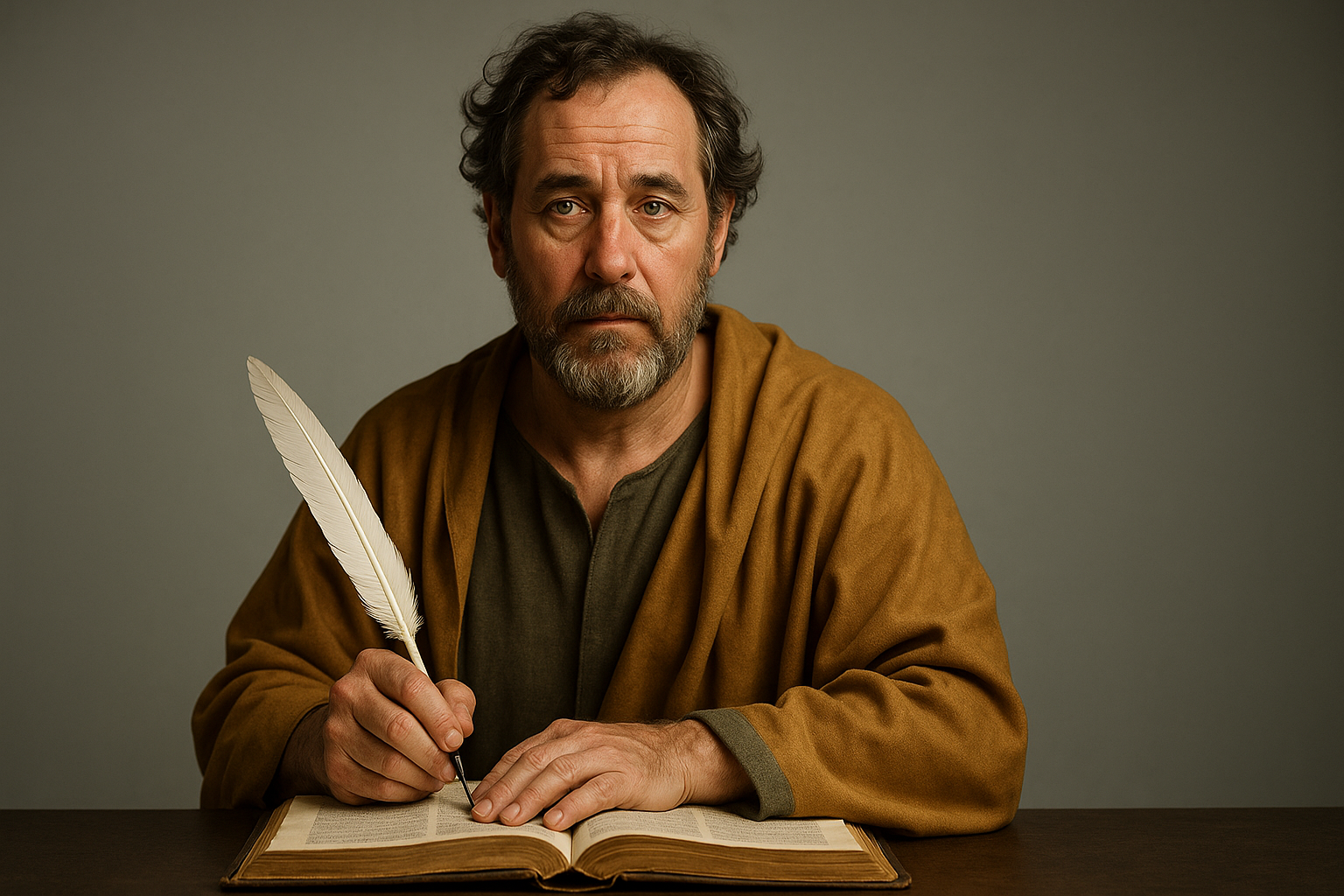
Step into the vibrant world of ancient Galilee, a land brimming with Roman authority and Jewish tradition, where a man named Levi sat at his tax booth, counting coins and collecting dues for an occupying empire. This is the starting point for the incredible story of St. Matthew the Evangelist, a figure whose life took a dramatic turn when he encountered Jesus of Nazareth. From a profession often despised by his own people, Matthew responded to an unexpected call, becoming one of Jesus’ closest followers and, most famously, the author of the first Gospel, forever shaping how millions understand the life and teachings of Christ. This article will explore Matthew’s surprising early life, his pivotal calling, the profound spiritual legacy he left behind, how he is revered today, and what his transformative journey can teach us in our modern world.
Quick Facts
| Category | Detail |
|---|---|
| Birth | Likely Capernaum, Galilee, 1st century AD |
| Death | Traditionally martyred in Ethiopia or Persia, 1st century AD |
| Feast Day | September 21 (Catholic Church) |
| Patronage | Tax collectors, accountants, bookkeepers, bankers, stockbrokers, security guards, custom agents, financial officers, Salerno (Italy), evangelists |
| Canonized | Revered as an Apostle since the earliest days of Christianity |
Historical Context & Early Life
To truly appreciate the radical nature of St. Matthew’s calling, we must first understand the world he inhabited. First-century Galilee, a region in northern Israel, was a complex blend of cultures. It was part of the Roman Empire, governed by local rulers like Herod Antipas, but deeply rooted in Jewish faith and tradition. Roman taxation was a constant, often oppressive, reality for the Jewish people. The system relied on local tax collectors, or publicans, who purchased the right to collect taxes from Rome and then often levied additional amounts for personal profit.
Matthew, also known as Levi, held one of these positions, likely at Capernaum, a bustling fishing town on the Sea of Galilee. As a tax collector, he would have been literate, numerate, and perhaps even fluent in Aramaic (the local language), Greek (the language of commerce), and Latin (the language of Roman administration). While these skills were valuable, his profession made him an outcast in Jewish society. Tax collectors were seen as collaborators with the Roman occupiers, often accused of extortion, and considered ritually impure. They were grouped with “sinners” and prostitutes, excluded from synagogue life, and their testimony was not accepted in court. This social ostracization painted a clear picture of Matthew’s status before he met Jesus.
We know little of Matthew’s family background, but his decision to become a tax collector suggests a practical, perhaps even ambitious, individual, willing to navigate the complexities of his world for financial gain, despite the social cost. He lived a life of material comfort, yet likely one of spiritual isolation and communal scorn. This backdrop makes his transformation all the more powerful: a man from the margins of Jewish society, steeped in worldly dealings, called to the very heart of a spiritual revolution.
Calling & Key Milestones
The Unexpected Call at the Tax Booth
The pivotal moment in St. Matthew’s life is dramatically recounted in all three Synoptic Gospels (Matthew 9:9-13, Mark 2:13-17, Luke 5:27-32). Jesus, walking by the Sea of Galilee, saw Matthew “sitting at the tax booth.” In a simple yet profound gesture, Jesus said to him, “Follow me.” And without hesitation, Matthew “rose and followed him.” This immediate, unqualified response speaks volumes about Matthew’s character and his spiritual readiness. Despite his comfortable, if disreputable, profession, there must have been a deep longing within him that Jesus’ call resonated with. He didn’t ask for time to consider, to settle his affairs, or to say goodbye. He simply left everything behind.
The Feast for Jesus
Following his conversion, Matthew demonstrated his profound gratitude and newfound faith by hosting a large banquet for Jesus at his own home. This was not just a meal; it was a public declaration of his allegiance to Jesus. Crucially, Matthew invited many of his former colleagues – tax collectors and “sinners” – to dine with them. This act scandalized the Pharisees and scribes, who questioned Jesus’ willingness to associate with such disreputable company. Jesus’ response, “I have not come to call the righteous but sinners to repentance,” underscored the very essence of Matthew’s story and the radical inclusivity of God’s grace.
Apostleship and Evangelist
Matthew became one of the twelve Apostles, part of Jesus’ inner circle, witnessing His miracles, hearing His teachings, and being commissioned to spread the Gospel. His unique perspective as a former tax collector likely gave him a particular insight into the human condition, the burdens of worldly life, and the liberating power of God’s forgiveness. As an evangelist, he penned the Gospel of Matthew, traditionally believed to be the first of the four Gospels written. His Gospel is particularly significant for its detailed accounts of Jesus’ ancestry, His Sermon on the Mount, and His frequent fulfillment of Old Testament prophecies, aimed primarily at a Jewish-Christian audience to prove Jesus was indeed the long-awaited Messiah.
Missionary Journeys and Martyrdom
After Jesus’ resurrection and ascension, and the coming of the Holy Spirit at Pentecost, the Apostles dispersed to spread the Good News. Tradition holds that St. Matthew initially preached in Judea for many years, strengthening the early Christian communities there, before embarking on extensive missionary journeys. His travels are traditionally said to have taken him to Persia, Parthia, and most famously, Ethiopia. Accounts of his death vary, but the most widely accepted tradition is that he suffered martyrdom in Ethiopia, where he was killed with a halberd (a type of axe-spear) while celebrating Mass, after converting the local king and many others. His steadfastness in proclaiming the Gospel, even unto death, is a testament to his unwavering faith.
Spiritual Legacy & Theological Themes
St. Matthew’s life offers a powerful testament to the transformative power of God’s grace and provides profound lessons for all believers. His core virtues include radical obedience, profound humility, and unwavering dedication to the truth. When Jesus called, Matthew didn’t hesitate. This immediate ‘yes’ demonstrates a deep trust and a willingness to leave behind a life of material comfort and social stigma for an unknown future with Christ. This aligns perfectly with scriptural teachings on detachment from worldly possessions and putting God first, as seen in Jesus’ instruction to the rich young man (Matthew 19:21).
His Gospel, in particular, is a cornerstone of Catholic teaching. It emphasizes Jesus as the fulfillment of Old Testament prophecies, grounding Christian faith firmly in Jewish tradition while simultaneously expanding its reach to all nations. Matthew’s detailed accounts of Jesus’ ethical teachings, especially the Sermon on the Mount (Matthew 5-7), lay out the moral framework for Christian living, stressing virtues like mercy, justice, and purity of heart. His Gospel’s emphasis on the “Kingdom of Heaven” (a phrase he uses exclusively among the evangelists) highlights the spiritual reality of God’s reign and its demands on human conduct.
Matthew’s lasting influence on liturgy is evident in the inclusion of his Gospel as a primary source for Mass readings throughout the liturgical year. His narrative structure and thematic focus continue to shape homilies, catechesis, and theological reflection. In art, Matthew is often depicted with an angel or a winged man, a symbol deriving from the vision of Ezekiel (Ezekiel 1:10) and Revelation (Revelation 4:7), signifying his Gospel’s focus on the human origins of Christ (His genealogy). He is also commonly shown with a pen and scroll, emphasizing his role as a Gospel writer, and sometimes with a money bag, representing his former profession and his renunciation of it.
Devotion Today
While St. Matthew may not have as many grand shrines or extensive pilgrimage routes dedicated solely to him as some other apostles, his veneration is widespread and deeply ingrained in the fabric of the Church. His feast day, September 21st, is celebrated with solemnity in Catholic and Orthodox traditions worldwide. Churches bearing his name are found in countless cities, from historic cathedrals to humble parish churches, serving as centers of local devotion. His relics are traditionally held in the Cathedral of Salerno, Italy, which has been a significant site of pilgrimage and veneration for centuries.
His patronage is particularly strong among professions related to finance and accounting, offering a comforting reminder that no profession, no matter how worldly it may seem, is beyond the call of Christ. Tax collectors, accountants, bookkeepers, bankers, and even security guards look to St. Matthew for intercession and guidance. This patronage helps to sanctify these often-demanding fields, encouraging practitioners to conduct their work with honesty, integrity, and a spirit of service, mirroring Matthew’s own transformation. Devotion to St. Matthew reminds us that God calls us from where we are, no matter our past, to serve Him with the unique gifts and experiences He has given us.
Reflections for Modern Readers
St. Matthew’s life story, spanning from a tax collector’s booth to an Apostle of Christ, offers profound lessons for believers and seekers alike in the 21st century. His journey reminds us that transformation is always possible, and that God’s grace can reach us wherever we are, no matter our past choices or perceived unworthiness.
- No one is beyond God’s call: Matthew’s profession made him an outcast, yet Jesus called him directly and unequivocally. This teaches us that God sees beyond our labels, our jobs, or our past sins. For example, if you feel trapped in a job that feels morally compromising, or believe your past mistakes define you, Matthew’s story encourages you to listen for God’s call to a new path, trusting in His mercy and transformative power.
- Radical obedience leads to true freedom: Matthew left everything at Jesus’ command. In a world obsessed with accumulating wealth and status, his instantaneous detachment from his lucrative career highlights the freedom found in placing God first. Imagine a young professional today, feeling the pressure to constantly climb the corporate ladder, deciding instead to volunteer significant time to a meaningful cause or to simplify their life to better serve their community. This echoes Matthew’s radical choice.
- Utilize your unique gifts for God’s glory: Matthew was literate and numerate, skills he likely developed as a tax collector. These very skills became instrumental in writing his Gospel, meticulously recording Jesus’ teachings and lineage. Your professional skills, hobbies, or personal talents, no matter how secular they seem, can be consecrated to God’s service. A skilled graphic designer might use their talent to create beautiful church bulletins, or an organized accountant might volunteer to manage a charity’s finances.
- The importance of bearing witness to truth: Matthew did not just follow Jesus; he dedicated his life to preserving and proclaiming Jesus’ message through his written Gospel. In an age of misinformation and fleeting attention, his commitment to carefully documenting the life and words of Christ is a powerful call to articulate and defend the truth of the Gospel in our own lives, whether through thoughtful conversations, creative expression, or simply living authentically.
In art and jewelry, St. Matthew is commonly represented by several powerful symbols. The most prominent is the winged man or angel. This symbol, derived from the vision of Ezekiel and adopted by early Christian tradition, represents the human aspect of Christ’s nature, emphasized in Matthew’s Gospel which begins with Jesus’ human genealogy. It reminds us that God became truly human, walking among us. Another common symbol is the money bag, often depicted overturned or discarded, symbolizing his renunciation of his tax collector’s profession and worldly wealth to follow Christ. It’s a vivid reminder of his conversion and detachment. He is also frequently shown holding a pen and a scroll or book, signifying his role as the author of one of the four Gospels, bearing witness to the divine truth through written word. These symbols not only identify the saint but also serve as visual sermons on his core virtues and legacy.
Timeline Summary
- Early 1st Century AD: Born Levi in Galilee, likely Capernaum.
- Circa 30-33 AD: Encountered Jesus at his tax booth in Capernaum; immediately responded to Jesus’ call, “Follow me.”
- Soon after his call: Hosted a celebratory banquet for Jesus, inviting many tax collectors and “sinners.”
- During Jesus’ Public Ministry: Chosen as one of the twelve Apostles, witnessing Jesus’ miracles and teachings.
- After Pentecost (circa 33 AD): Preached the Gospel, traditionally first in Judea, ministering to Jewish communities.
- Circa 50-60 AD (traditional dating): Authored the Gospel of Matthew, written primarily for a Jewish-Christian audience.
- Later 1st Century AD: Embarked on missionary journeys, traditionally to Persia, Parthia, and Ethiopia.
- Mid-Late 1st Century AD: Traditionally martyred in Ethiopia while proclaiming the Gospel.
- Present Day: Continues to be venerated as an Apostle and Evangelist, with his relics housed in Salerno, Italy.
Scripture for Reflection
Two passages from the Bible powerfully illuminate St. Matthew’s life and calling, inviting us to reflect on our own journey of faith:
Matthew 9:9-13 (NRSVCE):
“As Jesus went on from there, he saw a man named Matthew sitting at the tax booth; and he said to him, ‘Follow me.’ And he got up and followed him. And as he sat at dinner in the house, many tax collectors and sinners came and were sitting with Jesus and his disciples. When the Pharisees saw this, they said to his disciples, ‘Why does your teacher eat with tax collectors and sinners?’ But when he heard it, he said, ‘Those who are well have no need of a physician, but those who are sick. Go and learn what this means, “I desire mercy, not sacrifice.” For I have come to call not the righteous but sinners.'”
This passage is the very heart of Matthew’s story – his radical call and immediate response. It highlights Jesus’ profound mercy and His mission to reach those considered outcasts. It challenges us to examine who we might exclude from our spiritual communities and reminds us that God’s grace is for everyone, especially those who recognize their need for it.
Matthew 28:19-20 (NRSVCE):
“Go therefore and make disciples of all nations, baptizing them in the name of the Father and of the Son and of the Holy Spirit, teaching them to observe all that I have commanded you; and lo, I am with you always, to the close of the age.”
Known as the Great Commission, these words are the concluding charge in St. Matthew’s Gospel. They encapsulate the mission Matthew himself embraced after his conversion. He left his lucrative past to become a disciple-maker, taking Jesus’ teachings to new lands and recording them for future generations. This passage is a powerful call for all Christians to participate in evangelization, to share the Good News, and to live out Christ’s commands in the world, knowing that He is always with us.
Prayers to St. Matthew the Evangelist
Here is a common prayer invoking the intercession of St. Matthew the Evangelist:
Prayer to Saint Matthew the Evangelist
O glorious Saint Matthew, in your Gospel you have portrayed Jesus as the Promised Messiah who fulfilled the Old Covenant and inaugurated the New with His sacrificial death and resurrection. You abandoned your position as a tax collector to follow Christ, thus demonstrating that no one is beyond the call of God’s grace. You faithfully recorded the teachings of Jesus, especially His Sermon on the Mount, and showed us the path to true discipleship.
Grant us the grace to respond to Christ’s call with the same immediate obedience and detachment from worldly things that you exemplified. Help us to use our unique talents and gifts, no matter how humble, for the building up of God’s Kingdom. Inspire all who work in finance, accounting, and related fields to practice their profession with honesty, integrity, and a spirit of service, mindful of the poor and vulnerable.
Through your intercession, may we grow in our love for Sacred Scripture, especially your Gospel, and dedicate ourselves to spreading the Good News to all nations, just as you did. Amen.





