In a tumultuous era marked by religious strife and widespread spiritual confusion, a gentle yet profound voice emerged from the French-speaking Alps: Saint Francis de Sales. Often called the “Gentle Saint,” he became a beacon of charity and spiritual wisdom, showing ordinary people how to live a deeply devout life not in monasteries, but right in the midst of their everyday jobs, families, and communities. His writings and his approach to evangelization were revolutionary, emphasizing God’s universal call to holiness and the power of love over harshness. This article will explore his remarkable journey from a young nobleman to a Doctor of the Church, examining his life, his lasting spiritual teachings, and how his timeless wisdom continues to guide us today.
Quick Facts
| Category | Detail |
|---|---|
| Birth | August 21, 1567, Thorens-Glières, Duchy of Savoy |
| Death | December 28, 1622, Lyon, France |
| Feast Day | January 24 |
| Patronage | Writers, journalists, editors, adult education, the deaf, confessors, spiritual directors, Diocese of Annecy, Salesian congregations |
| Canonized | April 19, 1665, by Pope Alexander VII |
Historical Context & Early Life
Francis de Sales was born into a noble family in the Duchy of Savoy (modern-day France), a region caught in the spiritual crosscurrents of the 16th century. Europe was reeling from the Protestant Reformation, and religious tensions ran high, often spilling into violent conflict. The Catholic Church was undergoing its own period of reform following the Council of Trent, seeking to renew spiritual life and combat the spread of Protestantism.
Born at the Château de Sales, Francis was the eldest of thirteen children. His aristocratic parents, François de Sales and Françoise de Sionnaz, had high hopes for their intelligent and well-mannered son, expecting him to pursue a prestigious career in law, politics, or the military. From an early age, Francis received an excellent education, first from tutors at home and then at the Jesuit Collège de Clermont in Paris, a renowned center of learning.
While in Paris, Francis delved into philosophy, theology, and law. It was here, around the age of 19, that he experienced a profound spiritual crisis. Struggling with a deep temptation of despair, he believed he might be destined for hell, despite his efforts to live virtuously. This agonizing period, lasting several weeks, ended dramatically when he prayed before a statue of the Blessed Mother, reciting the “Memorare” prayer and committing his destiny entirely to God’s love and mercy. This experience instilled in him an enduring trust in divine providence and a profound understanding of God’s limitless love, which would shape his entire ministry.
After Paris, he continued his studies at the University of Padua in Italy, earning a doctorate in both civil and canon law. Though prepared for a brilliant secular career, Francis felt an undeniable pull toward the priesthood. This vocational calling was met with strong opposition from his father, who had already arranged a promising marriage for him. However, Francis’s quiet determination and unwavering conviction eventually won over his family, and he renounced his family inheritance and worldly ambitions to follow God’s call.
Calling & Key Milestones
Vocation to Priesthood and Early Ministry
In 1593, at the age of 26, Francis was ordained a priest. His first assignment was as Provost of the Cathedral Chapter of Geneva, a significant ecclesiastical role, though the city of Geneva itself was then a stronghold of Calvinism, a major Protestant movement. The Catholic diocese’s seat had been moved to Annecy due to the Reformation.
The Mission to Chablais
Francis’s true mettle was tested almost immediately. He volunteered for the highly dangerous and difficult mission to reconvert the Chablais region, a district south of Lake Geneva that had largely embraced Calvinism. For four years, Francis faced hostility, threats, and extreme hardship. He was often refused lodging, poisoned, attacked by wolves, and even shot at. Despite the dangers, he persisted, walking tirelessly from village to village, knocking on doors, and engaging in respectful, patient dialogue. Realizing that many people were illiterate, he began writing small tracts and pamphlets explaining Catholic doctrine in simple, clear language, slipping them under doors or nailing them to walls. This innovative method of mass communication earned him the unofficial patronage of writers and journalists.
His gentle approach, deep theological knowledge, and genuine charity gradually broke down the walls of suspicion and hostility. He focused on building relationships and presenting the Catholic faith with love and reason, rather than condemnation. Slowly, but surely, thousands began to return to the Catholic Church, a testament to his extraordinary perseverance and the power of his humble evangelization.
Bishop of Geneva and Spiritual Direction
In 1602, Francis was consecrated Bishop of Geneva. While he could not reside in Geneva itself due to its Protestant control, he established his episcopal seat in Annecy and dedicated himself to reforming his diocese, visiting every parish, preaching, and offering spiritual guidance. He became renowned as a wise and compassionate confessor and spiritual director, guiding countless individuals, from common folk to royalty, in their pursuit of holiness.
His spiritual direction was unique for its time. He famously said, “More flies are caught with a spoonful of honey than with a barrel of vinegar,” a principle that guided his interactions. He moved away from the severe and intimidating spiritual practices common in that era, emphasizing instead the importance of charity, gentleness, and finding God in everyday life. He met people where they were, helping them to discern God’s will for their specific circumstances.
Founding of the Order of the Visitation
One of his most significant collaborations was with Saint Jane Frances de Chantal. They met in 1604 and developed a deep spiritual friendship. Together, they founded the Order of the Visitation of Holy Mary in 1610. This new order was groundbreaking because it was designed for women who wished to live a religious life but were perhaps unable to endure the severe austerities and strict cloistering required by most existing orders. Francis de Sales envisioned a community where sisters could embrace a life of devotion and service, focusing on “interior detachment” and the practice of “little virtues” in humility and gentleness, rather than extreme physical penances. It provided a path to holiness for those with delicate health or other limitations, emphasizing a balanced spirituality.
Literary Contributions: Doctor of the Church
Francis de Sales’s enduring legacy is largely thanks to his prolific and insightful writings. His two most famous works are:
Introduction to the Devout Life (1608)
This book was groundbreaking. Written as a series of letters to a cousin, it offers practical advice for laypeople – men and women, rich and poor, married and single – on how to grow in holiness within their everyday lives. Before this, most spiritual guides were written for clergy or cloistered religious. Francis taught that true devotion was not just for the “perfect” but for everyone, regardless of their state in life. He provided concrete steps for prayer, overcoming temptations, practicing virtues, and living a Christ-centered life amidst worldly responsibilities.
Treatise on the Love of God (1616)
This more theological work delves deeply into the nature of divine love and the spiritual journey towards union with God. It explores the different stages of love, from initial attraction to profound mystical union, all explained with Francis’s characteristic clarity and warmth. Both books, translated into many languages, have shaped Catholic spirituality for centuries, earning him the title of Doctor of the Church in 1877 by Pope Pius IX.
Spiritual Legacy & Theological Themes
Saint Francis de Sales’s spiritual legacy is built upon several foundational themes that continue to resonate within Catholic teaching and individual spiritual growth.
The Universal Call to Holiness: This is arguably his most significant contribution. At a time when holiness was often perceived as achievable only by monks, nuns, or priests, Francis taught that every person, regardless of their profession or social status, is called to be a saint. He championed the idea that God is present in every circumstance of life and that one’s daily duties can be pathways to sanctity. He illustrated this beautifully: “It is not the business, but the mind with which we do it, that makes us holy.”
Gentleness and Charity: Known as the “Gentle Saint,” Francis de Sales was a living embodiment of Christian charity. He believed that true spiritual progress comes from a heart filled with love for God and neighbor, expressed through patience, humility, and kindness. He famously advised, “Be who you are and be that well.” He applied this gentleness not only to spiritual direction but also to evangelization, demonstrating that dialogue, understanding, and love were far more effective than coercion or harsh judgment in drawing souls to Christ.
Interior Life and Devotion: Francis emphasized the importance of cultivating a rich inner spiritual life. He taught simple, accessible forms of prayer, encouraging daily meditation, spiritual reading, and frequent reception of the Sacraments. He guided souls to find God’s presence in their daily routines, turning ordinary actions into acts of love and devotion. He also taught about the importance of discernment, learning to recognize God’s voice amidst the distractions and temptations of the world.
The Practice of “Little Virtues”: Rather than focusing solely on heroic acts, Francis encouraged the consistent practice of “little virtues” – small acts of humility, patience, meekness, and kindness in daily interactions. He believed that steadily practicing these small virtues transforms the soul more effectively than occasional grand gestures.
Balance of Activity and Contemplation: For Francis, the devout life in the world meant finding a balance between active engagement in one’s duties and maintaining a contemplative spirit. He showed how one could be busy in the world while remaining deeply connected to God, seeing God’s will in every moment and offering everything as a prayer.
Devotion Today
Devotion to Saint Francis de Sales remains strong worldwide, particularly among those seeking practical guidance for living a Christ-centered life in ordinary circumstances. His tomb is venerated in the Basilica of the Visitation in Annecy, France, which serves as a significant pilgrimage site for many. The Salesian religious orders, founded in his honor, continue his work:
- The Salesians of Don Bosco: Founded by Saint John Bosco in the 19th century, this large order of priests and brothers is dedicated to the education and evangelization of young people, particularly the poor and abandoned. Don Bosco chose Francis de Sales as their patron, admiring his gentleness, optimism, and practical approach to spiritual formation.
- The Oblates of Saint Francis de Sales: This congregation of priests and brothers focuses on living out Salesian spirituality through various ministries, including education, parish work, and spiritual direction.
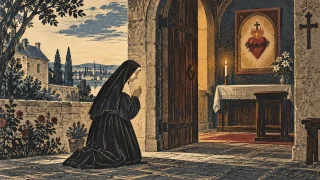
- The Sisters of the Visitation of Holy Mary: The order co-founded by Saint Francis de Sales and Saint Jane Frances de Chantal continues their contemplative and active life, focusing on interior prayer and fostering devotion to the Sacred Heart.
Beyond formal religious orders, countless lay individuals, writers, journalists, and spiritual directors draw inspiration from his teachings. His feast day on January 24th is celebrated globally, often with special Masses and events dedicated to his legacy of universal holiness and gentle evangelization.
Reflections for Modern Readers
Saint Francis de Sales offers profound insights that are remarkably relevant to the challenges and opportunities of the 21st century. His life and teachings provide a roadmap for navigating modern life with grace and purpose.
- Holiness in the Everyday: In a world that often measures success by external achievements, Francis reminds us that true sanctity is found in how we live our ordinary lives. We don’t need to quit our jobs or become monks to be holy. A busy parent finding God in the patience required for raising children, a student offering their diligent studies as prayer, or a professional serving customers with integrity and kindness are all living out the Salesian call to holiness. God is found not just in grand gestures, but in the faithful execution of daily duties and relationships.
- The Power of Gentleness and Listening: In an age of polarized opinions and heated online debates, Francis’s method of gentle evangelization is more crucial than ever. Instead of shouting down opponents or dismissing those with differing views, he teaches us to approach others with patience, understanding, and genuine charity. Imagine how much more fruitful our conversations would be – whether in social media, family discussions, or community forums – if we prioritized listening and gentle persuasion over aggressive arguments.
- Prioritizing the Inner Life Amidst Distraction: Our modern world is full of noise, constant notifications, and endless demands on our attention. Francis de Sales’s emphasis on cultivating an interior prayer life is a vital antidote. He teaches us that even short, frequent moments of turning our hearts to God throughout the day can create a deep reservoir of peace. This might mean setting aside five minutes for quiet prayer before starting work, pausing for a brief spiritual reflection during a commute, or consciously offering up a frustrating moment as a prayer.
- Seeking and Offering Spiritual Direction: Francis was a master spiritual director, and his writings encourage us to seek wise counsel for our spiritual journey. In a complex world, having a trusted spiritual director, mentor, or even a wise friend can provide invaluable perspective and accountability. Likewise, we are called to be sources of gentle wisdom and support for others, sharing our faith not by lecturing, but by living a virtuous life and offering compassionate advice when asked.
- Embracing “Little Virtues” for Big Impact: The idea that small, consistent acts of virtue can lead to profound spiritual transformation is liberating. We don’t have to wait for heroic opportunities to grow in holiness. A kind word to a struggling colleague, a moment of patience with an irritating person, resisting the urge to complain, or quietly doing a chore without being asked – these “little virtues” accumulate and shape our character, making us more like Christ.
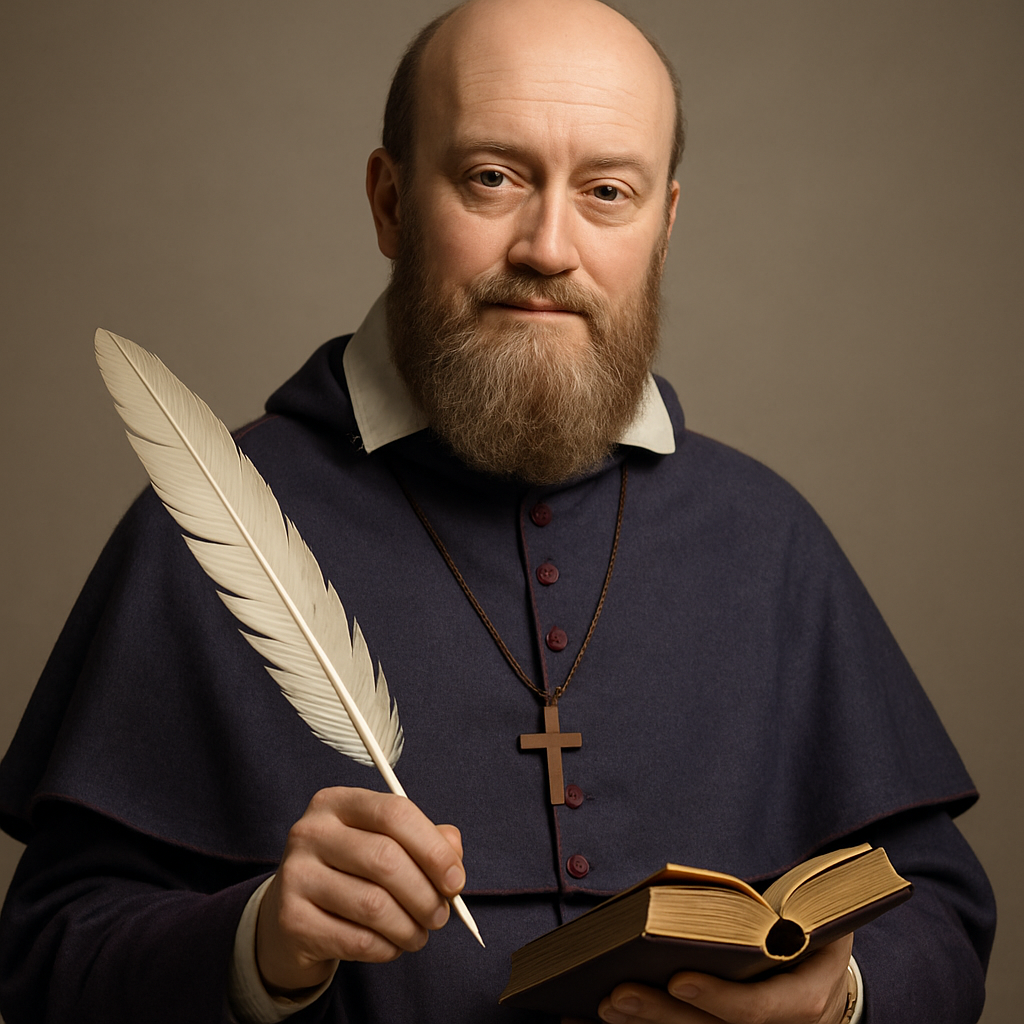
Symbols and Representations: In art, Saint Francis de Sales is often depicted with a heart, symbolizing his immense charity and devotion to the Sacred Heart of Jesus. He is also frequently shown with a pen and a book, representing his prolific writings and his patronage of writers and journalists. The lily is another common symbol, signifying his purity and the gentle nature for which he was known. Sometimes, a cross is included, pointing to his willingness to endure suffering for Christ and his mission.
Timeline Summary
- 1567: Born at the Château de Sales in Thorens-Glières, Duchy of Savoy.
- 1580: Begins studies at the Jesuit Collège de Clermont in Paris.
- 1588-1592: Studies law and theology at the University of Padua, Italy.
- 1593: Ordained a priest; appointed Provost of the Cathedral Chapter of Geneva.
- 1594-1598: Undertakes the challenging mission to reconvert the Chablais region, using gentle persuasion and written tracts.
- 1602: Consecrated Bishop of Geneva, residing in Annecy.
- 1604: Meets and begins the spiritual direction of Saint Jane Frances de Chantal.
- 1608: Publishes his seminal work, Introduction to the Devout Life.
- 1610: Co-founds the Order of the Visitation of Holy Mary with Saint Jane Frances de Chantal.
- 1616: Publishes Treatise on the Love of God.
- 1622: Dies in Lyon, France.
- 1665: Canonized a saint by Pope Alexander VII.
- 1877: Declared a Doctor of the Church by Pope Pius IX, recognized for his profound theological insights and spiritual teachings.
Scripture for Reflection
Several Scripture passages illuminate the virtues and core teachings of Saint Francis de Sales, especially his emphasis on charity, gentleness, and the universal call to holiness.
1 Corinthians 13:4-7 (NIV): “Love is patient, love is kind. It does not envy, it does not boast, it is not proud. It does not dishonor others, it is not self-seeking, it is not easily angered, it keeps no record of wrongs. Love does not delight in evil but rejoices with the truth. It always protects, always trusts, always hopes, always perseveres.”
This passage perfectly encapsulates the spirit of charity and gentleness that Saint Francis de Sales lived and taught. His mission to Chablais and his approach to spiritual direction were rooted in this patient, kind, and persevering love, seeking to win souls through understanding rather than force.
Matthew 11:29-30 (NIV): “Take my yoke upon you and learn from me, for I am gentle and humble in heart, and you will find rest for your souls. For my yoke is easy and my burden is light.”
This verse directly reflects the “gentle” aspect of Saint Francis de Sales. He encouraged a loving relationship with God, reminding people that devotion should bring rest and joy, not excessive burdens. His own character mirrored Christ’s gentleness, making him an accessible and comforting spiritual guide for all.
Prayers to Saint Francis de Sales
Here are some prayers associated with Saint Francis de Sales, invoking his intercession and drawing on his spiritual wisdom:
Prayer for the Gift of Gentleness
O glorious Saint Francis de Sales, who, in imitation of your Master, were meek and humble of heart, and did bear with admirable patience the contradictions and injuries of men: obtain for me, I beseech you, the grace to keep my heart ever peaceful and constant amidst the disturbances of this life. Teach me to accept with serene resignation the crosses that I must bear, and to overcome the difficulties that I encounter with unalterable mildness. Make me truly gentle and humble, that I may live in perfect charity with all men, doing good to all and injuring no one. Through Christ our Lord. Amen.
Prayer for Spiritual Guidance
Saint Francis de Sales, beloved Doctor of the Church, you taught us how to live a devout life in the midst of the world, making holiness accessible to all. Guide us, we pray, in our spiritual journeys. Help us to discern God’s will in our daily lives, to practice the little virtues with constancy, and to cultivate an inner life of prayer and communion with God. Inspire writers, journalists, and all who communicate to use their gifts for truth and charity. Intercede for us, that we may grow in gentle love, patience, and humility, always seeking to embrace God’s holy will with peaceful hearts. Amen.