In the vast tapestry of Catholic saints, some stand out for their extraordinary acts of love and sacrifice, their lives serving as luminous examples of faith in the darkest of times. One such beacon is Saint Maximilian Kolbe, a Franciscan friar who offered his life for a stranger in the horrific confines of a Nazi concentration camp. His story is not merely one of suffering but of profound courage, unwavering devotion to the Blessed Mother, and a radical commitment to Christian charity, illuminating how faith can shine even in humanity’s most dire moments. This article explores his early life, powerful calling, lasting spiritual legacy, and how his heroic sacrifice continues to inspire believers worldwide, inviting us to reflect on the depth of love and the power of redemptive suffering.
Quick Facts
| Category | Detail |
|---|---|
| Birth | January 8, 1894, Zduńska Wola, Congress Poland (then Russian Empire) |
| Death | August 14, 1941, Auschwitz Concentration Camp, Poland |
| Feast Day | August 14 |
| Patronage | Families, prisoners, journalists, political prisoners, drug addicts, the pro-life movement |
| Canonized | October 10, 1982, by Pope John Paul II |
Historical Context & Early Life
Raymond Kolbe, who would later become Saint Maximilian, was born in a Poland struggling under Russian rule, a nation whose Catholic identity was deeply entwined with its spirit of resilience. The late 19th and early 20th centuries were a time of significant political and social upheaval across Europe, setting the stage for the dramatic events of two World Wars. Raymond’s family was devoutly Catholic, and his parents, humble weavers, instilled in him a strong sense of faith and patriotism. From a young age, Raymond displayed an exceptional intellect and a deep piety. His early experiences, marked by a vision of the Blessed Mother offering him two crowns—one white (for purity) and one red (for martyrdom)—foreshadowed a life of extraordinary dedication and ultimate sacrifice. This profound spiritual encounter profoundly shaped his future, drawing him inexorably towards a life consecrated to God and Mary.
Calling & Key Milestones
Maximilian Kolbe’s life was a dynamic journey of faith, marked by innovative evangelization and profound self-giving.
Joining the Franciscans and a Vision of Mary
At the age of 13, Raymond entered the Conventual Franciscan seminary. He took the name Maximilian upon entering the novitiate and later added Maria to his name, showing his deep devotion to the Blessed Mother. His studies led him to Rome, where he pursued philosophy and theology, earning doctorates in both fields. During his time in Rome, he witnessed anti-Catholic demonstrations, which spurred him to action. Reflecting on his childhood vision and fueled by a desire to counter societal ills, he founded a spiritual movement aimed at drawing souls to Christ through the Immaculate Virgin Mary.
Founding the Militia Immaculatae
In 1917, while still a student, Saint Maximilian established the Militia Immaculatae (MI), or “Knights of the Immaculata,” a movement dedicated to the conversion of sinners and the sanctification of all, using prayer and good works under the patronage of the Blessed Virgin Mary. This initiative, which began with just seven young friars, quickly grew into a worldwide evangelical force. Kolbe envisioned the MI as a way for both religious and lay people to consecrate themselves to Mary and spread devotion to her, ultimately leading souls closer to Jesus Christ. He believed that Mary was the surest and quickest path to Christ.
Pioneering Media Evangelization
After his ordination to the priesthood in 1918, Saint Maximilian returned to Poland and began his ambitious work of evangelization through modern media. In 1922, he started publishing a monthly magazine called “Knight of the Immaculata” (Rycerz Niepokalanej). This publication, initially quite small, rapidly gained popularity due to its clear, inspiring content and modern approach. He saw the potential of mass media to spread the Catholic faith and Marian devotion far and wide. He built a vast friary near Warsaw, which he named Niepokalanów, “City of the Immaculata.” This innovative monastery became a bustling center of publishing, producing not only the “Knight” but also a daily newspaper, and eventually even operating a radio station. Niepokalanów was truly a pioneer in Catholic media, a testament to Kolbe’s foresight and zeal.
Missionary Work in Japan
Driven by his missionary spirit and a desire to spread the Immaculata’s message globally, Saint Maximilian traveled to Japan in 1930. Despite cultural differences and language barriers, he quickly established a Japanese version of the “Knight of the Immaculata” and founded a new Niepokalanów near Nagasaki. His innovative approach, respecting local customs and deeply understanding the Japanese mindset, allowed his work to flourish. He demonstrated remarkable adaptability and a profound commitment to the universality of the Catholic faith.
Return to Poland and Arrest
In 1936, Saint Maximilian returned to Poland due to ill health, though his heart remained with his missions. Niepokalanów in Poland continued to thrive, becoming one of the largest friaries in the world, with hundreds of friars dedicated to spreading the Catholic message. However, the peace was shattered by the outbreak of World War II. In 1939, Niepokalanów became a refuge for thousands of displaced persons, including many Jews. On February 17, 1941, the Gestapo arrested Father Kolbe and several other friars. He was imprisoned and eventually transported to Auschwitz Concentration Camp.
Auschwitz and the Ultimate Sacrifice
Life in Auschwitz was a descent into hell, characterized by starvation, forced labor, and constant brutality. Despite the inhumane conditions, Father Kolbe continued to minister to his fellow prisoners, offering hope, hearing confessions, and sharing his meager rations. In July 1941, a prisoner escaped from Kolbe’s block. As punishment, ten men were condemned to death by starvation in an underground bunker. When one of the condemned, Franciszek Gajowniczek, cried out in despair for his family, Father Kolbe stepped forward and offered to take his place. “I am a Catholic priest, and I want to take his place because he has a wife and children,” he calmly stated. His request was granted. In the starvation bunker, Kolbe led the condemned in prayer and hymns until, after weeks of agonizing deprivation, he was the last remaining. On August 14, 1941, his feast day today, he was executed with a lethal injection of carbolic acid. His ultimate sacrifice stands as a powerful testament to limitless love and unwavering faith in the face of unimaginable evil.
Spiritual Legacy & Theological Themes
Saint Maximilian Kolbe’s spiritual legacy is profoundly impactful, centered on his radical love for God and neighbor, and his deep devotion to the Blessed Virgin Mary.
Unconditional Charity: Kolbe exemplified the highest form of Christian charity—agape love—especially through his final act of self-sacrifice. His willingness to die for a stranger, Franciszek Gajowniczek, embodies Jesus’ teaching: “Greater love has no one than this, that someone lay down his life for his friends” (John 15:13). This act profoundly demonstrates that true love knows no bounds, even in the most dehumanizing circumstances. He showed that every human life has infinite dignity and is worth dying for.
Marian Consecration and the Immaculata: Central to Kolbe’s spirituality was his profound devotion to the Immaculate Conception of Mary, whom he called the “Immaculata.” He believed that through total consecration to Mary, one could become a perfect instrument for Christ’s work in the world. His Militia Immaculatae was founded on this principle, emphasizing Mary’s role as a mediator who leads souls to God. He saw her as the perfect model of holiness and obedience, the one through whom God chose to enter the world, and thus the surest path back to God for humanity.
Evangelization Through Media: Kolbe was a visionary who understood the power of modern communication to spread the Gospel. His pioneering work with the “Knight of the Immaculata” magazine and the Niepokalanów publishing house revolutionized Catholic evangelization. He integrated modern technology with traditional faith, demonstrating that the Church must be present in all aspects of contemporary life to reach souls effectively. This foresight continues to inspire Catholic media and outreach efforts today.
Redemptive Suffering: Saint Maximilian’s suffering in Auschwitz and his eventual martyrdom reflect a deep understanding of redemptive suffering. He didn’t just endure suffering; he transformed it into an offering of love, uniting his pain with Christ’s Passion. His serene demeanor and spiritual leadership within the bunker demonstrated that even in the ultimate deprivation, spiritual freedom and hope can prevail. His life teaches us that suffering, when united with Christ, can be a powerful force for good, bringing about spiritual fruit and eternal life.
Devotion Today
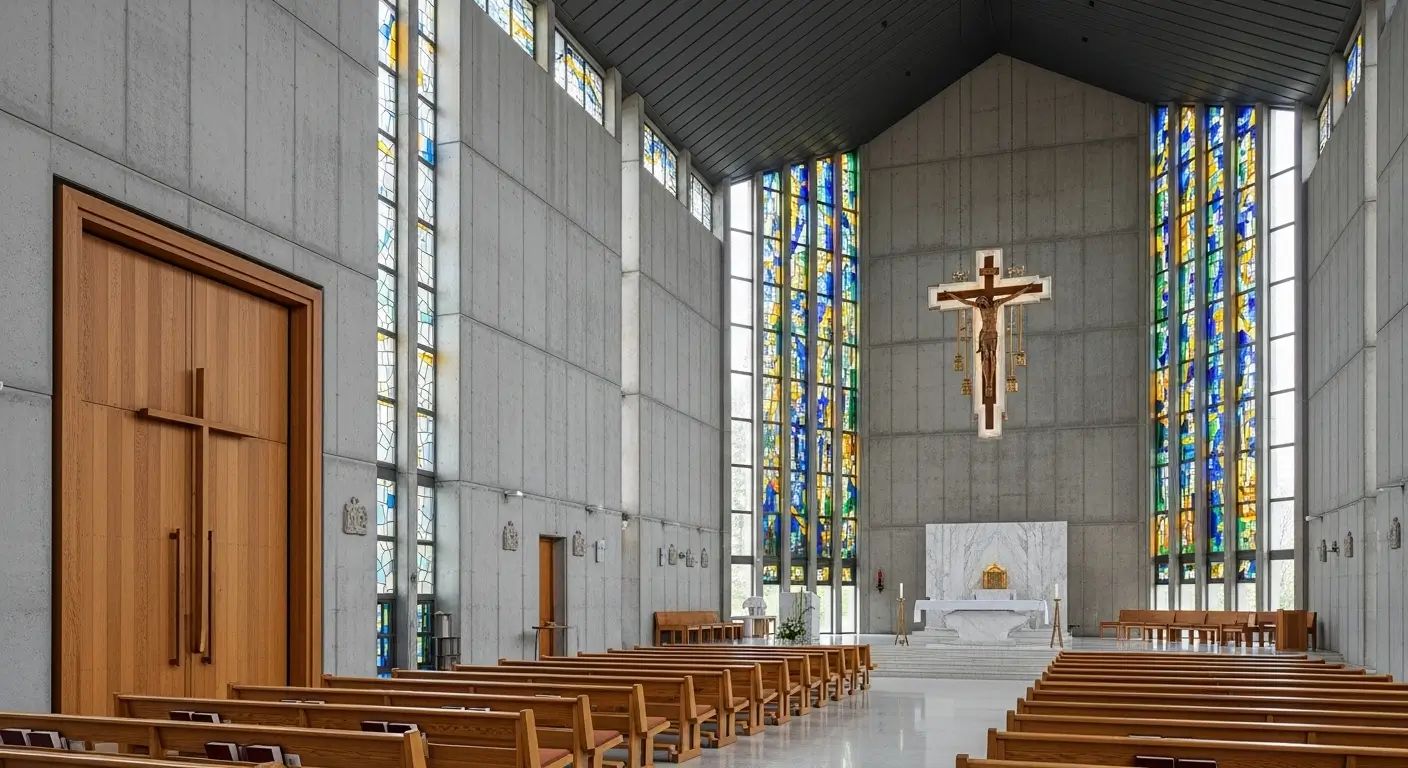
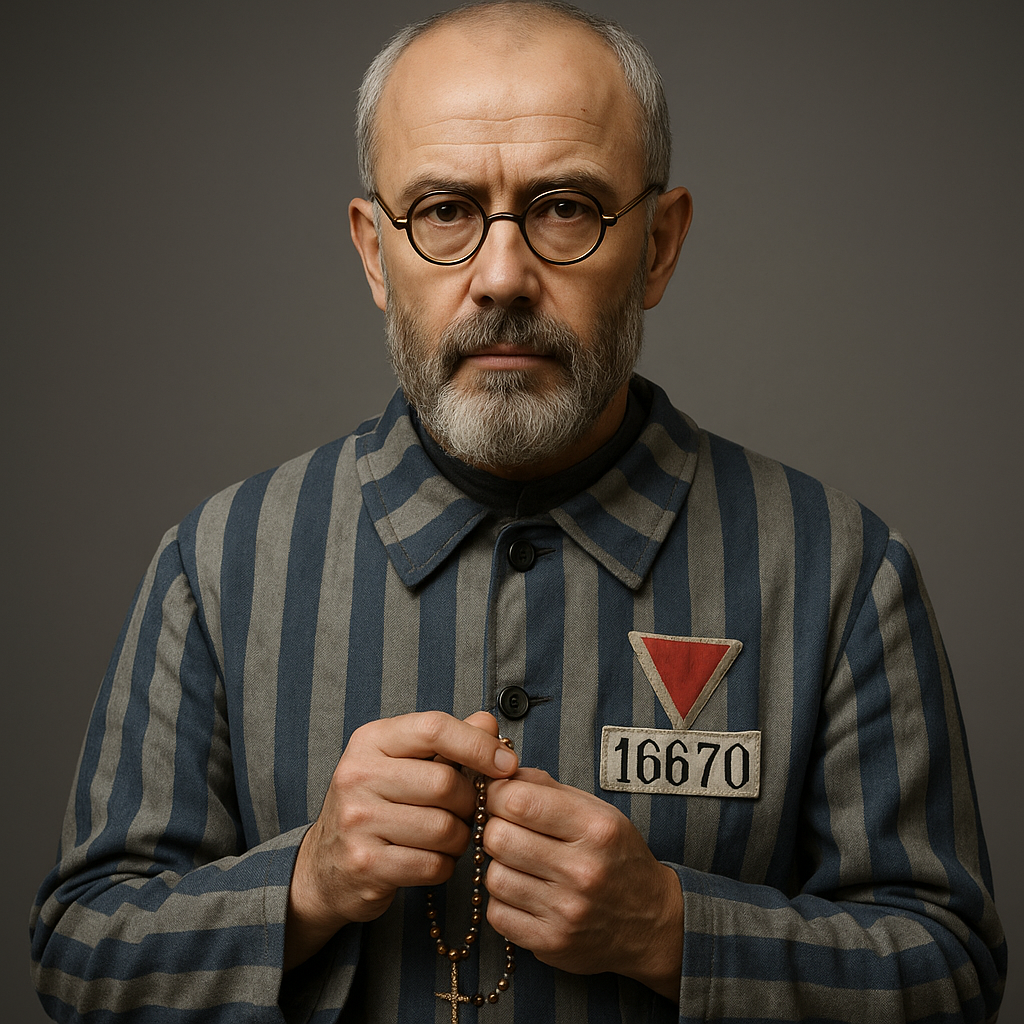
Devotion to Saint Maximilian Kolbe is widespread, particularly among those dedicated to the pro-life movement, journalists, and prisoners. His feast day on August 14th is celebrated globally, often with special Masses and commemorations focusing on themes of sacrifice, charity, and Marian devotion. The Niepokalanów friary in Poland remains a significant pilgrimage site, a living monument to his media apostolate and spiritual vision. Many visit the site, which includes a museum dedicated to his life and work, to experience the spirit of his profound faith. Additionally, the cell block and starvation bunker at Auschwitz-Birkenau, where he made his ultimate sacrifice, are visited by millions, serving as a stark reminder of human cruelty but also of the extraordinary love that triumphed there. Numerous churches and chapels worldwide are dedicated to him, and he is often invoked as a patron for difficult times, offering hope and courage to those facing persecution or hardship. His image, often depicted with a striped prisoner’s uniform and a serene expression, continues to inspire countless individuals to live lives of deeper faith and selfless love.
Reflections for Modern Readers
Saint Maximilian Kolbe’s life, though lived in a vastly different era, offers profound lessons for contemporary challenges.
- The Power of Selfless Love: Kolbe’s act of stepping into the starvation bunker for another man is perhaps the most striking lesson. In a world often driven by self-interest, his action reminds us that true human flourishing comes from giving ourselves away, especially to those most in need. We can practice this in small ways daily: offering help to a struggling colleague, spending time with an elderly neighbor, or simply listening patiently to someone’s troubles.
- Faith in the Face of Despair: Trapped in Auschwitz, Kolbe faced unimaginable despair, yet he maintained his spiritual integrity and ministered to others. This teaches us that faith is not just for easy times but is a lifeline in moments of crisis. When we face personal setbacks, societal unrest, or even existential doubt, we can draw strength from his example, trusting that God is present even in the darkness.
- Creative Evangelization: Kolbe utilized radio and mass media to spread the Gospel, showing incredible foresight. For modern readers, this translates to using contemporary tools—social media, podcasts, blogs—to share positive messages, promote ethical values, and foster communities of faith. We are called to be “digital missionaries,” using technology for good, just as Kolbe used the printing press and radio.
- Devotion to Mary: His unwavering devotion to Mary, the Immaculata, provides a model of purity, humility, and trust in God’s plan. In a world that often struggles with authentic relationships and spiritual grounding, Mary offers a maternal presence and a path to deeper union with Christ. Reflecting on her virtues can help us cultivate a purer heart and a more trusting spirit.
- Courage to Stand for Truth: Kolbe’s refusal to renounce his faith and his brave opposition to Nazi ideology, even through passive resistance and quiet witness, show immense courage. In a world where moral relativism often blurs lines, his life encourages us to stand firm in our convictions, speak truth with charity, and defend human dignity, especially for the most vulnerable.
Symbols and Representations: In art and jewelry, Saint Maximilian Kolbe is often depicted in his Franciscan habit or, more strikingly, in the striped uniform of a concentration camp prisoner. He may be shown holding or gazing upon an image of the Blessed Virgin Mary, emphasizing his profound Marian devotion. Sometimes, he is shown with a crown of thorns and a crown of roses, referencing the vision he had as a child, symbolizing his willingness to accept suffering for Christ (red crown) and to preserve purity (white crown). These symbols serve as powerful reminders of his unwavering faith, his ultimate sacrifice, and his deep connection to Mary, making him a poignant figure for reflection and prayer.
Timeline Summary
- 1894: Born Raymond Kolbe in Zduńska Wola, Poland.
- c. 1906: Experiences a vision of the Blessed Mother offering him two crowns.
- 1907: Enters the Conventual Franciscan seminary.
- 1910: Becomes a novice, receiving the name Maximilian.
- 1917: Founds the Militia Immaculatae (MI) in Rome.
- 1918: Ordained a priest in Rome.
- 1919: Returns to Poland, battling tuberculosis.
- 1922: Begins publishing “Rycerz Niepokalanej” (Knight of the Immaculata) magazine.
- 1927: Establishes Niepokalanów, the “City of the Immaculata,” near Warsaw, which becomes a major publishing center.
- 1930: Departs for missionary work in Japan, establishing a new Niepokalanów near Nagasaki.
- 1936: Returns to Poland due to declining health.
- 1939: Poland is invaded by Nazi Germany; Niepokalanów becomes a refuge.
- 1941 (February): Arrested by the Gestapo and imprisoned.
- 1941 (May): Transferred to Auschwitz Concentration Camp.
- 1941 (August 14): Offers his life for Franciszek Gajowniczek and is executed by lethal injection after two weeks of starvation in the bunker.
- 1971: Beatified by Pope Paul VI, declared a confessor.
- 1982: Canonized by Pope John Paul II as a martyr of charity. Franciszek Gajowniczek, the man whose life he saved, is present at the ceremony.
Scripture for Reflection
Saint Maximilian Kolbe’s life is a powerful illustration of Christian love and sacrifice, echoing many truths found in Sacred Scripture.
John 15:13 (NIV): “Greater love has no one than this: to lay down one’s life for one’s friends.”
This verse perfectly encapsulates Kolbe’s heroic act at Auschwitz. His voluntary sacrifice for Franciszek Gajowniczek was the ultimate expression of selfless love, mirroring Christ’s own giving of His life for humanity. It shows that true love is not just a feeling, but a radical act of self-giving that transcends fear and self-preservation.
Romans 5:8 (NIV): “But God demonstrates his own love for us in this: While we were still sinners, Christ died for us.”
Kolbe’s sacrifice also reflects God’s proactive and unconditional love for humanity. Just as Christ died for us when we were undeserving, Kolbe gave his life for a man who was, in that moment, a stranger. This highlights the universal call to charity and compassion for all, regardless of their background or perceived worthiness.
Philippians 4:8 (NIV): “Finally, brothers and sisters, whatever is true, whatever is noble, whatever is right, whatever is pure, whatever is lovely, whatever is admirable—if anything is excellent or praiseworthy—think about such things.”
Despite the horrors surrounding him, Saint Maximilian Kolbe maintained an internal peace and continued to minister spiritually to others, focusing on higher truths and the Immaculata. This passage encourages us to cultivate a positive and virtuous mindset, even amidst difficult circumstances, reminding us that our interior life and thoughts profoundly impact our ability to live out our faith.
Prayers to Saint Maximilian Kolbe
Here are some prayers often recited in honor of Saint Maximilian Kolbe, invoking his intercession for various needs.
Prayer for Intercession of Saint Maximilian Kolbe
O Saint Maximilian Kolbe, faithful follower of Saint Francis, inflamed by the love of God, you dedicated your life to the Immaculate Virgin Mary and, by your example, led many to her. Inspired by her, you founded the Militia Immaculatae and zealously spread the Kingdom of God through the media. By your heroic sacrifice of life in the concentration camp of Auschwitz, you showed the greatest love for your neighbor. Obtain for us, O Saint Maximilian, a fervent devotion to the Immaculata, and the grace to live as true disciples of Christ, following His commands of love, even to the point of laying down our lives for others. Through your intercession, may we persevere in faith and charity, and one day attain the eternal reward in Heaven. Amen.
Short Prayer to Saint Maximilian Kolbe for Courage
Saint Maximilian Kolbe, patron of difficult times, you faced the ultimate test with unwavering faith and courage. Inspire us to be brave in our trials, to stand for truth, and to love with a sacrificial heart. Pray for us, that we may always trust in God’s mercy and Mary’s intercession, bringing light to the darkness of our world. Amen.