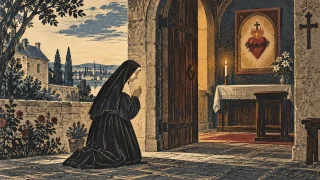

Saint Lawrence: Deacon, Martyr, and Steward of Charity

Click to share this post

In the vibrant, often dangerous, world of early Christianity, brave souls lit up the darkness with their faith. Among these luminous figures is Saint Lawrence, a deacon of Rome whose story continues to inspire millions. Known for his unwavering courage, his deep love for the poor, and a famous moment of defiant wit in the face of persecution, Lawrence stands as a powerful example of Christian steadfastness. This article will explore his life, his enduring legacy, the historical context of his time, and how his virtues offer profound lessons for us today.

Quick Facts

Category Detail
Birth Circa 225 AD, Huesca, Hispania (modern-day Spain)
Death August 10, 258 AD, Rome, Roman Empire
Feast Day August 10
Patronage Deacons, cooks, chefs, restaurateurs, the poor, archivists, librarians, humorists, and Rome.
Canonized Pre-Congregation (Venerated as a saint from early Christian times)

Historical Context & Early Life

Saint Lawrence lived during a turbulent period for Christians in the Roman Empire, specifically under the reign of Emperor Valerian. The mid-3rd century AD was marked by severe persecutions aimed at eradicating Christianity, which was seen as a threat to traditional Roman polytheism and imperial authority. Valerian’s edicts in 257 and 258 AD were particularly brutal, targeting Christian clergy and property.

Lawrence was born around 225 AD in Huesca, a city in the Roman province of Hispania Tarraconensis, located in what is now Spain. Not much is known about his early family life, but it is believed he received an excellent education. He traveled to Rome, possibly with his mentor, the future Pope Sixtus II, whom he had met in Caesaraugusta (modern-day Zaragoza). In Rome, Lawrence’s intelligence, piety, and organizational skills quickly became evident.

Upon the election of Sixtus II as Pope in 257 AD, Lawrence was ordained as one of the seven deacons of Rome. These deacons were highly important figures, not just assisting the Pope in liturgical functions but also managing the Church’s vast material possessions and, critically, distributing alms to the poor, widows, and orphans. As the chief deacon, Lawrence was effectively the Church’s treasurer and administrator of its charitable works, a role that placed him in a position of significant trust and responsibility, especially given the precarious legal status of Christianity.

Calling & Key Milestones

Deacon of Rome and Steward of Charity

Lawrence embraced his role as deacon with profound dedication. Beyond the solemn duties of assisting at Mass, his primary focus was the care of the Christian community’s most vulnerable members. He oversaw the Church’s resources, which were not meant for lavish display, but for the practical support of those in need. This stewardship of charity was not merely an administrative task; it was a deeply spiritual vocation, reflecting Christ’s command to love one’s neighbor, especially the suffering.

In the face of imperial persecution, the Church’s assets became a target. Roman authorities believed that by seizing Christian property and executing their leaders, they could cripple the burgeoning faith. Lawrence’s position, therefore, made him a direct threat to the Roman state, as he controlled what the pagans perceived as immense wealth.

Martyrdom and the “Treasures of the Church”

The persecution under Emperor Valerian intensified rapidly. In August 258 AD, Pope Sixtus II was arrested while celebrating Mass in the Catacombs of Praetextatus and summarily executed. Legend says that as Sixtus was being led to his death, Lawrence met him, weeping and asking, “Where are you going, father, without your son? Where are you hastening, holy priest, without your deacon?” Sixtus is said to have comforted Lawrence, prophesying that he would follow him in three days, enduring a greater trial.

Three days later, the prefect of Rome demanded that Lawrence surrender the “treasures of the Church.” Lawrence, with incredible ingenuity and courage, requested three days to gather these treasures. Instead of presenting gold, silver, or precious jewels, he spent these three days gathering the poor, the sick, the blind, the lame, widows, and orphans—the very people the Church served. On the appointed day, he presented them to the prefect, declaring, “These are the treasures of the Church!”

This defiant act, a powerful testament to where the Church’s true value lies, enraged the prefect. Lawrence was condemned to a horrific death by being roasted alive on a gridiron. Tradition holds that during his torture, Lawrence, with remarkable serenity and even humor, famously told his tormentors, “Turn me over, I’m done on this side!” This phrase, whether historically accurate or a later embellishment, perfectly captures the spirit of joy and courage in the face of unimaginable suffering that defined many early martyrs.

Spiritual Legacy & Theological Themes

Saint Lawrence’s life and martyrdom exemplify several core Christian virtues. His story is a powerful reflection of charity, courage, humility, and the supreme witness of faith unto death.

Charity (Caritas): Lawrence embodied the Christian call to serve the least among us. His understanding that the poor were the true “treasures of the Church” aligns perfectly with Scripture (e.g., Matthew 25:31-46, where Jesus identifies with the hungry, thirsty, naked, and imprisoned). His life demonstrates that true wealth is not in material possessions but in love and service to others.

Courage and Fortitude: Facing the full might of the Roman Empire and a gruesome death, Lawrence never wavered. His bravery was not a reckless abandon but a fortitude rooted in his faith in Christ. He chose fidelity to his vocation and to the poor over personal safety, offering a profound witness to the power of God’s grace in human weakness.

Humility and Service: As a deacon, Lawrence served. His role was not one of worldly power but of humble service to the Pope and, more importantly, to the suffering members of Christ’s body. His readiness to sacrifice everything for the sake of his mission speaks volumes about a life truly given to God.

Joy and Wit in Suffering: The traditional account of his witty remark on the gridiron, “Turn me over, I’m done on this side,” illustrates a profound spiritual freedom. It’s a testament to a soul so filled with divine grace that even in agony, it could find a moment of grace-filled humor, confounding his persecutors and inspiring countless generations.

Lawrence’s lasting influence is immense. He quickly became one of the most venerated martyrs in Rome, alongside Saints Peter and Paul. Churches throughout the world bear his name, and his feast day, August 10, is celebrated with great reverence. His story inspired countless artists, writers, and musicians. He is often depicted with a gridiron, a purse (symbolizing his role as treasurer), or holding the Gospels. His life continues to remind us that the Gospel message is not just about belief, but about actively living out charity, especially towards the marginalized.

Devotion Today

Devotion to Saint Lawrence remains strong across the globe, particularly in Rome and in Spanish-speaking countries. His feast day on August 10 is a major celebration, often marked by special Masses, processions, and charitable activities.

  • Rome: The Basilica di San Lorenzo fuori le Mura (Saint Lawrence outside the Walls) is one of Rome’s seven major basilicas and houses his tomb. It’s a significant pilgrimage site. Another church, San Lorenzo in Panisperna, is traditionally believed to be the site of his martyrdom.
  • Huesca, Spain: As his birthplace, Huesca holds a special veneration for Saint Lawrence, with a major festival (Fiestas de San Lorenzo) from August 9-15 each year, featuring parades, traditional dances, and religious ceremonies.
  • Patronage: His patronage extends widely, reflecting aspects of his life. He is the patron of deacons, due to his office; of cooks and chefs, due to the manner of his martyrdom; of the poor, because of his stewardship of Church charity; and of librarians and archivists, perhaps because he managed the Church’s records and “treasures.” He is also one of the patron saints of Rome itself.
  • Meteor Shower: Coincidentally, the Perseid meteor shower, which peaks around August 10, is sometimes called “The Tears of Saint Lawrence” due to its timing near his feast day.

Reflections for Modern Readers

Saint Lawrence’s ancient story resonates powerfully in our modern world, offering profound lessons for contemporary Christians.

  1. True Riches are People, Not Possessions: Lawrence’s dramatic presentation of the poor as the Church’s true treasures is a timeless challenge to our often materialistic society. In a world obsessed with accumulating wealth and status, Lawrence reminds us that our greatest investments should be in people, especially those in need. For modern readers, this means actively seeking out opportunities to serve, advocate for, and lift up the marginalized in our communities, understanding that these acts of charity are profoundly spiritual and pleasing to God.
  2. Courage to Stand for Truth: In an age of shifting values and moral relativism, Lawrence’s unwavering conviction in the face of persecution offers a model of courageous witness. We may not face literal gridirons, but we often face social pressure, criticism, or professional consequences for upholding Christian values. His example encourages us to speak truth with love, even when it’s unpopular, and to defend the dignity of every person.
  3. Joy in Adversity: Lawrence’s legendary wit during his martyrdom teaches us about finding spiritual joy even amidst trials. This isn’t about denying suffering but finding a deeper wellspring of peace and strength in faith that transcends difficult circumstances. When facing personal struggles or frustrations, we can ask for the grace to meet them with patience, hope, and even a touch of humor, trusting in God’s presence.
  4. Stewardship of Resources: As a deacon, Lawrence was a steward of the Church’s material goods. His example calls us to reflect on how we use our own resources—time, talent, and treasure. Are we using them for personal gain alone, or are we mindful of the needs of our community and the broader world? This could mean donating to charities, volunteering our time, or simply being more mindful consumers.

In art and jewelry, Saint Lawrence is most commonly depicted with the gridiron, the instrument of his martyrdom. This symbol, while gruesome, represents his immense fortitude and faith in the face of agonizing death. It reminds us of the ultimate sacrifice made for Christ. He is also often shown holding a purse or bag of coins, or a book of the Gospels. The purse symbolizes his role as the chief deacon responsible for the Church’s material goods and, crucially, for distributing alms to the poor. It signifies his dedication to charity and his understanding that the Church’s true wealth lay in its people, not its gold. The Gospels symbolize his adherence to the Word of God and his role as a minister in the Church. Sometimes, he is shown with a deacon’s dalmatic, his ecclesiastical vestment, further highlighting his sacred office.

Timeline Summary

  • Circa 225 AD: Born in Huesca, Hispania (modern-day Spain).
  • Mid-250s AD: Travels to Rome, likely with Sixtus.
  • 257 AD: Ordained as one of the seven deacons of Rome by Pope Sixtus II, becoming the chief deacon and treasurer of the Church.
  • August 6, 258 AD: Pope Sixtus II is arrested and martyred under Emperor Valerian’s persecution. Lawrence meets him, receiving a prophecy of his own martyrdom.
  • August 9, 258 AD: Roman prefect demands the “treasures of the Church” from Lawrence. He requests three days to gather them.
  • August 10, 258 AD: Lawrence presents the poor, sick, and vulnerable of Rome as the Church’s true treasures to the prefect. He is then martyred by being roasted on a gridiron.

Scripture for Reflection

Saint Lawrence’s life illuminates several scriptural themes:

Matthew 25:34-36: “Then the King will say to those on his right, ‘Come, you who are blessed by my Father; take your inheritance, the kingdom prepared for you since the creation of the world. For I was hungry and you gave me something to eat, I was thirsty and you gave me something to drink, I was a stranger and you invited me in, I needed clothes and you clothed me, I was sick and you looked after me, I was in prison and you came to visit me.'”

Lawrence’s ministry to the poor and his declaration of them as the “treasures of the Church” perfectly echo Christ’s teaching on caring for the marginalized as a direct service to Him.

Romans 8:35, 37-39: “Who shall separate us from the love of Christ? Shall trouble or hardship or persecution or famine or nakedness or danger or sword? …No, in all these things we are more than conquerors through him who loved us. For I am convinced that neither death nor life, neither angels nor demons, neither the present nor the future, nor any powers, neither height nor depth, nor anything else in all creation, will be able to separate us from the love of God that is in Christ Jesus our Lord.”

This passage beautifully reflects Saint Lawrence’s unwavering faith and courage in the face of extreme persecution, demonstrating that nothing could separate him from the love of Christ.

Prayers to Saint Lawrence

A Prayer to Saint Lawrence for the Poor and Suffering:

O glorious Saint Lawrence, you were a faithful deacon of the Church, entrusted with the care of its treasures. You understood that the true riches of the Church were not gold and silver, but the poor, the sick, and the suffering. Inspired by your boundless charity and heroic courage, we implore your intercession.

Look kindly upon us, and upon all who are in need, especially those who are poor, hungry, homeless, or persecuted. Help us to open our hearts and hands to serve Christ in our brothers and sisters, just as you did. Grant us the grace to be generous stewards of the gifts God has given us, and to always prioritize the needs of others above our own comfort.

Through your intercession, may we be strengthened in faith, filled with charity, and granted the courage to stand firm in times of trial. May we, like you, joyfully offer our lives in service to God and neighbor, and one day share in the eternal treasures of heaven. Amen.

Traditional Prayer to Saint Lawrence:

Saint Lawrence, glorious martyr of Christ, you fulfilled your deacon’s office with such devotion, serving the poor, the sick, and the needy. You were faithful in distributing the Church’s wealth to those who needed it most. You offered your life for love of Christ and His Church, even to the gridiron, showing heroic fortitude. Intercede for us, we pray, that we may be filled with your spirit of charity and service. Protect us from worldly attachments and inspire us to seek the true riches of God’s kingdom. Amen.

Discover More Saints

Picture of LocalCatholicChurches

LocalCatholicChurches

LocalCatholicChurches.com connects individuals to Catholic parishes across the United States, offering free web listings for churches and schools. The site also features select local businesses that support Catholic communities. It aims to be a comprehensive Catholic Church directory, helping users find churches in their area and providing up-to-date information such as Mass times and church events.

Search

About Local Catholic Churches

LocalCatholicChurches.com helps individuals find Catholic churches, schools, and local Catholic-owned businesses, fostering a faith-based community while offering comprehensive listings and resources.

Recent Resources

Follow Us

Sign up for our Newsletter

Sign up to receive our monthly newsletter and stay updated!

Join Our Newsletter

beautiful modern catholic church

Subscribe to LocalCatholicChurches.com Newsletter!

Join our community and receive uplifting prayers, inspiring messages, bible resources, and spiritual support delivered to your inbox every month. This newsletter is not endorsed or affiliated with any Catholic Church.